
EU Commission Receives Formal Complaint Over Controversial Tenerife Real Estate Projects
Conservation groups have filed a formal complaint with the European Commission, seeking to halt two major real estate projects in Tenerife that allegedly violate EU environmental laws protecting the Montaña de Guaza natural site.
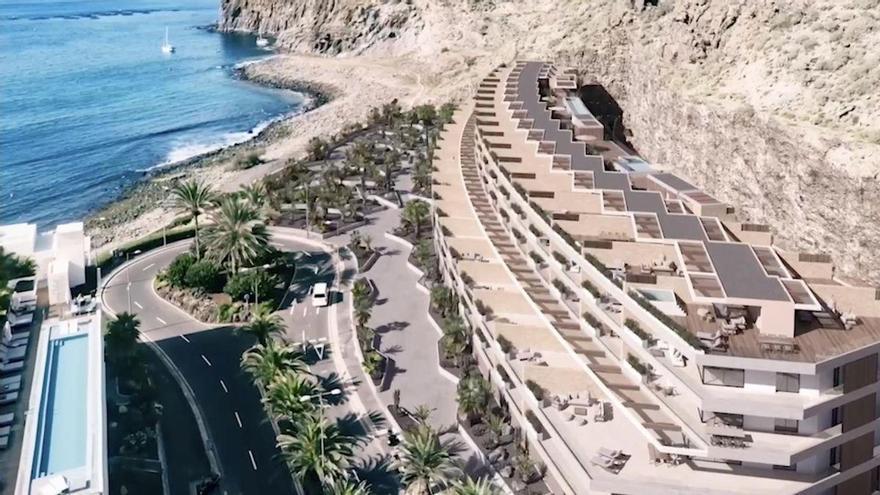
Concerns over urban development in southern Tenerife have reached the European Commission. Several conservation groups have filed a formal complaint with the EU’s environment department, calling for a halt to two major real estate projects in Palm-Mar, Arona: "The Cliff," by Los Menceyes Properties, and "Edificio Gara," by Metrovacesa. The dispute centers on whether these developments violate European laws designed to protect natural habitats.
The projects are located on land that overlaps with the Montaña de Guaza Natural Monument and the Rasca y Guaza Special Protection Area for Birds—both of which are part of the protected Natura 2000 network. The conservationists argue that local authorities, including the Canary Islands government, the Tenerife Island Council, and the Arona City Council, have ignored the EU Habitats Directive. This directive requires a thorough environmental impact assessment for any project that could significantly harm a protected site.
Technical and scientific reports from 2025 and 2026 warn that the construction could cause irreversible damage. The risks include the loss of native shrubland (tabaibal-cardonal) and threats to endangered species, such as the coastal Tenerife darkling beetle and the declining population of the Tenerife giant lizard. The area is also a documented nesting site for Cory’s shearwaters.
Experts also dispute the developers' claims that the land requires stabilization measures like concrete or metal mesh. They argue the hillside is already geologically stable and that such construction would disrupt the local water cycle and landscape. Environmentalists are calling for the projects to be cancelled entirely to ensure the area’s preservation.
This case highlights a growing legal conflict in the Canary Islands regarding the authority of EU law over local court rulings. The conservation groups are challenging a 2025 High Court of Justice of the Canary Islands decision that allowed the projects to proceed without a new environmental assessment, based on outdated 2008 standards. The groups maintain that no local ruling should override the EU’s requirement for environmental protection when scientific evidence shows a clear risk. They are now demanding that all building licenses be suspended until the projects fully comply with European directives.