
El Rosario Clears 70 Football Fields in Post-Fire Prevention Drive
El Rosario has cleared an area equivalent to 70 football fields and implemented a comprehensive fire prevention plan, including grazing animals and new land-clearing regulations, following a major 2023 wildfire.
The mayor of El Rosario, Escolástico Gil, was deeply worried during one of the first nights of the big fire in the summer of 2023. That time marked a turning point in how the town tackled fires. Soon after, a new rule was introduced about cleaning, fencing, and enclosing plots of land. Now, the efforts are starting to show results.
Since the new rule began on June 12, 2024, an area the size of 70 football fields has been cleared. The main goal is to remove anything that could fuel a fire.
According to the local council, this new rule makes it easier to clear rural land next to forests, which is where the risk to people is highest. This has led to 142 cleaning requests being processed (60 in the second half of 2024 and 82 in 2025). Mayor Gil notes that this increase shows people are becoming more aware.
The "70 football fields" is a way to visualize the 495,071 square meters that have been cleared (135,956 in 2024 and 359,115 in 2025). "This is almost 50 hectares of land that can no longer act as fuel for a fire," the mayor proudly states. He also points out that the rule is used when owners don't follow council instructions. In such cases, 17 fines have been issued, covering 77,998 square meters. "The aim isn't to collect money, but to make sure everyone takes responsibility for protecting the community," he explains.
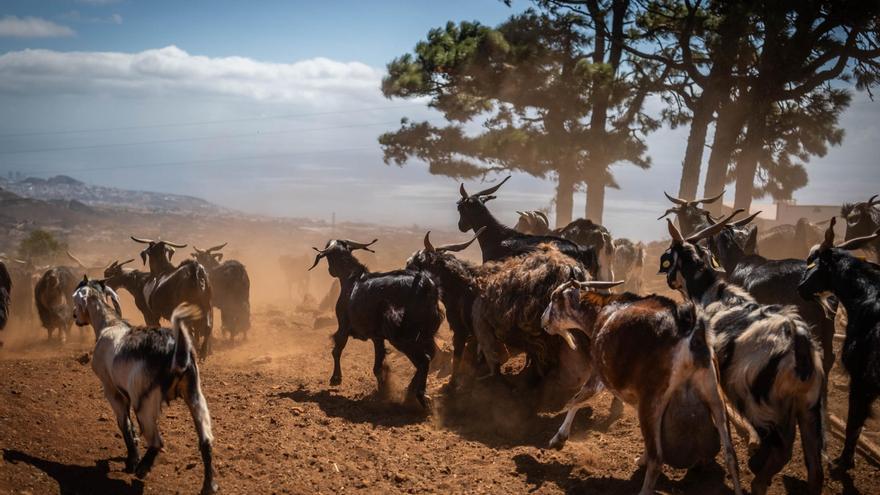
One effective method for clearing undergrowth has been using goats and sheep to graze in areas where forests meet homes. Mayor Gil recalls that this "ancient practice had become less common as farming declined in mid-altitude areas." He adds that "the City Council has brought it back and made it an official, key tool for prevention."
The council supports this work with annual grants of 2,000 euros per farm. The local authority sees this as a way to recognize "a job that benefits everyone." Areas like La Montañeta, Vista la Huerta, Peñafiel, Las Erillas, Juan Fernández, and El Poleo "directly benefit from this initiative, which combines sustainability, tradition, and effectiveness."
Besides these actions, El Rosario is also proud of its planning. "We are the most advanced municipality in the Canary Islands when it comes to preventing forest fires. Our Municipal Action Plan against Forest Fire Risk, approved by the Canary Islands Government in December 2024, makes us a leader regionally and nationally," says the mayor. This plan, created by the University of La Laguna's Chair of Disaster Risk Reduction and Resilient Cities, includes detailed risk maps, evacuation and reception zones, action plans, and specific prevention measures.
"Out of 88 at-risk municipalities in the Canary Islands, only about three have such a plan, and El Rosario's is the most up-to-date," Gil compares. He also highlights that the Tenerife Island Council recently suggested a model rule that was "40% inspired" by El Rosario's.
The local government believes that the last two summers, which were "milder than the disastrous 2023," helped them strengthen these fire prevention policies. "But we can't relax: climate change makes fires more intense and harder to control," he warns. He concludes: "As experts say, fires are put out in winter with constant prevention work."
Escolástico Gil gives the example of the 70 goats from local farmer Eulalio Domínguez's herd. "These animals eat about 300 kilos of plants every day in critical areas like La Esperanza and Las Barreras," estimates the mayor. He also mentions José Antonio Sánchez and Ana Luz Gutiérrez, from the La Pedrera farm, who keep over 1,500 livestock active across several square kilometers, removing fuel that could feed a fire.