
EduCarnaval Project Now On All Eight Canary Islands
The Canary Islands' Ministry of Education has expanded its EduCarnaval project, which integrates Carnival as a teaching tool for cultural heritage and local identity, to all eight islands.
The Canary Islands' Ministry of Education announced that its EduCarnaval project is now running on all eight islands. This project, championed by Minister Poli Suárez's department, uses Carnival as a teaching tool. It helps connect cultural heritage, local identity, and learning for students across the Canary Islands.
Forty schools across the islands are currently part of the program. This school year, it includes two schools in La Gomera (CEIP Ruiz de Padrón and CEIP La Lomada) and CEO Ignacio Aldecoa in La Graciosa, where all 47 students are expected to take part.
The project started five years ago, an idea from the 'murga' group Diablos Locos. Coordinated by Elías Alonso, with help from Ruymán Rodríguez and Foche Hernández, the idea began independently in the 2021-2022 school year. Their goal was to make Carnival more than just a party. A year later, the Canary Islands Government backed the project. Soon after, Santa Cruz de Tenerife City Council also joined, with Mayor José Manuel Bermúdez and Councillor Charín González participating.
The project uses a broad learning approach. It teaches students about each island's history, music, social commentary, and unique traditions, always tailoring the content to the local area. Carlos Casanova, who coordinates the Ministry's Canarian Natural, Social, and Cultural Heritage area and is a well-known 'murga' lyricist, explained the main goal: to see Carnival as a cultural heritage, not just a single event. The aim is for Carnival to become a natural part of school lessons, an identity passed down through generations. He stressed that its start with Diablos Locos was crucial for its spread across the region.
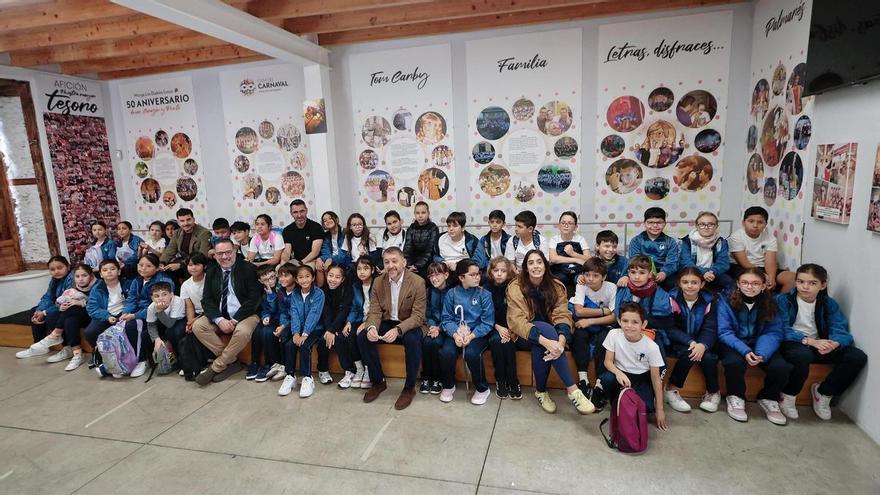
Getting involved is a key part of EduCarnaval. Students learn about how 'murgas' and 'comparsas' create their performances through workshops on lyrics, music, and costumes, interviews with Carnival figures, and guided tours. The project has brought in more volunteers, including traditional Carnival groups like Los Buches and Los Diabletes from Lanzarote, and famous figures such as Víctor Lorenzo Soso or La Negra Tomasa from Los Indianos palmeros. This helps include the diverse celebrations from across the islands. Foche Hernández, a project leader and one of its founders, said the goal is to introduce Carnival culture to classrooms. This sparks curiosity and knowledge in young children, changing how many of them see Carnival – from just a fair to something much more.
The project has been very well received by schools. Míriam Fernández, a teacher since 2015, noted how excited students are, with many asking for longer sessions. She explained that many students, especially those whose families aren't usually involved in Carnival, are discovering its cultural importance for the first time. Families also get involved, helping with workshops and making costumes, which supports the classroom learning. Fernández believes EduCarnaval should continue and expand to more schools and age groups across the Canary Islands.
The project has become more hands-on, with local people on each island taking part. This creates direct connections between students and the real stars of Carnival. Future plans include organizing school gatherings. The main goal for the institutions involved is to teach future generations about the historical, social, and artistic value of this tradition, which is central to the identity of the Canary Islands.