
Drug Operation Seizes Five Illegal Servals in Canaries
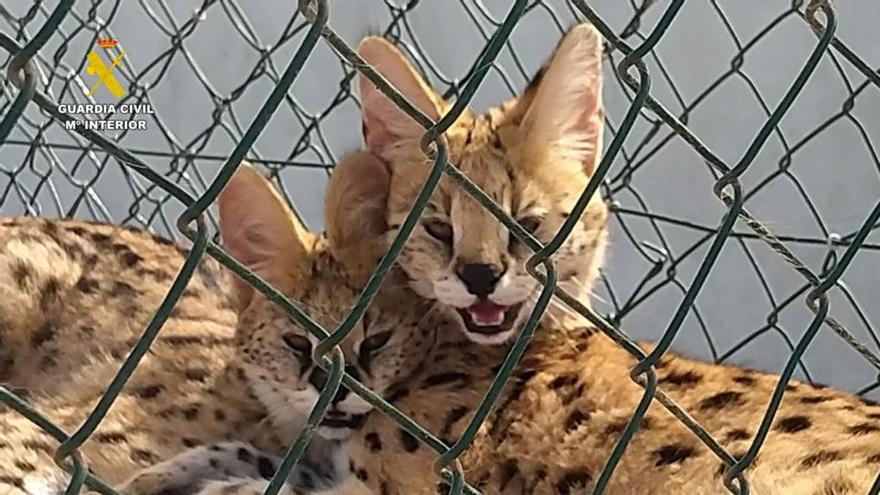
An anti-drug operation in the Canary Islands uncovered a crime against protected wildlife, leading to the seizure of five illegally imported servals and the investigation of three individuals.
A major anti-drug operation in the Canary Islands has uncovered a potential crime against protected wildlife. During searches for 'Operation Blood Ties' (Lazos de sangre), police seized five wild African felines. The Civil Guard announced this, stating that the leader of one of Spain's most active drug trafficking networks was arrested during the operation.
During an inspection of a private estate in Gran Canaria, officers found several exotic animals. Seprona, the Civil Guard's nature protection service, confirmed that a 50-square-meter enclosure, made with metal mesh and a double access door, housed five servals (Leptailurus serval).
Further investigation revealed that the animals had been brought into the Canary Islands without the necessary CITES authorization, or proper customs and health checks. As a result, three people are now under investigation for a crime against protected wildlife, along with potential administrative and customs violations.
The animals – a pregnant adult female, an adult male, and three cubs about four months old – were initially moved to the Neotrópico Foundation in Tenerife. This center specializes in exotic animals, and the transfer was approved by the Ministry for Ecological Transition and Demographic Challenge.
According to Efe, three of the servals (one male, one female, and their cub) were moved to Oasis Wildlife Fuerteventura at the end of October. They will stay there under judicial deposit, receiving specialized care and ongoing veterinary attention, the center stated. The whereabouts of the other two servals have not been revealed.
Throughout the process, the main goal was to ensure the servals' safety and well-being. This involved checking transport crates, ensuring they stayed hydrated, and controlling the temperature during their journeys.
During the transfers, protocols from the European Association of Zoos and Aquaria (EAZA) were followed. These protocols focused on reducing stress by avoiding noise, bright lights, and crowds.
Before moving to Fuerteventura, the three servals completed a quarantine protocol at the Neotrópico Foundation, as is standard for animals seized from illegal trafficking.
During quarantine, they underwent stool and blood tests, including blood biochemistry and hematocrit, to check their health and rule out parasites or diseases.
Once at Oasis Wildlife Fuerteventura, the veterinary and caregiver team examined them before releasing them into an enclosure designed for their species, helping them to adapt.
Oasis Wildlife Fuerteventura has created a spacious, safe, and natural habitat for them, complete with vegetation, shaded areas, and shelters. This allows the servals to climb, explore, and behave naturally.
Bringing these types of animals into the region is a serious offense. Decree 30/2018 from the Government of the Canary Islands specifically bans owning, breeding, and trading potentially dangerous wild animals. This includes all felines from the Felidae family, except for domestic cats (Felis catus).
Additionally, Law 7/2023 on animal rights and welfare further strengthens this ban by not allowing such animals to be kept as pets.
Public cooperation is crucial to detect and prevent the illegal trafficking and unauthorized ownership of protected or banned species. This illegal activity poses a major threat to biodiversity and ecological balance.
State Security Forces remind the public that owning, breeding, transporting, or trading wild or exotic animals – including species covered by the CITES Convention or those that are prohibited – requires prior authorization and registration with the CITES administrative authority or the relevant regional body.
Anyone who owns such animals must report them to the authorities or law enforcement. This allows for verification of their legality and, if necessary, their regularization or voluntary surrender.
Voluntary regularization helps avoid penalties or criminal charges. It also protects biodiversity and public safety by preventing the ownership and breeding of potentially dangerous or invasive animals.