
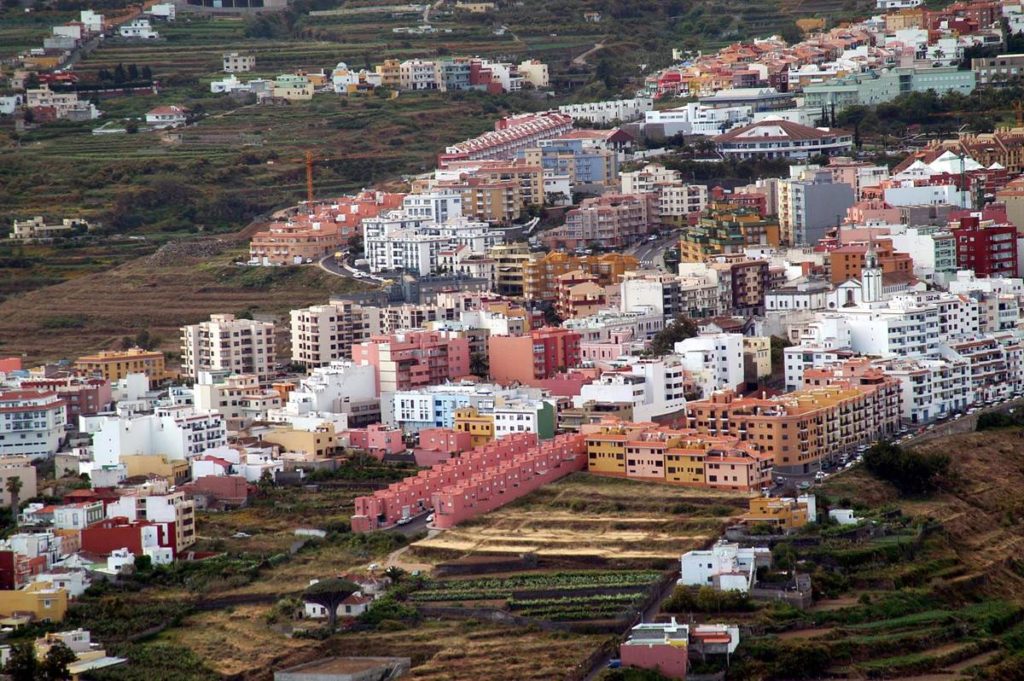
Drago Canarias Challenges Los Realejos Urban Plan Amid Housing Crisis
Drago Canarias has challenged Los Realejos' urban planning strategy, arguing that the municipality should prioritize utilizing its 1,448 vacant properties over new developments to address the local housing crisis.
The housing crisis in northern Tenerife has intensified following a new report from Drago Canarias in Los Realejos, which challenges the municipality’s current urban planning strategy. The study highlights a significant gap between the town’s projected population growth and the actual capacity of its infrastructure to support it.
The political group argues that the solution lies in utilizing existing housing rather than building new developments. Citing data from the National Statistics Institute (INE), the report notes that there are 1,448 empty properties in the municipality. Spokesperson Javier Álvarez insists that the priority should be to bring these homes back into use through public policy, rather than pursuing an expansion model that threatens the area’s sustainability and affordability for locals.
The report points to a major contradiction in municipal planning: the current General Urban Development Plan (PGO) allows for the development of over 777,000 square meters of residential land—an area the size of 109 football fields. This could theoretically house 76,606 people, more than double the current population of roughly 37,000. The study warns that planning for 40,000 new residents poses a serious risk to public services and basic infrastructure.
Beyond these long-term concerns, the document highlights failures in current management. For instance, eight social housing units on Tindaya Street have sat empty since their completion in 2005. This administrative delay has led the group to question whether the City Council and the Canary Islands government can effectively enforce legal requirements, such as the mandate to reserve 30% of new developments for social housing.
This debate reflects a wider issue across the Canary Islands, where tourism and a lack of housing have driven up prices. Drago Canarias is joining a growing chorus of voices calling for a shift in strategy: moving away from constant construction and toward optimizing existing buildings to protect the landscape and prevent the over-saturation of public resources.