
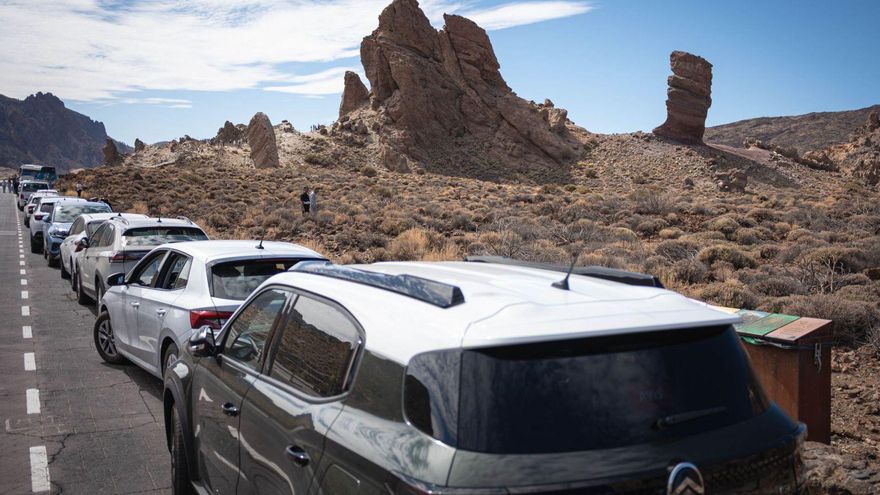
Teide: Board of Trustees to discuss tourism restrictions due to park overcrowding
The Board of Trustees of Teide National Park will discuss a new plan to regulate tourist flow, aimed at protecting the park's fragile ecosystem from excessive pressure.
Next Monday, the Board of Trustees of the Teide National Park will discuss a new plan to address the problem of the large number of tourists. Last year, the park was visited by over 5 million people, which is too many.
The authorities of Tenerife and the Canary Islands agree that something needs to change. The previous plan is outdated, as it was developed 23 years ago. However, opinions differ on how exactly to reduce the number of tourists.
Some propose stricter restrictions on private transport, suggesting that cars should be completely banned from entering Teide (except for local residents). Tourists would then use buses organized by the local authorities.
Others believe that a more flexible approach is needed. For example, allowing only buses during certain hours and private cars during others. However, not everyone likes this option.
In any case, everyone wants to better protect the Teide National Park, as its nature is very vulnerable. The new plan, which local and regional authorities have been working on for a year, stipulates that the Tenerife Council will develop a sustainable transport plan.
The strictest proposals suggest that only local residents will be allowed on the TF-21 road. Permits to pass will be granted to those who work in the park, beekeepers, climbers, scientists, guests of the Parador hotel, rescuers, and security services.
There may be other permits for locals, but they will be issued depending on the number of people in the park. If there are too many visitors, permits will not be issued. Some believe that thanks to the new roads around the island, traffic on the TF-21 can be restricted, as it is no longer the main road from north to south.
Everyone agrees that there is no need to build bus transfer hubs near the park itself, as previously proposed. It is better for tourists to board buses in large cities (in the north, south, and capital) and then travel to Teide. There, they would use special bus routes. Transfer hubs can be built, but further away from the park, so as not to harm nature.
Entry to Teide will not be paid, as this is prohibited by law. However, the Council plans to charge for services, especially for buses that transport tourists. This will be free for local residents, as is all public transport on the island. Part of the money will be spent on transport, and the other part on nature protection.
So, the new plan will be discussed at a meeting of the Board of Trustees of the Teide National Park. It includes representatives of various authorities, scientists, security services, and entrepreneurs. The government is expected to make a final decision in December.
Professor of Botany Wolfredo Wildpret, who knows Teide well, believes that urgent measures must be taken to save the park from destruction due to the large number of tourists.