
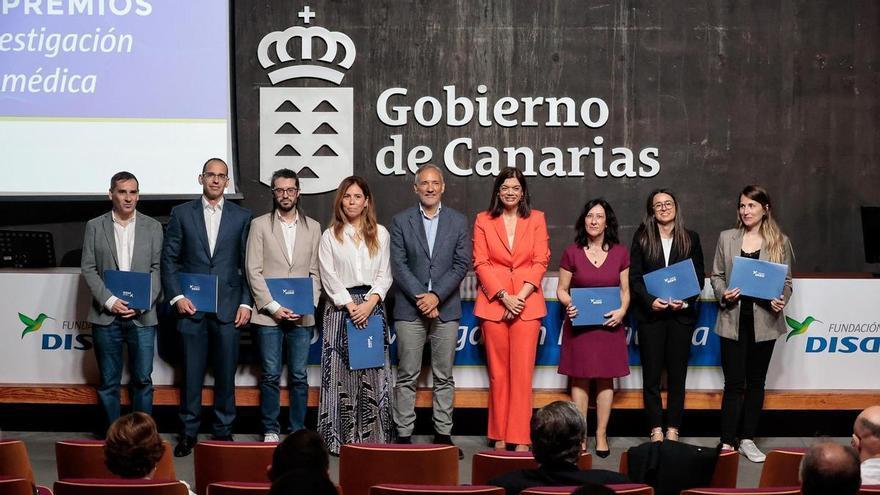
DISA Foundation Awards €190,000 to Boost Biomedical Research in Canary Islands
The DISA Foundation has awarded nearly 190,000 euros to seven biomedical research projects in the Canary Islands, aiming to advance clinical specialization and support early-career scientists.
Biomedical research in the Canary Islands has received a significant boost with the ninth annual DISA Foundation awards. The foundation has granted nearly 190,000 euros to seven different projects, bringing its total investment in regional science to 1.4 million euros since the program began.
The winning projects highlight a strong focus on clinical specialization. Notable research includes Félix Manuel Machín’s work at the Nuestra Señora de la Candelaria University Hospital on using the ClpP protein to fight drug-resistant bacteria and tumors. At the same hospital, María del Carmen Mora is studying how the FGF23-Klotho system can predict cardiovascular risks, while Ana Cardeña is investigating the role of vitamin D in the survival rates of patients with advanced lung cancer.
Beyond the funding itself, these awards are vital for keeping young talent in the region. This year saw 55 applications—an increase of eight from last year—with many led by researchers under 40. As postdoctoral researcher Aitana Alonso noted, these grants are crucial because early-career scientists often struggle to secure larger national funding without an established track record.
The awarded projects address major public health concerns. At the University of La Laguna, Ana Elena Rodríguez is leading a type 2 diabetes study that includes establishing the archipelago’s first human pancreatic biobank. Meanwhile, Daniel Ferreira at Fernando Pessoa University is developing a standardized protocol for the early diagnosis of neurodegenerative diseases like Alzheimer’s. Rounding out the winners are Gilberto Betancor (ULPGC), who is researching how the MOV10 protein could inhibit HIV, and Daniel Pérez (Insular Materno Infantil University Hospital), who is studying the durability of lung prostheses.
This support arrives as the islands work to make their clinical research more competitive on a national level. By helping to build infrastructure like biobanks and shared hospital protocols, the DISA Foundation is doing more than funding individual studies; it is helping to create a network of knowledge essential for tackling the rising rates of metabolic, oncological, and infectious diseases in the Canary Islands.