
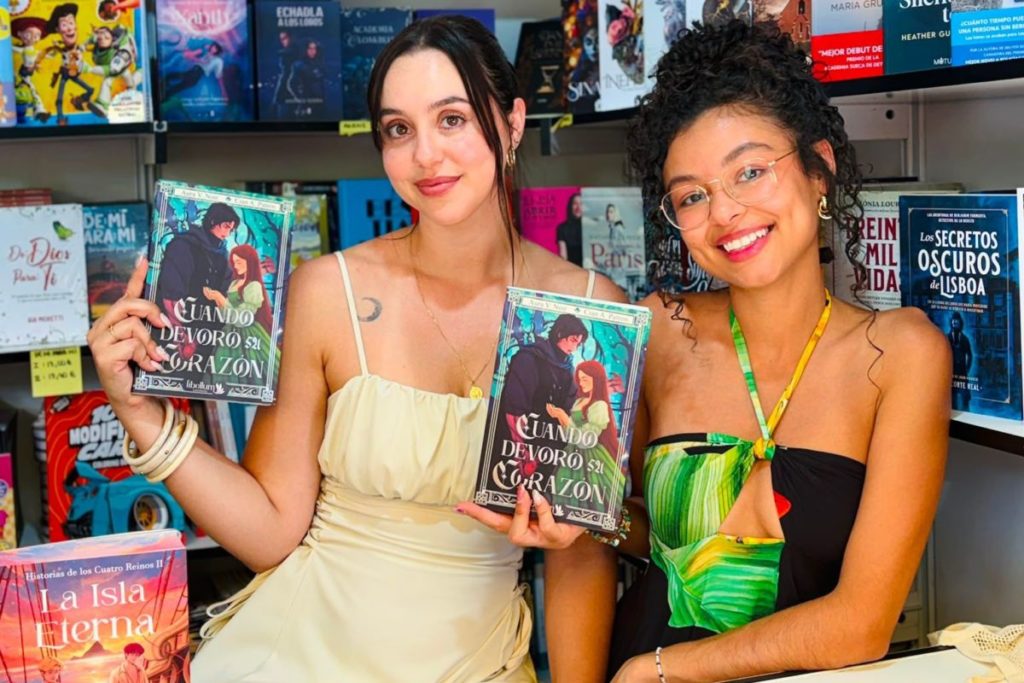
Digital Collaboration Reshapes the Landscape for Emerging Spanish Authors
Spanish writing duo Lucía Ángulo and Laura Varona exemplify the modern shift toward digital collaboration as they navigate the challenges of the competitive Spanish publishing market.
Contemporary Spanish literature is undergoing a major shift: digital collaboration is no longer a rarity, but a standard way of working. The creative duo Lucía Ángulo and Laura Varona—known by their pseudonyms, Cian and Aura—perfectly illustrate how combining different backgrounds can help writers overcome geographical distance and the challenges of today’s publishing market.
Their partnership began in 2015 when they met in an online space for collaborative storytelling. What started as a shared taste in books soon grew into a professional writing team. Their journey wasn't without hurdles; after years of working remotely, Cian’s move from Cartagena de Indias to Gran Canaria, encouraged by Aura, allowed them to synchronize their creative process and truly establish themselves as authors.
Their story highlights the common struggles faced by emerging writers in Spain. After an initial publishing experience that didn't quite meet their goals for narrative consistency, they found success with the publisher Libellum. This breakthrough came after they strategically reworked a previous series into a standalone novel to better fit industry demands.
Beyond their personal story, Ángulo and Varona point to a recurring issue in the industry: the difficulty local authors face in reaching a national audience, which often favors translations of English-language works. They describe the current publishing landscape as a complex environment where gaining visibility is a constant battle.
In terms of their writing process, the pair divides roles by character and point of view, balancing their different personalities. While Aura approaches writing as an instinctive, vital impulse, Cian uses her scientific background to bring analytical rigor to the fantasy worlds they build. By combining this discipline with market awareness and transatlantic collaboration, the duo serves as a prime example of resilience in the Spanish-language book industry.