
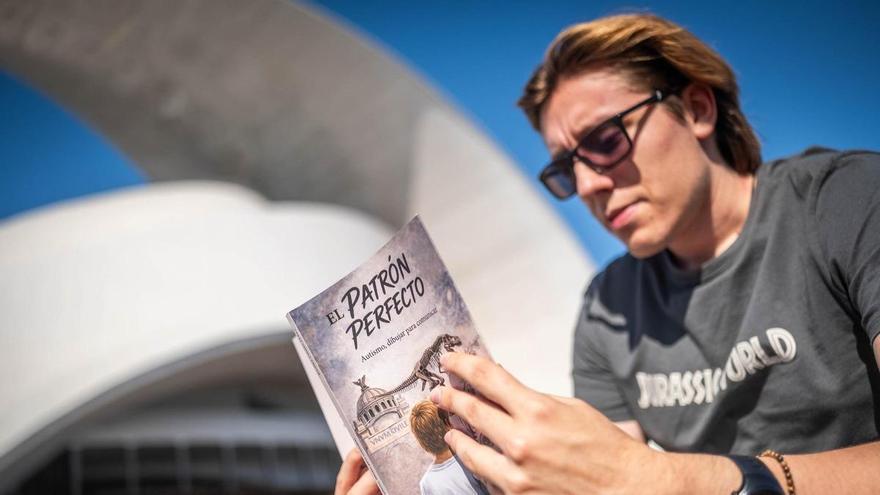
Daniel Comín’s 'El Patrón Perfecto' Chronicles Life With Autism Through Art and Clinical Records
In El Patrón Perfecto, author Daniel Comín and his mother, Delfina Pérez, chronicle his journey with autism through a unique blend of childhood artwork, clinical reports, and personal reflections on resilience and non-verbal communication.
El Patrón Perfecto (The Perfect Pattern) is more than just a book; it is an emotional and clinical journey. Written by Daniel Comín in collaboration with his mother, Delfina Pérez, the work reconstructs the first 23 years of Comín’s life following his autism diagnosis at age two.
The book’s true value lies in its personal archive. It features drawings and diagrams Comín created during his childhood, a time when he could not speak fluently—a skill he did not master until he was twelve. Organized into five thematic sections, the book combines these personal artworks with clinical reports from the specialists who monitored his development. This provides a unique dual perspective: the patient’s internal experience alongside the professional medical assessment.
From a sociological standpoint, the project underscores the vital role of early intervention and family support. The narrative uses "gestalt" language processing, where the author expresses himself through complete blocks of meaning rather than traditional grammar. This is not a stylistic choice, but a reflection of how Comín processes the world, turning the book into a direct line of communication with the reader.
The project began after a shared museum visit, where working with charcoal inspired the pair to review the graphic legacy Pérez had carefully preserved. Across 188 pages and 24 chapters, the book explores complex topics like sensory hypersensitivity—particularly to noise—and managing frustration, turning memories of childhood isolation into a story of resilience.
Ultimately, El Patrón Perfecto is a testament to the strength of the bond between mother and son. For Comín, the process of writing the book was a journey of self-discovery, allowing him to reframe his development and honor his mother for safeguarding his "preverbal voice." The work serves as a powerful argument for providing better support tools for neurodivergent individuals, proving that communication is a fundamental right, even when it does not take the form of spoken words.