
Columbus Recorded First Documented Tenerife Eruption in 1492
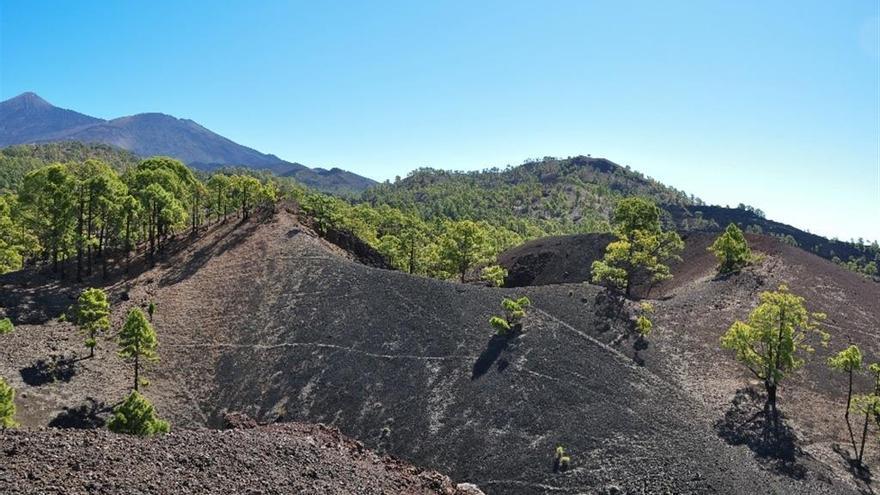
Christopher Columbus recorded the first documented volcanic eruption on Tenerife in 1492, later identified as the Boca Cangrejo volcano.
Volcanic eruptions have played a huge role in shaping the Canary Islands, creating their unique landscapes. Since the 1400s, 17 eruptions have been recorded across the islands, each changing the land in different ways.
Among these, the Boca Cangrejo eruption on Tenerife stands out, not because of its size or power, but because it was the first one ever written down.
What's most interesting is that the person who recorded it wasn't a scientist or a local islander, but a famous explorer who would soon change world history.
That explorer was Christopher Columbus. In 1492, he made a stop in the Canary Islands before sailing off to what he hoped would be the Indies, and what we now call the New World. It was his last stop before his historic journey, and it was there that he witnessed something unexpected, becoming the first person to document a volcanic eruption on Tenerife.
Columbus wrote about this event in his logbook from his first trip to America. Copies of this logbook were later made by Fray Bartolomé de Las Casas. For a long time, there was debate about which volcano he saw erupt. Many believed it was Teide, Tenerife's highest peak. However, over the years, research has shown this to be incorrect. It was, in fact, the Boca Cangrejo volcano, making it the first documented eruption on the island.
His diary entry specifically notes that "one night when he was near Tenerife, so much fire came out of the peak of the mountain range (...) that it caused great wonder."
The word 'peak' likely led to the confusion about the eruption's exact location. This mystery was finally cleared up in 2007. A publication in 'Geogaceta,' titled 'The eruption that Christopher Columbus saw on the island of Tenerife (Canary Islands),' by researchers from CSIC, the University of Las Palmas de Gran Canaria, and the University of Extremadura, among others, confirmed the true site.
Columbus sailed from Palos de la Frontera to the Canary Islands on August 9, 1492, and left the islands on September 6. This means he must have seen the eruption sometime between these two dates.
Not only did Columbus himself describe the event, but his son, Hernando Colón, also wrote about it in his book 'Historias del Almirante' (History of the Admiral). Hernando's account adds more detail: "... on August 23, the Admiral decided to return with his two ships to Gran Canaria. He set sail the next day ... and spent that night near Tenerife, from whose summit, which is very high, enormous flames were seen emerging, which, to the astonishment of his crew, he explained the origin and cause of such fire, citing the example of Mount Etna in Sicily, and many other mountains, where the same phenomenon was observed."
Interestingly, Hernando's account mentions 'summit' rather than 'peak,' which further suggests the eruption might not have been Teide, but another location.
The researchers in the 2007 study also pointed out several key facts. If the eruption had been on Teide, it would have been visible from other Canary Islands, and it's unlikely no one else would have mentioned it. Also, some had linked Columbus's sighting to the Lavas Negras eruption, but its timeline doesn't match. The Boca Cangrejo eruption, however, is estimated to have occurred between 1430 and 1660, fitting perfectly with Columbus's voyage.
The Boca Cangrejo volcano itself is found on Tenerife's northwest ridge, about two kilometers south of the Chinyero volcano.
It's a Strombolian volcano, meaning it likely had mild, explosive eruptions. Its vents are clearly lined up, with the main crater opening towards the west, down the slope.
While we don't know exactly how long this eruption lasted, the small size of its cone and the limited area covered by its ash and rock fragments suggest it was a short event with low explosivity.
Today, the volcano's eruption points and some of its nearby lava flows are part of the Corona Forestal Natural Park.