
'Clorofilas' Project Blends Art and Heritage to Preserve Anaga’s Washerwomen History
The "Clorofilas" initiative in Tenerife’s Anaga Massif preserves the legacy of local washerwomen by blending oral history with botanical art created in historic stone washbasins.
A new project in the Anaga Massif is helping to preserve local history by blending traditional heritage with modern art. The "Clorofilas" initiative, supported by the Santa Cruz de Tenerife City Council and the island’s Cabildo, focuses on documenting the lives of the washerwomen of Roque Negro—figures who were once central to the island’s rural economy.
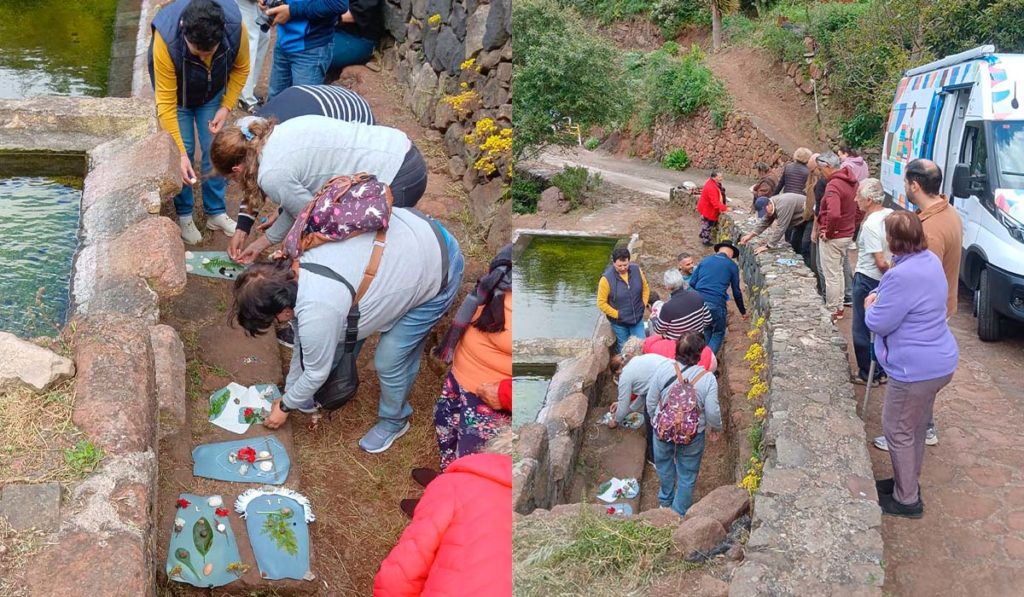
Artists Pablo Otero and María José Floriano led the project, working closely with the washerwomen themselves to create a unique, collective book. Instead of paper, the "pages" are made from linen and local botanical elements, such as laurel and wild olive leaves, treated with a special chemical process. By soaking these materials in the area’s historic stone washbasins—which served as vital community hubs for generations—the artists imprinted personal memories and fabrics with a distinct Prussian blue, a technique similar to traditional photography.
The project also has an educational side, reaching local schools in Roque Negro, Las Carboneras, and Taganana to help pass these life stories on to younger generations. Additionally, the initiative helped restore the paths leading to these old cisterns, ensuring that these historically significant sites remain accessible.
This work is part of a broader effort across the Canary Islands to protect ethnographic heritage. By turning the historically female-led task of washing into a creative act of remembrance, the Clorofilas project ensures that the history of Anaga remains a living, tangible part of the present.