
Chinamada: Remote Anaga Village Thrives on Resilience
Chinamada, a remote Anaga village with a strong community and unique history of late development, thrives on traditional living and attracts hikers while advocating for improved transport.
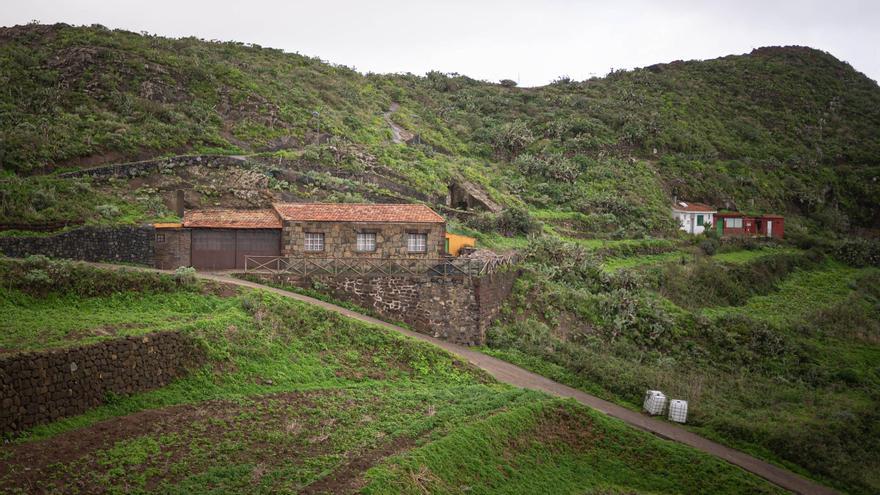
Chinamada, a village perched like a balcony, looks out towards Punta del Hidalgo from the Aguaide viewpoint. The road only reached Chinamada in 1991, and electricity didn't arrive until 2004. Despite its remote location, this small Anaga village thrives, with residents proudly stating they "make ends meet."
Chinamada's peaceful atmosphere draws hikers, mostly from abroad, who pass through the village daily as it sits on the edge of the rural park. It's a popular meeting point, where trails from Las Carboneras and El Batán meet. From here, you can also reach Punta del Hidalgo, a place with strong connections to Chinamada. As Demófilo Díaz Rojas, president of the Aguaide neighborhood association, explains, "many people who come from here live there."
Though originally from Las Mercedes, Demófilo married Carmen Rojas Ramos, a Chinamada native, and they have lived in the village ever since. Their home is right next to La Cueva restaurant, a central spot in the village known for its delicious goat meat and a hearty 'escaldón' that truly warms you up. This was perfect for a December day when the sun was shy and rain fell on and off. Demófilo Díaz, with his gray hair, radiates a calm and peaceful presence. His thoughtful and clear way of speaking reflects the spirit of the La Laguna area and covers key moments in Chinamada's history: the villagers building their church in the late eighties, the first pilgrimage for San Ramón Nonato in 1991, the road arriving that same year, and the delayed electricity connection in the early 2000s, which only happened after they insisted it be installed underground.
Emotion fills his voice as he recounts these events, remembering the sacrifices made for the area's development and progress. This is a true, living history, one you won't find in books. It's the story of its people: of Tella, of Aunt Juana, who recently passed away at over 100 years old, and of the more than 70 residents who once called Chinamada home, a number now reduced to about twenty.
Living in such a remote place teaches people many things: how to build a strong community, find and improve resources, and develop and protect their heritage. "We don't ask for much, but we are persistent," says the community leader. "I can't count how many meetings we have at the Town Hall or elsewhere to get what we need." Currently, one of their main requests is for better transport. Buses only go as far as Las Carboneras, the village just before Chinamada. Residents are asking for a micro-bus service or on-demand transport for those without cars, who find it hard to leave the area.
Ignacia Ramos Ramos, a lifelong resident, is one such person. She lives in Chinamada with one of her three children. "He's not leaving here," she jokes, hinting at the possibility of her son finding a partner. "He loves the mountains, and whoever joins him will have to love them too." Ignacia arrives carrying a bag with a hidden thermos of hot chocolate. She claims there's no secret to her recipe but insists it's expertly made.
Ignacia's father was a goatherd, a job that no longer exists in Chinamada. "Before, we had many goats and made cheese," she explains, "but that's all gone now." However, farming the land is still very much alive. She had planted 'papas morrallas' – a local potato variety – but Storm Emilia ruined them. Luckily, she has another type and happily declares, "My house is full of potatoes!" She is a lively woman, and her genuine personality shines through. So much so that she sometimes pauses her stories for the microphone, careful not to say anything she shouldn't. Her conversation is always entertaining and brings a smile to anyone listening. She is truly charming.
"We are very festive here," Demófilo says in a room that clearly shows they love to gather and celebrate. A long table and two benches invite you to imagine the many moments shared in the Díaz and Rojas home. Posters and photos from previous San Ramón Nonato festivals decorate the walls, alongside farming tools. "They say if you come to Chinamada, you'll get pregnant," Ignacia blurts out with a laugh. While the saint was chosen because many men in the Anaga village were named Ramón, he is also known for miracles related to pregnancy, difficult births, and motherhood.
After choosing San Ramón Nonato, a statue was commissioned and carried along the trails to Chinamada in 1991. "Many people gathered to bring the saint," Demófilo Díaz remembers, "and since then, we hold a pilgrimage every five years."
It's fitting that Chinamada's only restaurant is named La Cueva (The Cave), as traditional cave houses are common here. These homes naturally stay cool in summer and warm in winter. José Luis Febles Arzola has managed the restaurant for nearly ten years. While goat meat is the specialty, hikers are eager to try other typical Canarian dishes too. "During the week, we see many foreign customers passing through on the trails," he says. "On weekends, we get more local visitors."
The owner of La Cueva expresses concern about traffic in Anaga. "Traffic jams really hurt our business," he laments. "People see the queues, for example, in Cruz del Carmen, and then they don't bother to come any further." They don't realize what they're missing by not stopping at this special spot in Chinamada. The food, lovingly prepared by Matilde, José Luis's wife, warms both body and soul.
While stumbling on the edge can be a misfortune, in a place like Chinamada, you'll always find someone ready to help you back up with a smile, no matter the sacrifice.