
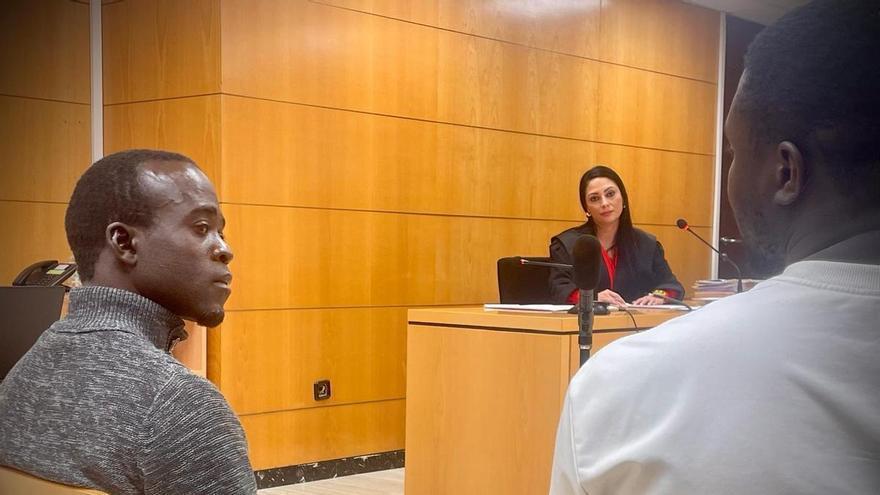
Captain Jailed 4 Years for Human Trafficking to Canaries
A court in Santa Cruz de Tenerife has sentenced a boat captain to four years in prison for human trafficking, after he endangered over 50 migrants on a perilous illegal journey from Senegal to El Hierro.
A court in Santa Cruz de Tenerife has sentenced the captain of a makeshift boat to four years in prison. He was found guilty of helping more than 50 migrants travel illegally from Senegal to El Hierro. The court highlighted its strong stance against human trafficking, noting that the captain seriously endangered the lives of those on board during one of the world's most perilous sea journeys.
The court heard that the boat, a 13-meter-long and 2-meter-wide fishing vessel, arrived at La Restinga port in El Hierro in April 2024. It had completed a six-day journey carrying 55 people, including one unaccompanied child, from Senegal, Gambia, and Guinea Bissau. The boat was extremely unsafe, lacking basic equipment like navigation lights, flares, or any way to communicate at sea, making the trip even more dangerous.
The investigation found that the convicted captain worked with the trip organizers in Senegal. They reportedly gave him a GPS device and sent the coordinates for the Canary Islands coast to his mobile phone using a messaging app. Crucial evidence for the prosecution was the discovery of both the GPS and the phone near the boat's rudder and engine – typically where the person steering the vessel would be.
Forensic experts analyzed the GPS and phone in September 2024, after getting court approval. They found conversations, videos, and navigation data. The GPS showed the planned route and waypoints, while the phone contained videos and messages. The court ruled that this evidence proved the captain was actively involved in both planning and carrying out the journey, including entering the destination coordinates. However, the defense lawyer, Victoria Díaz Alba, argued that the way this evidence was handled – its "chain of custody" – was flawed.
The lawyer told the court that the initial police report didn't mention finding a GPS or satellite phones, but a later report from the Ucrif (a unit for illegal immigration and document fraud) did. She also highlighted that there was no clear, documented record of who had the devices from when they were found on April 28, until they were officially given to a Ucrif agent in July, and then until the data was taken off them in September. The defense suggested this gap in custody could mean the evidence might have been tampered with, especially since the phone was reportedly found turned on and without a password.
The court directly addressed these concerns. It acknowledged that a proper chain of custody is vital for proving evidence is genuine. However, it stated that any issues with this chain don't automatically make the evidence invalid, though they might affect how reliable it is. The court stressed that simply claiming a break isn't enough; specific details of when and how the chain was broken are needed. The officers explained how the devices were moved from El Hierro to Tenerife and kept at the Ucrif office. Ultimately, the court concluded that there was no significant break in the chain of custody that would make the evidence unreliable.
Further evidence included several photos found on the mobile phone. One was a selfie showing the accused wearing a life vest, with a GPS device clearly sticking out of it. This picture was taken at the back of the boat, next to another person who was steering but has not yet been identified or found.