
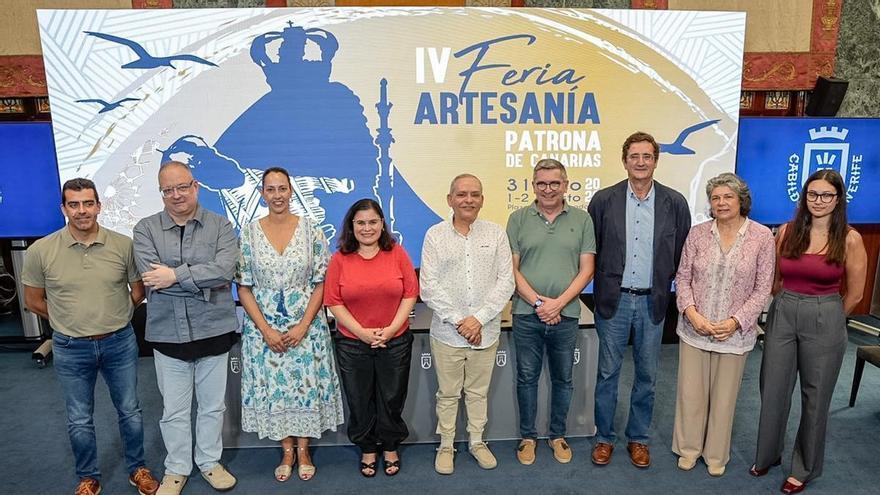
Candelaria Hosts Fourth Annual Craft Fair to Preserve Canarian Heritage
The fourth annual 'Patron Saint of the Canary Islands' Craft Fair opens this Friday in Candelaria, showcasing traditional artisanal trades to preserve cultural heritage and support local craftspeople through August 2nd.
The Plaza de los Pescadores in Candelaria is set to become a hub for Tenerife’s cultural heritage as it hosts the fourth annual 'Patron Saint of the Canary Islands' Craft Fair. Running from this Friday until August 2nd, the event aims to do more than just sell goods; it serves as a vital effort to protect traditional crafts from the influence of mass-produced, globalized markets.
The fair is a key opportunity to support the economic future of thirteen different artisanal trades and encourage a new generation to take up these skills. Across 21 tents, 20 professional craftspeople will showcase a wide range of techniques, including traditional drawn-thread embroidery, wicker basketry, and roseta lace-making, as well as leatherwork, candlemaking, carpentry, glasswork, modeling, dressmaking, doll-making, textile decoration, enameling, and patchwork. The exhibition will be open to the public daily from 11:00 a.m. to 9:00 p.m., with coordination provided by the Island Craft Company and the local city council.
The timing of the fair is intentional, coinciding with the municipality’s busy summer festival season. By bridging the celebrations of Saint Anne, Our Lady of Mount Carmel, and the Patron Saint of the Canary Islands, the event takes advantage of the influx of summer visitors to highlight Candelaria as a center for island tradition.
Efraín Medina, the Minister of Employment and Education, emphasized that these platforms are essential for strengthening the craft sector. Candelaria’s Mayor, Mari Brito, added that the fair has become a vital meeting point for the community. Ultimately, the initiative highlights that these manual techniques are not just relics of the past, but living, breathing parts of Canarian identity.