
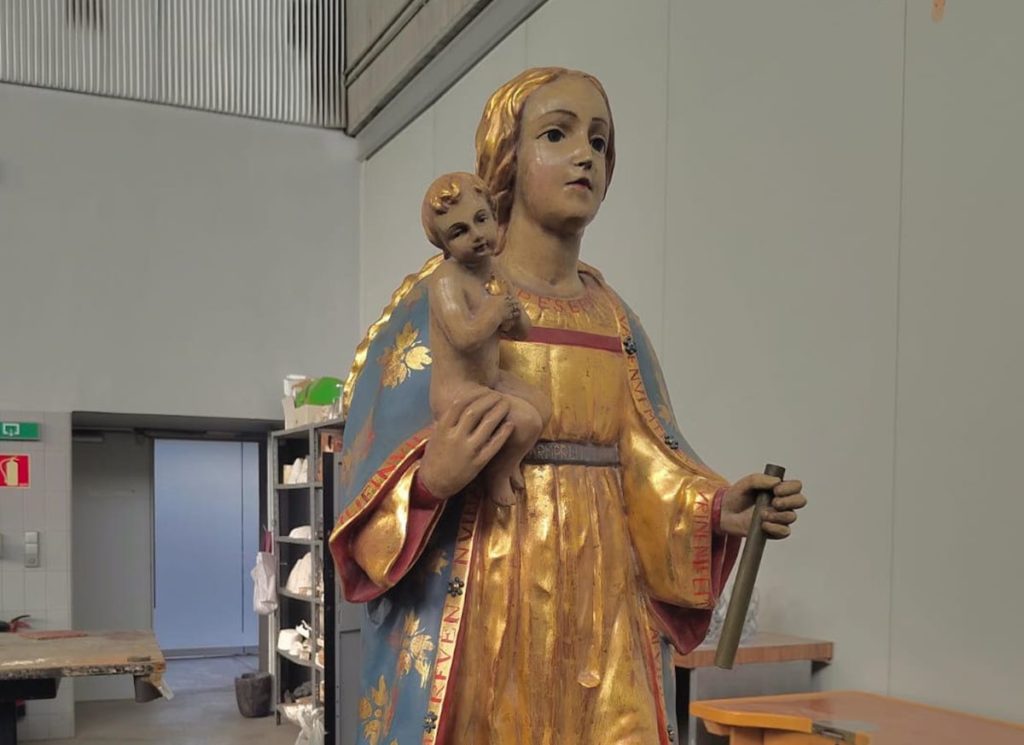
Canary Islands to Unveil Historical Replica of Lost Virgin of Candelaria Statue
A faithful replica of the original Virgin of Candelaria statue, lost in an 1826 storm, will be unveiled in the Canary Islands on November 9 following a collaborative research project blending historical iconography with modern 3D printing.
The Canary Islands are reaching a significant milestone in preserving their history with the recreation of the original Virgin of Candelaria statue. According to local reports, the piece will be unveiled to the public on November 9. This project, led by the Candelaria City Council and the University of La Laguna, aims to bring back the physical likeness of an image that was lost during a catastrophic natural disaster in 1826.
The project stands out for its blend of academic research and modern technology. Directed by Professor Itahisa Pérez Conesa and executed by Alejandro Hernández Pérez, the team created a faithful replica based on detailed historical studies. By using topographic maps derived from the iconography of José Rodríguez de la Oliva, they modeled the statue’s dimensions and printed them using polylactic acid. This modern base was then finished using 16th-century artisanal techniques—including stucco, 22-karat gold leaf, and oil paint—to recreate the appearance of the sculpture that served as a central symbol of the archipelago for centuries.
This reconstruction marks the bicentenary of a tragedy that shaped the island's history. In November 1826, a massive storm destroyed the Dominican chapel, sweeping the original statue out to sea. The disaster also claimed 261 lives and caused widespread destruction across Tenerife. Following the loss of the original, the community venerated an oil painting until the current statue by Fernando Estévez was blessed in 1830.
The project has been validated by experts from the Institute of Canarian Studies and supported by the University of Burgos, which published the team's research in the journal Sarmental. Municipal authorities emphasize that this replica is not intended to replace the current Estévez statue or change existing religious practices. Instead, the goal is purely educational: to provide a tangible way for the public to connect with a symbol that remains a pillar of Canarian culture. The piece, which cost 4,300 euros to produce, will be a highlight of the municipality’s upcoming commemorative exhibition in November.