
Canary Islands Students Pioneer AI Irrigation for Resource Management
Canary Islands vocational students have developed an award-winning AI-powered smart farming device, Naira, to enhance irrigation efficiency and promote sustainable agriculture amidst the region's resource challenges.
The Canary Islands face a tough challenge: balancing a booming tourism industry with limited resources like water and land. Now, an exciting new project in sustainable farming is emerging there. Vocational Training students have created a smart farming device that uses artificial intelligence (AI) to make irrigation much more efficient. Their goal is to revolutionize how water is managed in agriculture.
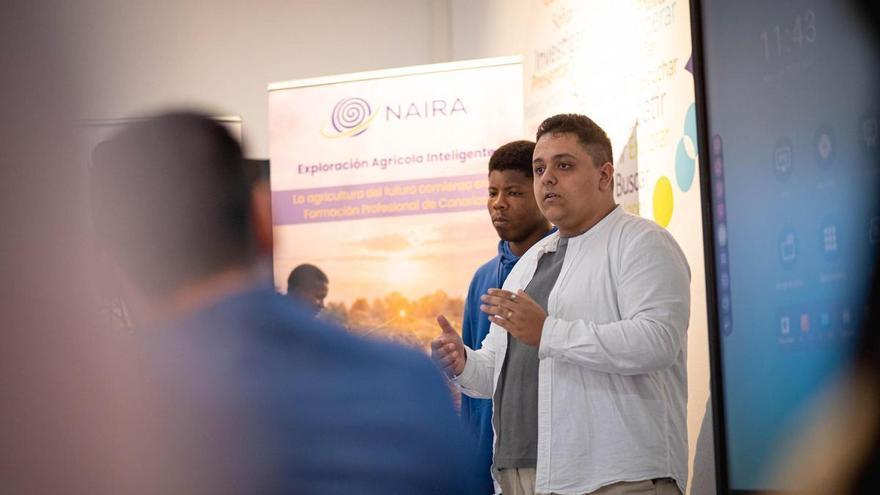
This project, called Naira, began because students at IES San Marcos in Icod de los Vinos were worried. They saw how tourism was affecting natural resources and making the islands less self-sufficient in food. Naira aims to help farmers produce food more efficiently and sustainably. Carlos De Arriba, who coordinates the project, stressed how important it is to bring AI technology to rural areas to solve today's problems.
Naira brings together Vocational Training students from all levels – from basic to advanced – across four different schools: IES San Marcos, IES Sobradillo, IES Teguise, and IES La Guancha. They're also working with experts from the Institute of Agrarian Research and the University of La Laguna (ULL), which adds a strong scientific and technical side to the project. Tasks are divided based on skill level: advanced students manage the overall setup, while basic students focus on practical elements like connections and sensors.
In June, a key step will be taken to test the system. The equipment developed in the classrooms will be sent to Senegal to collect data, which will then be analyzed. Ultimately, the project aims to share this valuable information with companies looking to use water more efficiently, as water is a crucial resource.
The CaixaBank Dualiza Foundation has recognized the importance of this work, naming it one of two award-winning projects from Tenerife and one of the 38 most creative initiatives in Spain. Santiago García, director of IES San Marcos, praised the talent and innovation coming from local schools. Student Ancor González called the experience enriching, noting how much he learned and the skills he gained for his future career. Teachers involved in the project highlighted the students' dedication, often working extra hours outside of school, even when motivation naturally varied. Juan Ramón Rodríguez, Director General of Agriculture, commended the educational community for creating practical, technology-driven solutions that benefit the environment.