
Canary Islands Sport Industry Contributes €2.586 Billion, 4.45% of GDP
A groundbreaking study reveals the Canary Islands' sports industry directly contributes €2.586 billion annually, representing 4.45% of the region's GDP in 2024.
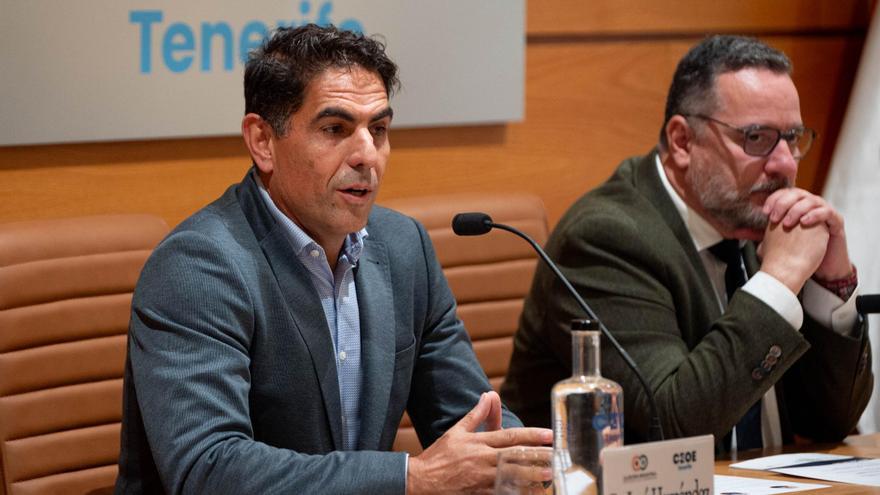
The sports industry in the Canary Islands is a major economic player, directly contributing €2.586 billion annually. This represents 4.45% of the region's total economic output (GDP) in 2024. These figures come from a new study, the first of its kind for the islands, presented this Tuesday by the Canary Islands Sports Industry Cluster (Cideca). The report was funded by the Canary Islands Government's Ministry of Education, Vocational Training, Physical Activity and Sports, and conducted by KPMG. Its findings were revealed at an event held at the CEOE Tenerife headquarters.
Cideca president José Hernández led the presentation, which was attended by key regional figures. These included Poli Suárez, the Minister of Education, Vocational Training, Physical Activity and Sports, and Ángel Sabroso, the Deputy Minister of Physical Activity and Sports, along with other government officials and business representatives.
The €2.586 billion direct contribution, making up 4.45% of the Canary Islands' GDP, shows that sport is a crucial economic engine for the islands. This level of impact is higher than that reported by many other Spanish regions. A significant portion, 76% (€1.962 billion), comes from the private sector.
Looking at the bigger picture, the total impact of the sports industry in 2024 reached €5.742 billion. This includes the direct impact (€2.586 billion), plus indirect effects (€2.155 billion) and induced effects (€1.001 billion). This sector also creates a lot of jobs. It directly provides 28,667 full-time positions, with another 16,789 indirect jobs and 20,965 induced jobs, totaling 66,421 jobs. This means for every €1 million added to the GDP, 10 direct jobs are created.
The study also broke down where this direct economic impact comes from. Accommodation makes up the largest share at 28.2%. Other key areas include:
- Elite clubs, federated sports, and sports corporations: 12%
- Retail (commerce): 10.9%
- Hospitality (restaurants, bars): 9.9%
- Public sector: 8.5%
- Sports betting: 6.7%
- Sport/fitness activities: 6.2%
- Education: 3.8%
- Technology/media: 3.5%
- Sports tourism: 3.1% Smaller contributions come from transport, physiotherapy and rehabilitation, sports equipment, self-employed workers, and video games/eSports (specifically those linked to physical activity).
The sports sector in the Canary Islands is growing. It covers 54 different types of economic activities and includes 2,600 companies. This makes the Canary Islands the fifth-largest Spanish region for sports-related businesses, holding 6% of the national total. The sector saw a 7.2% growth in 2024, the second-highest in Spain after Andalusia. These sports companies make up 1.8% of all businesses in the Canary Islands, which is one of the highest proportions in Spain.
Poli Suárez, the Minister of Education, Vocational Training, Physical Activity and Sports for the Canary Islands Government, emphasized that "for the first time, the Canary Islands has rigorous and comparable data that supports sport as a full-fledged industry, with a real capacity to attract private investment, generate quality employment, and diversify the economy." He also noted that this study was "the first major commission undertaken by the Cluster since its creation last March, and it represents an excellent way to demonstrate that its establishment was necessary."
Suárez added that the report will help guide future decisions and boost sport's role in the regional economy. He stated, "Having this information enables us to better plan infrastructure, design evidence-based public policies, and strengthen collaboration between administrations and businesses. Furthermore, it opens the door for us to attract new sponsorships and private investment to continue positioning the Canary Islands as a benchmark in the sports industry, a sector that is growing in volume, professionalization, and innovation."
Cideca president, José Hernández, highlighted the importance of the study, saying, "what is not known is not valued, and what is not valued is not promoted." He explained that understanding the sports industry's impact was a key goal for the new Cluster. After six months of work, the data now clearly shows that "the ecosystem supporting physical activity and sport, both public but mainly private, generates sufficient economy and employment to consolidate itself as a strategic engine of the Islands' economy."
The report also looked at sports habits among the population. It found that 52% of people in the Canary Islands engage in physical activity weekly, which is on par with the national average. Specifically, 22.8% exercise daily, 33.5% occasionally, and 40.8% do not participate in physical activity – figures similar to those across Spain. The islands also boast a strong sports infrastructure, with 211,671 registered athletes and 61 sports federations.