
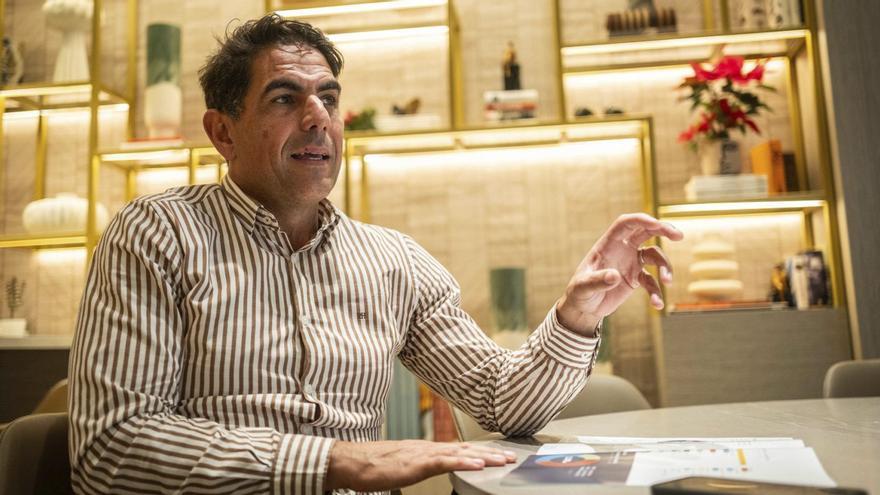
Canary Islands Sport Calls for Tax Incentives, IGIC Exemption
The Canary Islands' sports sector, led by executive secretary Carmen Sosa, advocates for significant tax incentives and zero-rated IGIC to boost its growth, professionalization, and private investment, aiming to close a 15-year development gap with regions like Catalonia.
I believe we're making good progress. We've already brought together nearly 400 companies, organizations, and self-employed individuals from various sectors, which is a great achievement. We're steadily moving forward to ensure our growth and operations, all under the leadership of executive secretary Carmen Sosa.
Sport is no longer seen as unimportant by public administrations, from local councils to the government. It has gained recognition, and budgets have grown. However, we believe funding needs to keep increasing, especially given how much the sports sector contributes in taxes.
I recognize that the Canary Islands' public and private sports sector isn't as developed as Catalonia's; they might be about 15 years ahead. Improving sport doesn't necessarily mean needing a dedicated Department of Sport. Creating the Vice-Ministry of Physical Activity and Sport was a significant step. The key is to equip public administrations with the right staff and sufficient budgets.
If I could ask for one thing, it would be for sport to receive the same tax incentives that culture currently enjoys, both nationally and regionally. These incentives allow companies and self-employed individuals to use part of their Reserve for Investments in the Canary Islands (RIC) to support cultural projects. It would be vital for similar support to extend to sport.
These tax incentives would be incredibly important. They would bring about real change, helping grassroots sports improve, especially since many clubs and federations are currently just barely getting by. Public funding alone cannot solve all their problems.
My second request would be for the Canary Islands General Indirect Tax (IGIC) on sports to be zero-rated, just like healthcare services. This would not only encourage exercise but also makes sense. We tax sugary drinks, tobacco, and alcohol, but we shouldn't tax exercise, as it actually lowers healthcare and pharmaceutical costs.
While the return on investment might drop from 3.4 euros to around 2.5 euros for every euro spent, it would also boost the industry, creating new companies and jobs.
With tax incentives, using culture as an example again, there are two main players: the financier and the producer (which would be the club in sport). It's up to politicians to decide where these incentives go – to elite clubs, grassroots clubs, inclusive clubs, or all of them. That's a political choice.
Within the Cluster, I represent all sectors, so I support both grassroots federated sport and elite sport. Elite sport inspires children who are just starting out, and it's important to encourage these young people.
What I can say for sure is that both grassroots and elite sports are currently at a disadvantage compared to culture. As a businessman, I invest in culture because of the tax incentives, but I'd rather invest in sport. I'm certain many other investors feel the same, especially for sports in their own region. We need to focus on this before relying solely on public funding for clubs' sustainability. While governments should supervise and promote, they shouldn't own clubs.
There isn't an overall ranking because each sector calculates its own GDP, but I'm confident sport would rank highly. For instance, the direct impact of the tobacco industry is 0.33, while tourism is nearly 40. Other strong sectors include construction and audiovisual.
Considering the Canary Islands' GDP and population, sport contributes about 1,200 euros per person, similar to Madrid, where sport accounts for 3% of GDP. These are good numbers. However, the main weakness in our sports system lies in grassroots and federated sport. While administrations put a lot of effort into building facilities, there are ultimately more clubs than available spaces. And professionalization is another issue; outside of elite teams, most clubs depend on volunteers. This needs to change through professionalization, securing sponsorships, and gradually increasing public contributions. Most importantly, we need to attract more resources from the private sector, which is far more adaptable than the public sector.
While not terrible, employment in sport could certainly be better. Federated and professional sports are important, but we know they often depend on volunteers or unstable job contracts. This is a tough problem to fix quickly, but we have to try.
I don't believe clubs are intentionally avoiding professionalization; rather, they would love to become more professional. I don't think anyone is running a self-serving operation; grassroots sport simply does its best with what it has. I doubt any specific club would be uninterested in professionalizing. I understand that everyone increasingly wants quality, trained coaches, and administrative staff for management.
Just like other sectors, professionalizing sports clubs and federations would increase their budgets. However, this must be matched by a significant increase in funding. The path is clear, but it won't happen overnight.
Sports tourism brings in 14% of all tourists to the Canary Islands – that's about three million people whose main reason for visiting is sport. Currently, we don't have capacity issues with sports tourism itself, but rather with accommodation. The Canary Islands offer an ideal outdoor setting for many types of sporting events. I don't think sports tourism is anywhere near saturation; it still has significant potential for growth.
Let me give an example. For Canary Island companies focused on ecotourism, water sports, cycling, and similar activities, almost all tourist spending stays within the region. With a major sporting event, the benefits might be more about promoting the Canary Islands as a healthy and sustainable brand. I don't think one is better than the other; I believe both have their value and should be promoted equally.
It won't have a negative impact, but we also won't get to enjoy its positive effects. Any major event coming to the Canary Islands, especially one with international prestige and image reach, is beneficial. The key is to host these events while respecting the environment and sustainability, and always considering the local economy. For instance, if the Vuelta a España (Tour of Spain) came here, we'd need to think about the state of cycling in the Canary Islands, how many clubs exist, and so on. That's why I believe public policies promoting such events must also consider the lasting legacy they leave in the region. I hope it happens soon.
It's not just a passing trend. Sport is a growing reality, not a fad, but a habit for many, whether for nutrition or exercise. In the Canary Islands, over a million people are physically active, but only 20% participate in organized, federated sports. That leaves 800,000 Canarians who don't, and this is where the private sector sees opportunities, offering what people want. This includes sports centers of all sizes, not just large ones; there's also a rise in smaller centers. Another positive trend is health professionals working with specific groups. Many new market niches are appearing because sport is a societal need, not just a temporary craze.
Any period of rapid growth can bring challenges. We've seen this with popular trends like trail running, CrossFit, and now Hyrox. But these are welcome challenges, because it's far worse for people to be inactive.
No, that's a real problem. The Gasol Foundation's National Plan against Childhood Obesity found that over 50% of families with overweight children don't realize it. If we don't acknowledge the issue, we can't fix it. That's why we need to not only promote activity but also educate people to tackle this problem at its core.
However, we can lead the way in finding a solution. Childhood obesity is a complex problem that requires complex, multi-faceted solutions. That's why I believe we need to collaborate closely with universities to address every angle. Public administrations have limited resources, so forming partnerships between the public and private sectors is essential.
Being a great cook doesn't automatically make you a great restaurant owner. Similarly, being a good athlete doesn't necessarily make you a good sports manager. However, if a talented cook also becomes a skilled entrepreneur, they can create an excellent restaurant. And if an athlete receives the right training to become a good sports manager, they'll have a fantastic understanding of the sport because they've lived it. So, a political sports manager doesn't have to be a former athlete, which was common 30 years ago. Nowadays, political parties naturally appoint more prepared and trained individuals to lead sports initiatives. What's important is that they are an influential politician.