
Canary Islands Self-Employed Demand Tax Reform
Self-employed workers in Santa Cruz de Tenerife protested against complex tax and administrative rules, demanding fairer contributions and VAT/IGIC exemption for those earning under €85,000, ahead of wider national demonstrations.
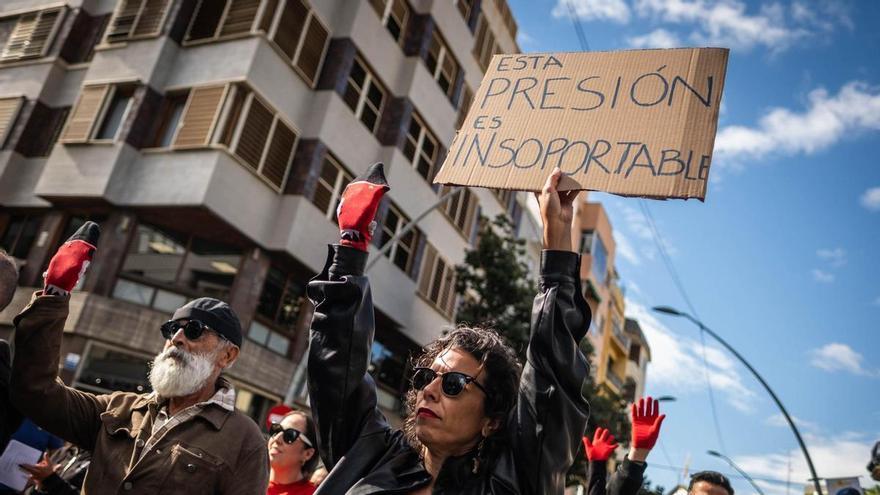
Self-employed workers are increasingly frustrated with the tax and administrative rules they have to follow. This frustration was clear on Monday in Santa Cruz de Tenerife, where about fifty professionals gathered to voice their concerns. The protest, organized by the 'Platform for the Dignity of the Self-Employed 30N', highlights the growing pressure on these workers, who their representatives say are vital to Spain's economy. According to the EFE news agency, the demonstrators are asking for clearer laws, a tax system that better matches their actual earnings, and an exemption from VAT (Value Added Tax) and IGIC (Canary Islands General Indirect Tax) for those earning less than 85,000 euros a year.
The demands from self-employed workers in the Canary Islands reflect a common worry about unstable rules and administrative decisions. They feel these create constant uncertainty in their daily lives. Mijaíl Morales, a spokesperson for the group in the Canary Islands, stressed the need for a predictable and stable work environment. The platform also insists that social security contributions should be calculated based on current earnings, not those from the previous year. This change aims to better match their tax payments with their actual income, which is particularly important during times of economic change.
Their request for VAT and IGIC exemption for annual incomes up to 85,000 euros is supported by EU rules. These rules allow and even recommend member states to use this limit to simplify administrative tasks for small businesses. The self-employed complain that despite being a crucial part of the economy, their contribution isn't properly recognized. They feel this leads to taxes they consider disproportionately high and excessive bureaucracy, which makes it difficult to access aid or complete necessary procedures. For many, attending the protest itself meant temporarily closing their businesses and losing income.
The gathering in Tenerife is part of a larger national protest planned for March 2, with demonstrations expected in nearly forty Spanish cities. This action continues a movement that began on November 30 and aims to draw attention to the struggles faced by small businesses and local economies. Across the Canary Islands, in addition to Tenerife's capital, protests are also expected in Gran Canaria, Lanzarote, Fuerteventura, and La Graciosa, showing how widespread these demands are among the self-employed.