
Canary Islands See Colder, Much Wetter December
The Canary Islands experienced a significantly colder and 133% wetter December than usual, with an average temperature of 15.7°C and widespread rain, hail, and snow brought by storms.
December in the Canary Islands was colder and much wetter than usual, according to Spain's State Meteorological Agency (Aemet). The average temperature across the islands was 15.7 degrees Celsius, which is 0.7 degrees lower than what's normally expected for December.
Rain was a big story too. The islands received an average of 75.3 liters of rain per square meter. This is 133% more than the typical amount for December, making it a much wetter end to the year.
Aemet's data shows that temperatures stayed below average for most of December. The only exceptions were December 7th, 8th, and 9th, when it was slightly warmer than usual.
The start of December saw high pressure, bringing northerly winds to the Canary Islands. This kept the weather cool and stable until the 6th, with steady temperatures and no major weather problems.
From the 7th to the 9th, the Atlantic high-pressure system moved north of the Canary Islands. This changed the wind direction to east-southeast, causing a slight rise in temperatures. It also brought haze and less humidity, particularly in lower and city areas.
This warmer spell was short-lived, quickly followed by another drop in temperatures as weather fronts moved in.
On December 10th, temperatures dropped across the islands due to a weather front linked to Storm Bram and a trough of low pressure east of the Canaries.
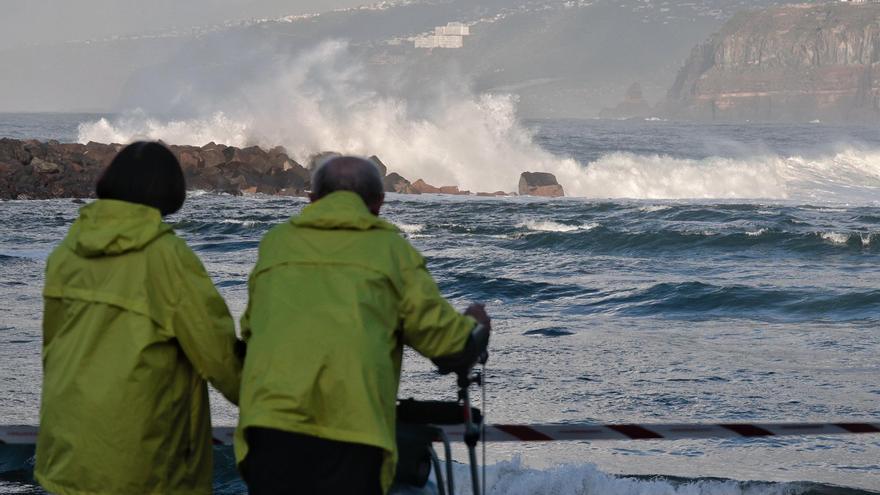
The weather got much worse on the 12th and 13th with the arrival of Storm Emilia, which hit all the islands. It brought continuous, widespread rain, stormy downpours, hail, and even snow on the peaks of La Palma, Tenerife, and Gran Canaria. Strong winds also made it feel even colder.
This cold snap, lasting from the 11th to the 14th, saw the biggest temperature drop of the month. On the 13th, temperatures were as much as 4.4 degrees below average, marking one of the coldest December values ever recorded.
From the 15th, high pressure returned to the Canary Islands, bringing strong northerly winds. While the weather became more stable and less rainy, temperatures stayed slightly below normal for the rest of the month, with little change.
December ended with another shift in the weather. As Storm Francis approached from the 30th, it brought westerly winds that caused a slight temperature increase. This meant temperatures were back to around the seasonal average on the 31st, making for a milder end to December.