
Canary Islands See 150% Rise in Murder Attempts Amid Drug Violence
The Canary Islands experienced a sharp rise in serious crime in 2025, with 25 murders and 41 attempted murders—a 150% increase—largely driven by professionalized drug trafficking, organized gang violence, and other brutal incidents.
The Canary Islands in 2025 have seen a sharp rise in serious crime, particularly drug trafficking and related violence. Murders, beatings, kidnappings, and shootings have become more common, reflecting a growing professionalization of criminal activity. Official figures up to September show a worrying trend: 25 people were killed and 41 others survived murder attempts – a 150% increase compared to the same period in 2024.
Beyond the numbers, authorities are deeply concerned about the increasing brutality. Many of these killings are not random acts but carefully planned attacks by organized gangs. These groups often seek revenge or are hired to commit murders, acting with chilling precision. While there have also been "ordinary" crimes – such as a roommate killing another during an argument, a drug addict murdering a neighbor, a bar fight ending in a stabbing, or a son killing his mother over "witchcraft" – the rise of organized crime is particularly alarming. Despite the challenges, police have largely managed to solve these cases; all but one – the discovery of a tied-up body under the Silva bridge – have led to arrests and imprisonment.
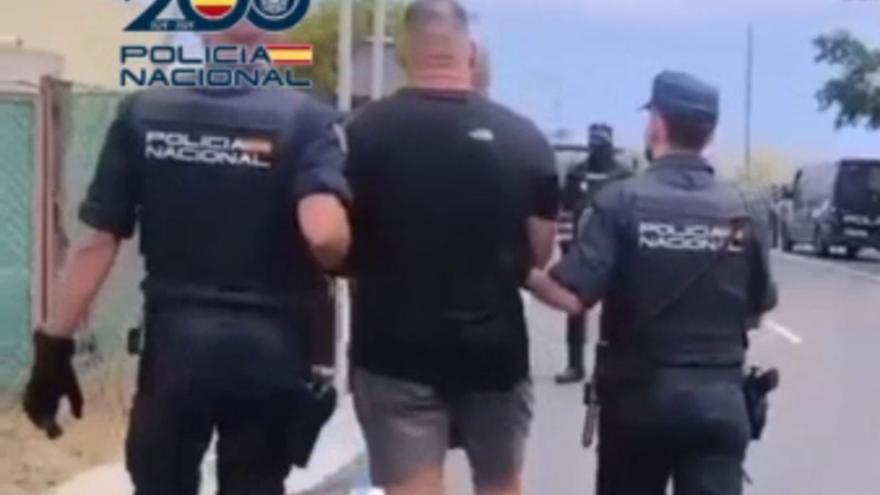
The growing criminal underworld began to show its true face in March. A woman and her 19-year-old son were kidnapped in the south of Gran Canaria. This incident brought José A., known as "el del Buque" (the Ship's Man), into the public eye, though he was already known to the police. The kidnapping was reportedly an act of revenge against him for allegedly stealing 500 kilograms of cocaine. After two days, his relatives were released unharmed, reportedly following a payment of 300,000 euros in cryptocurrency. Five people were arrested, and "el del Buque" himself surrendered to the police in September, leading to the arrest of 16 more members of his network.
The presence of criminal organizations continued to be felt. In June, in Telde, Josué D., known as "el Conejero" (the Rabbit Man), was shot five times at close range on the street. Investigators initially suspected a drug-related settling of scores. By November, all four Colombian hitmen hired for the crime had been arrested. However, the arrest of the last suspect brought a surprising twist: it suggested the hitmen might have made a mistake and killed the wrong person. The identity of who ordered the murder remains one of the year's biggest mysteries.
Revenge for a drug theft was also the motive behind the murder of Alberto González. This case involved a group known as the Añaza gang. On July 30, Moisés Baute, a kickboxing fighter, and Jonathan Martín, a nightclub bouncer, arrived at a police station in Santa Cruz de Tenerife with Alberto González's body and another seriously injured young man, known as "León" (Lion). Both men claimed responsibility and were arrested. However, the National Police Homicide Unit quickly linked the case to the gang led by Aarón Vargas. It was revealed that a member of this group had set a trap for the victims, kidnapped them, and first took them to Güímar for beatings, before moving them to a squatted house in Santa María del Mar, where Alberto was beaten to death on July 29.
Drugs were also behind the kidnapping and brutal beating of a man in Gran Canaria on November 19. Jonay S., an MMA fighter known as "Caracol" (Snail), and his friend Antonio M., "Antony," forcibly held the individual. They were seeking to recover a 100,000 euro debt related to a drug stash seized in the southwest of the Island in 2023. The victim required emergency surgery.
The Canary Islands have become a crucial strategic hub on the global drug trafficking map. The Balkan cartel, notorious for cocaine dealing, is establishing itself in the Islands to control the flow of "white lady" – cocaine. The Albanian mafia, responsible for 80% of cocaine shipments from South America to Europe, uses the Archipelago's prime location as a storage point and a source of labor. This increased presence of cocaine directly correlates with a rise in violence.
Police are closely monitoring these groups, and 2025 has seen significant drug busts. A key objective is to cripple these organizations financially. Operation Black Shadow led to 48 arrests and the seizure of four tons of cocaine. Another operation, Traba, removed 4,000 kilograms of drugs from the market and resulted in the arrest of nine crew members near the Canary Islands.
Authorities aren't just targeting cocaine. Between October 2024 and January 2025, the National Police shut down around 112 illegal cannabis clubs in southern Tenerife. Lebanese businessman Mohamed Derbah was found to control several of these establishments. On April 30, Internal Affairs arrested nine people connected to Derbah's activities, including three police officers. One of them was the already retired Chief Inspector Francisco Moar, former head of the Judicial Police in Tenerife province and an investigator in the "Mediator" case. He was the only one released without facing a judge, though 145 grams of cocaine were found at his home in Galicia. Derbah himself was caught the next day at a traffic checkpoint. A controversial meeting between Derbah and Gustavo Matos, a PSOE deputy in the Canary Islands Parliament, also came to light, with Matos allegedly praising Derbah and offering to make calls on his behalf.
A major blow to drug trafficking in Tenerife came on September 10 with the dismantling of Clénder Chinea's organization. An operation by the Civil Guard and Customs Surveillance led to 34 arrests, with 18 individuals imprisoned. Chinea had established connections with businessmen to buy cocaine from Latin America or hashish from Morocco, and with ship captains to transport the drugs. His gang also included specialists in beatings, extortion, and weapons.
Beyond drug-related and revenge crimes, the year also saw several murders stemming from fights. On January 27, Hakim, a 38-year-old Senegalese man, fatally stabbed a 30-year-old Gambian man in the neck in La Laguna. On February 19, a drug-addicted man stabbed his neighbor, who was the mother-in-law of the mayor of La Aldea de San Nicolás. During Carnival Tuesday in Santa Cruz de Tenerife on March 4, a 19-year-old from Gran Canaria punched Isaac Trujillo, a nightclub bouncer from Lanzarote, who then died from a head injury after falling. Francisco Rosales was beaten in Puerto de la Cruz on March 16; he died two days later in the hospital. Police arrested a 35-year-old man for the assault a month and a half later. Two days before that, a bar fight in the capital of Gran Canaria ended with one woman stabbing another. On March 20, a 47-year-old man from Valle Gran Rey died from multiple stab wounds in Puerto de Vueltas, leading to the arrest of a Cuban man. On April 24, a 34-year-old Dutch man killed his father by stabbing and hitting him with stones on the coast of San Miguel. A week later, a man suffocated his roommate to death in Las Palmas de Gran Canaria. In June, a granddaughter killed her grandfather in Firgas, and a waiter stabbed a homeless man in Playa del Inglés. In August, a woman set fire to the van a man lived in, burning him to death in Ojos de Garza.
Other tragic murders included a man killing his mother on September 8, claiming she was "practicing witchcraft" on him. The next day, September 9, journalist and disability rights activist Eugenia Paiz killed her autistic daughter, Rebeca. The mother, who attempted suicide, forced her daughter to inhale gas until she died.
The year also saw a high number of aquatic accidents, with 67 people dying, according to the "Canarias 1500 kilómetros de Costa" association. The most severe incident occurred on December 7 in Los Gigantes, where four tourists died and another remains missing after a wave swept them into the natural pool of Isla Cangrejo.