
Canary Islands Ring Road Budget Jumps €21.5M for Green, Safety Upgrades
The Canary Islands Government has approved an additional 21.5 million euros for the Santiago del Teide-El Tanque section of the Insular Ring Road, now totaling over 302.6 million euros, to fund environmental upgrades, energy efficiency, and safety improvements in the Erjos tunnel.
The Canary Islands Government's Public Works Ministry is adding nearly 21.5 million euros to the budget for the Insular Ring Road section between Santiago del Teide and El Tanque. This increase comes after approving a second change to the project plans. The extra funds will pay for environmental upgrades, better energy efficiency, and improved safety in the Erjos tunnel.
This 8.9% budget increase aims to reduce greenhouse gas emissions, lessen reliance on fossil fuels, and update safety systems in the Erjos tunnel, all in line with the Canary Islands' Climate Change and Energy Transition Law.
With this additional 21.5 million euros, the project's total cost now exceeds 302.6 million euros. This is 61.1 million euros more than the original 241.5 million euro contract. This figure includes price adjustments made since work began in November 2019: 3.7 million in 2022, 15 million in 2023, and 7.2 million in 2024. Additionally, the Canary Islands Government paid 13.7 million euros in compensation to the main contractor, UTE OHL, due to a court order.
The second amendment introduces several new sustainability features. One key change is building a 500-kilowatt solar power plant above the southern entrance's false tunnel. This plant is expected to meet about 55% of the tunnel's energy needs during normal operation, cutting down on fossil fuel use and promoting more efficient, sustainable infrastructure management.
Another change involves switching from traditional formwork lining to sprayed lining inside the tunnel. This method better handles uneven drilling and uses less concrete. It's estimated this change will prevent about 32,000 tons of CO2 from being released into the atmosphere.
Furthermore, the tunnel's safety systems have been upgraded, incorporating the newest technology for ventilation, lighting, communication, and control.
Pablo Rodríguez, the Minister for Public Works, Housing, and Mobility, stated that "we are advancing with one of the most strategic infrastructures for mobility in Tenerife. This project will link the island's northern and southern corridors via the west, easing traffic jams currently seen on the TF-5 towards Santa Cruz de Tenerife." He believes the new road will boost the economy and improve life for both residents and tourists.
The El Tanque-Santiago del Teide section will connect the TF-1 and TF-5 motorways through the western part of the island. This will link up with completed sections: Adeje to Santiago del Teide in the south, and Icod de Los Vinos to El Tanque on the eastern side of the island. However, the final part of the island's ring road, connecting Icod de los Vinos and Los Realejos, still needs to be planned and built.
The current road construction features a standard design with one lane in each direction, allowing for speeds of up to 80 kilometers per hour. The route is 11.3 kilometers long, with half of it passing through tunnels or covered sections, where the road will have two lanes in each direction.
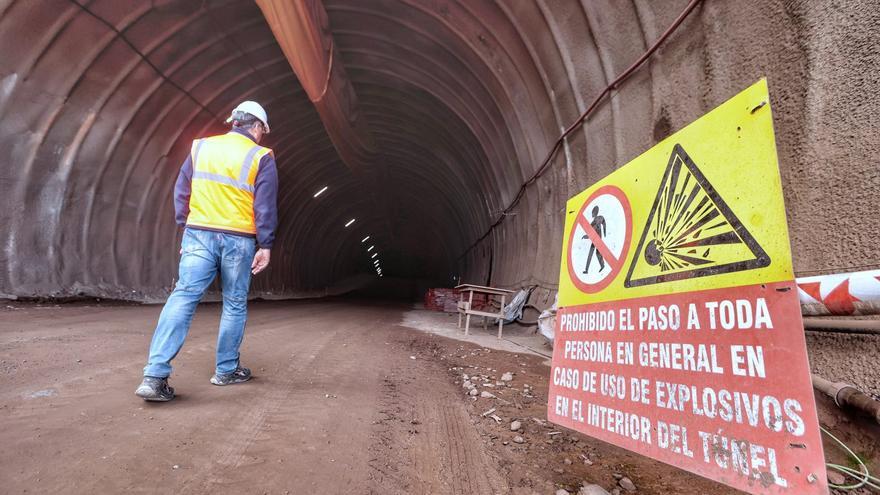
The standout feature is the 5.1-kilometer-long Erjos tunnel. This tunnel will go around Teno Rural Park and the town of Erjos, protecting this environmentally important area. It exits in the Valley of Santiago del Teide, where the road then skirts the town to link up with the Adeje-Santiago del Teide section.
The Santiago del Teide-El Tanque section of the Insular Ring Road is expected to be finished and open in the first quarter of next year. The original contract, signed on November 14, 2019, set a 48-month deadline for the work.