
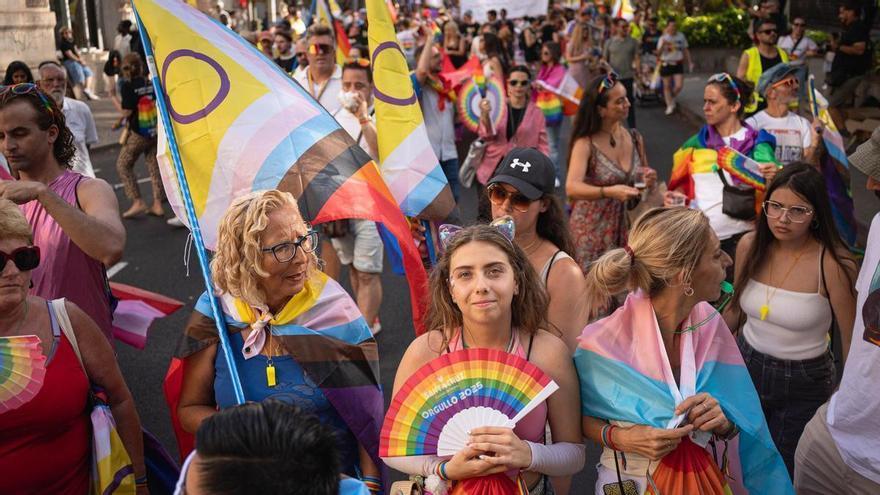
Canary Islands Report Surge in Anti-LGTBIQ+ Violence Amid Rising Political Polarization
The Canary Islands are experiencing a surge in anti-LGTBIQ+ violence and hostility, prompting local officials and activists to call for stronger institutional protections against rising political polarization.
The Canary Islands are facing a troubling paradox: as the rights of the LGTBIQ+ community gain more institutional recognition, there has been a corresponding rise in hostility and physical violence.
Sergio Siverio, secretary of the association Diversas Canarias, highlighted this critical situation on Friday while presenting the "Asterisco" project. The findings, part of a broader State of Hate 2026 report by the FELGTBI+ and the CSIC, suggest a direct link between increased public visibility for sexual diversity and a more aggressive backlash from far-right groups.
This tension is no longer just theoretical. Recent incidents, such as the controversy surrounding the display of an asexual flag at the La Laguna City Council, have sparked public campaigns aimed at stigmatizing diversity advocates and delegitimizing their work.
Patricia León, the Island Director of Equality and Diversity for the Cabildo de Tenerife, agrees that political ambiguity in the face of hate speech is not enough. She argues that institutions must protect fundamental rights regardless of shifting political climates. In response, the Cabildo has launched a new strategic framework designed to institutionalize protections for the LGTBIQA+ community and ensure that civil rights remain secure.
These concerns extend far beyond the Canary Islands. They raise a broader question about how society can protect minorities in an era of intense polarization, where identity is increasingly used as a tool for political conflict. Ultimately, both activists and local officials are calling for a firm, consistent stance against discrimination to ensure that equality is protected, regardless of the political landscape.