
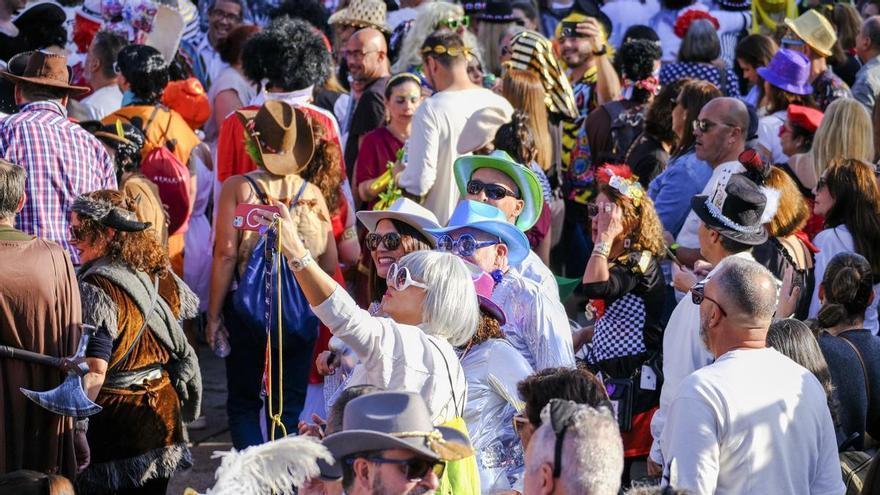
Canary Islands PP Proposes Cultural Asset Status for Major Festivals
The Popular Party in the Canary Islands Parliament has proposed recognizing the carnivals of Santa Cruz de Tenerife and Las Palmas de Gran Canaria, plus Los Indianos in Santa Cruz de La Palma, as 'Assets of Cultural Interest' (BIC) for their intangible value.
Efforts to protect the Canary Islands' important cultural traditions are getting a fresh push in the regional Parliament. The Popular Party has put forward a proposal to officially recognize three of the islands' most famous festivals as 'Assets of Cultural Interest' (BIC) for their intangible value. These are the carnivals of Santa Cruz de Tenerife and Las Palmas de Gran Canaria, plus the Los Indianos celebration in Santa Cruz de La Palma. MP Carlos Ester explained that this move aims to officially recognize and protect these traditions.
During his presentation, the MP stressed the importance of preserving the islands' unique culture, noting how these festivals are known across Spain and Europe. The Popular Party's proposal suggests a unique recognition for each event, taking into account its own history and social importance. This is allowed by the Canary Islands' Statute of Autonomy, which permits declaring intangible traditions like social customs, rituals, or festivals as BICs.
For the Las Palmas de Gran Canaria Carnival, it was highlighted how it has grown into one of Spain's biggest festivals. It was named a Festival of National Tourist Interest in 2017 and an International Tourist Interest in 2023. This year's carnival is expected to bring in almost 40 million euros for the economy and generate over 80 million euros in media coverage, showing its role as an economic boost and a platform for creative talent. The Drag Queen Gala, in particular, was praised as a symbol of tolerance, equality, and free expression.
For the Santa Cruz de Tenerife Carnival, it was noted that this carnival is world-famous. It mixes grand shows with huge public involvement, with more than a hundred groups taking part each year in events like the Queen's Gala or the Coso Apoteosis, which are deeply ingrained in people's minds. However, MP Ester clarified that the Popular Party's initiative fits with work already started by the Santa Cruz de Tenerife City Council. The council has agreed to collaborate with the University of La Laguna to create a university department to study and protect the carnival as an intangible heritage. To avoid doing the same work twice and to ensure efforts are coordinated, the Popular Party announced it would accept a change suggested by the Canarian Coalition party, which will adapt the proposal to fit with this local council's work. They understand that the university department adds to the BIC status from a scientific and educational point of view, rather than replacing it.
The proposal also includes the Los Indianos celebration in Santa Cruz de La Palma, which is called one of Spain's most unique festivals. It celebrates the return of Canarian emigrants from the Americas. With over 80,000 attendees at its last event, this festival makes the population of Santa Cruz de La Palma swell. It creates a distinct cultural image, known for its talcum powder, Caribbean music, and humor, blending memories of migration with local identity.
The Popular Party MP argued that the BIC declaration would not just be a symbolic gesture, but a legal tool with real benefits. He listed these as: official recognition of their historical, cultural, and ethnographic importance; a duty to preserve them, stopping essential parts from being removed; better access to public and private funding and support; more cultural and tourist promotion; and strengthening the public interest in the festivals, which could help resolve administrative or legal disputes. Ester clarified that the BIC status would not stop the festivals from naturally changing or adding new elements, but it would prevent the removal of core parts that are already recognized as essential to them.
It was also stressed that the declaration would not cancel out existing rules, like those about noise or the right to rest. Instead, it would add a balancing factor, recognizing the Carnival as a general cultural and economic asset. The MP said the measure should rise "above political disagreements," calling for cooperation between government bodies, carnival groups, and the public to preserve a tradition that is a way of life for thousands.
The proposal will be discussed in the next full parliamentary session. This comes at a time when there are different opinions on how much the government should get involved in cultural events that blend tradition, popular creativity, and economic benefits. With this proposal, the Popular Party aims, in Ester's words, to "nurture our roots so they can reach future generations," while also starting a discussion about how to protect these key Canarian traditions without changing their participatory spirit.