
Canary Islands Ombudsman Warns of Systemic Public Service Collapse in 2025 Report
The Canary Islands Ombudsman’s 2025 annual report warns that systemic administrative exhaustion, severe healthcare staffing shortages, and inadequate social protections are threatening the region's social stability.
The Canary Islands Ombudsman (Diputación del Común) has presented its 2025 annual report to the regional Parliament, revealing a breakdown in essential public services. Head of the institution, Dolores Padrón, warns that the regional system is suffering from "administrative exhaustion," which is threatening social stability across the islands.
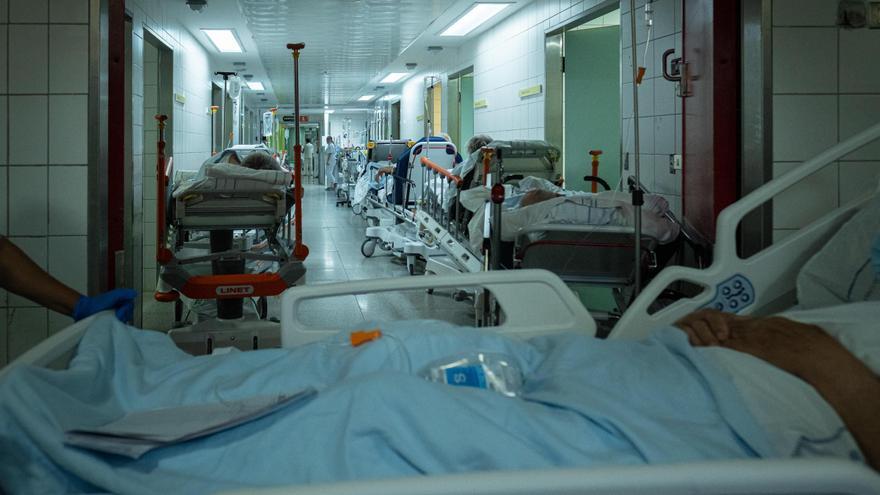
A major focus of the report is the University Hospital of the Canary Islands (HUC). Following an investigation, the Ombudsman is calling for an immediate external audit of the hospital’s emergency department. Padrón describes the situation at the Tenerife facility as a symptom of a failing healthcare model, noting that staff shortages have become so severe that a single medical resident is sometimes left to oversee thirty patients. The report also rejects the common claim that hospital overcrowding is solely due to a lack of social-health beds, calling that explanation insufficient.
The report also highlights the precarious situation of minors. With laws that haven't been updated in 25 years, the Ombudsman warns that official poverty statistics—which suggest nearly 40% of the population is at risk—may actually be underestimating the problem by excluding children in state care. The institution is calling for a major overhaul of the system, urging better coordination between the Education, Health, and Social Services departments and demanding that the government meet its legal commitment to spend 5% of the regional GDP on education.
Gender inequality remains a recurring issue in public complaints. Of the 3,572 cases processed last year, the majority were filed by women. In the housing sector, 68% of complaints came from single mothers or victims of gender-based violence. Additionally, complaints regarding social rights rose by over 7%, with the regional basic income program being a primary source of conflict.
Overall, the report—which covers more than 29,000 actions—shows that the islands' social welfare system relies too heavily on the "invisible" support of families and charities. With significant staff shortages at agencies like the Canary Islands Housing Institute, the Ombudsman warns that administrative delays are causing a crisis for the most vulnerable citizens. While 70% of complaints were eventually resolved, the report concludes that a lack of public sector staff remains the biggest barrier to ensuring fairness and protecting fundamental rights in the Canary Islands.