
Canary Islands Observatory Hosts New Exhibition Featuring Artists with Disabilities
The Institute of Astrophysics of the Canary Islands has launched "The Observed Observatory," a permanent exhibition featuring engravings by artists with disabilities from the Giro-Arte workshop to promote inclusivity and equal access to cultural spaces.
The Canary Islands have taken a significant step toward greater inclusivity with the opening of The Observed Observatory at the Institute of Astrophysics of the Canary Islands (IAC). This permanent exhibition highlights the work of the Giro-Arte workshop, a project run by the Insular Society for the Promotion of People with Disabilities (Sinpromi) that has supported artists with disabilities for over 30 years.
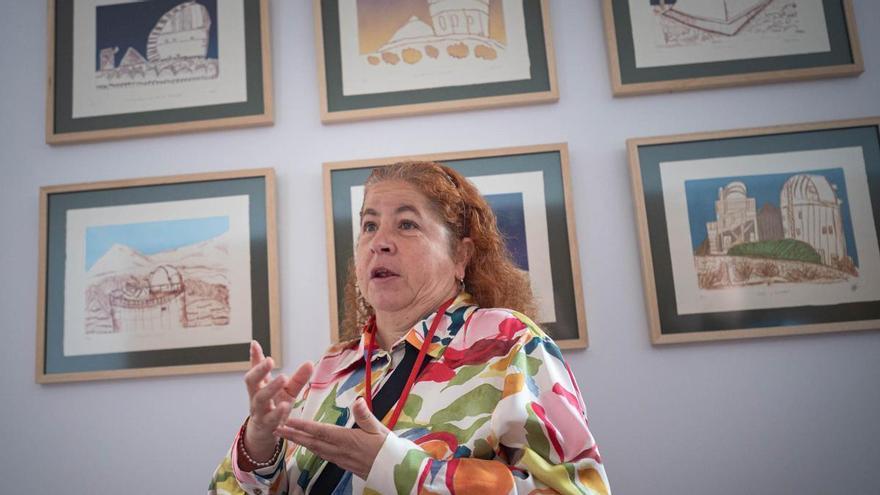
The exhibition features 23 engravings created by Giro-Arte students. The project began after a chance meeting, when a student presented a print of the Gran Telescopio Canarias to Casiana Muñoz-Tuñón, the IAC’s head of atmospheric characterization. This led to a field trip to the Teide Observatory, where students like Zevenzuí Pérez studied how scientific equipment interacts with the high-mountain landscape.
To create the artwork, students used algraphy—a form of lithography that uses aluminum plates instead of stone—under the guidance of educator Marlene Orán. The pieces incorporate complex techniques like gradients and chine-collé, showcasing the growth of the Giro-Arte program. Since starting in 1998 as a small pilot project with four people, the center has expanded to support 24 students across various disciplines, including ceramics and photography.
More than just an art display, the project advocates for artists with disabilities to be recognized in prestigious spaces without being defined by their disability. The workshop’s leadership emphasizes that their goal is for these artists to compete in mainstream contests, ensuring they have equal access to cultural opportunities. By combining technical training with museum visits, the program aims to remove traditional barriers to the arts.
As Giro-Arte prepares to open a new studio in the south of the island, this exhibition serves as a testament to their success. It demonstrates how science and creativity can work together to foster full civic participation, turning astronomical observation into a powerful form of artistic expression.