
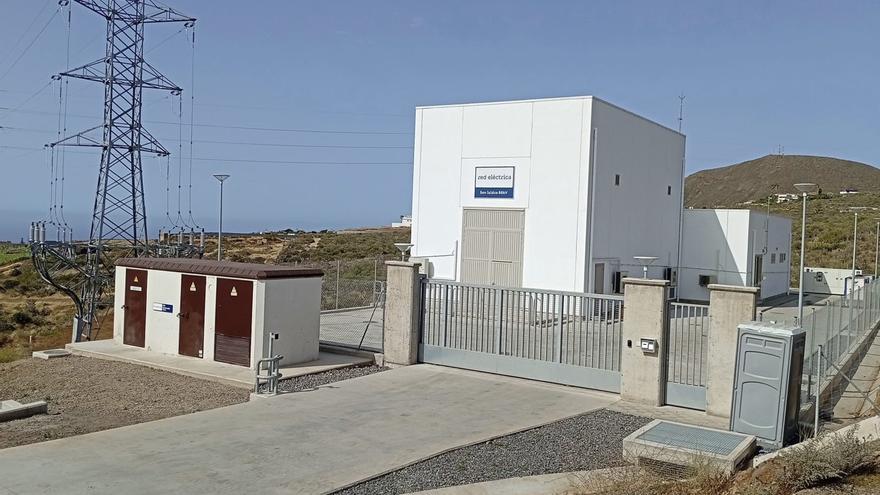
Canary Islands Modernize Power Grid to Boost Renewable Energy and Stability
Red Eléctrica has invested 1.8 billion euros since 2011 to modernize the Canary Islands' power grid, successfully increasing renewable energy integration and stabilizing service across the archipelago.
Modernizing the Canary Islands' electrical system is no longer just a goal; it is now essential for the region's economic and social stability. According to Red Eléctrica, a subsidiary of Redeia, 1.8 billion euros have been invested in the archipelago since 2011. This spending marks a major shift in how the islands manage energy, helping to overcome the challenges of their isolated, fragmented geography.
This investment has pushed grid availability above 98%, bringing the islands' service standards in line with mainland Spain. Beyond building infrastructure, the focus has been on making the eight separate island power systems more resilient. By embracing digitalization and new technologies like Dynamic Line Rating (DLR), the grid can now better handle the variable nature of renewable energy.
The results are already clear in the region’s energy mix. Renewable power capacity grew from 23% in 2021 to nearly 30% in 2025—reaching 32% when including self-consumption. Similarly, the amount of electricity demand met by renewables has risen to 22.5% including self-consumption. These figures prove that a strong transmission grid is the backbone of a successful transition to clean energy.
The strategy has been applied across all the islands. In the province of Las Palmas, the interconnection between Lanzarote and Fuerteventura—supported by a new 132 kV line and stability projects like the Jares synchronous condenser—has improved efficiency. In Gran Canaria, the focus has been on strengthening the southern grid, including the new Barranco de Tirajana-Santa Águeda line and the Salto de Chira pumped-storage plant, which is vital for energy storage.
In the province of Santa Cruz de Tenerife, the submarine cable linking Tenerife and La Gomera has significantly improved connectivity. These efforts are supported by upgrades to the El Rosario axis and the Buenos Aires substation. Additionally, 20.2 million euros are being invested in La Palma to create a 66 kV electrical ring in the south, which will improve supply security and allow more clean energy onto the grid.
Ultimately, the Canary Islands show that a sustainable energy future depends on more than just generating power; it requires a robust grid capable of balancing supply and demand. With further projects planned, such as energy storage in Güímar, the archipelago is becoming a model for managing complex island power systems.