
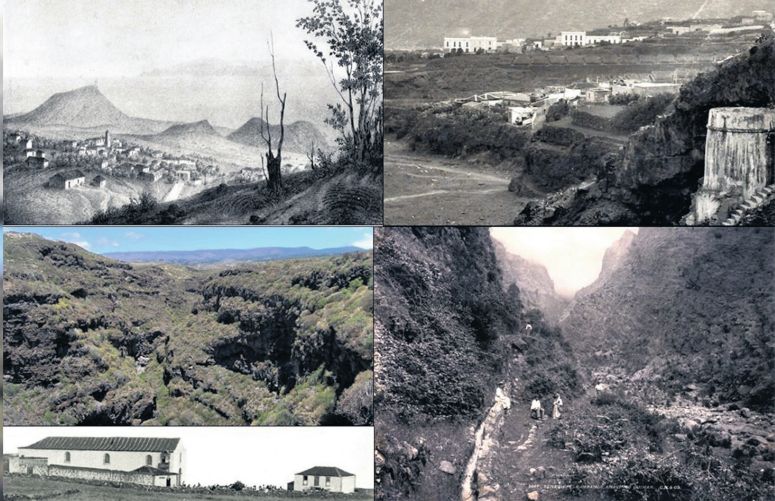
Canary Islands Mark Bicentenary of Deadly 1826 San Florencio Storm
The Canary Islands will conclude the bicentenary commemorations of the 1826 San Florencio storm on November 7 with a memorial event in La Orotava honoring the disaster's victims and highlighting the ongoing importance of climate resilience and land management.
The Canary Islands are preparing to mark the end of the bicentenary commemorations for the San Florencio storm. On November 7, the Association for the Memory of the 1826 Flood (AMA) will host a closing event at the La Orotava town hall to honor the more than 300 people who lost their lives in the disaster and to highlight the vital lessons it offers regarding land use and extreme weather.
Journalist Zenaido Hernández will host the event, which begins with an official reception in the Noble Hall. The program includes a documentary screening and a speech by AMA vice president José Luis Hernández, who will discuss the importance of reclaiming this long-overlooked piece of history. The most poignant moment will be the reading of the victims' names, organized by district, followed by a minute of silence accompanied by the Ikaro Quartet. Afterward, a three-meter-tall sculpture by Isidro Portocarrero Álvarez, titled "Memory of Water," will be unveiled in the town hall gardens to symbolize the connection between humanity and the island landscape.
The 1826 disaster, now identified by meteorologists as a large-scale tropical cyclone, was a turning point for the Orotava Valley. At the time, it destroyed over 200 homes and devastated the local livestock, triggering a long economic crisis for the region’s wine industry. The storm’s power was so great that it even swept the original statue of the Canary Islands' patron saint into the sea in Candelaria.
Beyond the tribute, the AMA—founded last year to preserve this history—aims to highlight the fragility of a region that, two centuries ago, had no early warning systems. An exhibition titled "1826 Flood: The Storm That Changed the Canary Islands" is currently open to the public at the town hall, using historical maps and documents to connect the past to today’s climate change challenges.
This closing ceremony concludes a series of events supported by the Government of the Canary Islands and the Cabildo of Tenerife, which included scientific conferences in Las Palmas de Gran Canaria and La Laguna. The ceremony will be streamed online, serving as a reminder that proper land management and water channel safety remain just as critical today as they were 200 years ago in the face of increasingly intense Atlantic storms.