
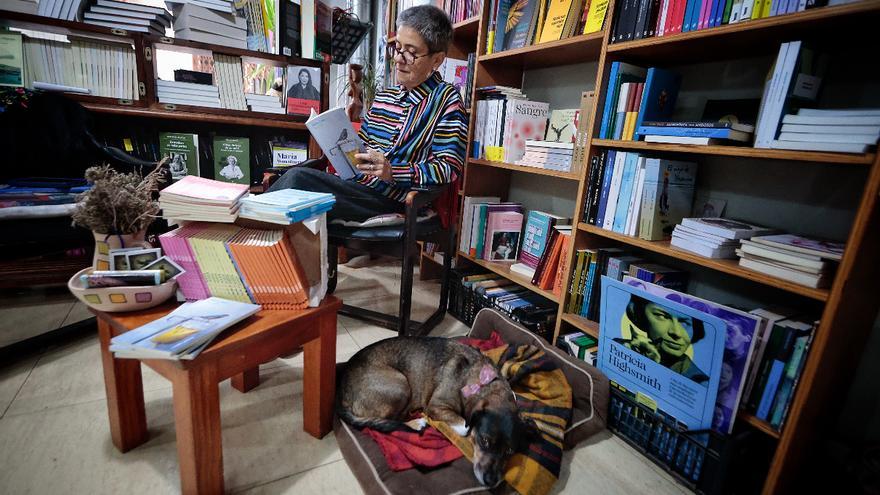
Canary Islands’ Independent Bookstores Face Existential Crisis Amid Rising Costs
Independent bookstores in the Canary Islands are facing an existential crisis as rising rents, digital shifts, and corporate competition threaten to close historic cultural landmarks.
Local bookstores in the Canary Islands are facing a major crisis, struggling to survive against the rise of digital technology and soaring property costs. While reading remains popular—with over 66% of Spaniards reading for pleasure—small, independent shops are losing ground. Recent reports show that while small bookstores have seen their market share drop by 4%, large retail chains have grown by 3%.
This shift is driven by several factors. The move toward digital education has made traditional physical textbooks less relevant, leading to the closure of historic shops like Tenerife’s Librería Lemus. At the same time, gentrification is pushing out long-standing landmarks; La Isla Libros has already closed, and others, like Solican, face an uncertain future as their leases come to an end.
To stay afloat, booksellers are being forced to reinvent themselves. Owners are working harder than ever, hosting book clubs and workshops, and selling stationery or gifts just to make ends meet. However, these efforts are often undermined by a lack of government support. Remedios Sosa, head of the Tenerife Booksellers Association, warns that without help to manage rising rents and support for the next generation of booksellers, city centers are losing vital spaces for community and critical thinking.
The situation is a clear paradox: even as bookstores work to modernize, they are struggling to compete in a market dominated by algorithms and massive corporations. Ultimately, the survival of these shops depends on more than just the owners' hard work; it requires political action to recognize the cultural value of these spaces. As local booksellers point out, losing these shops would be a significant blow to the region's cultural and democratic health.