
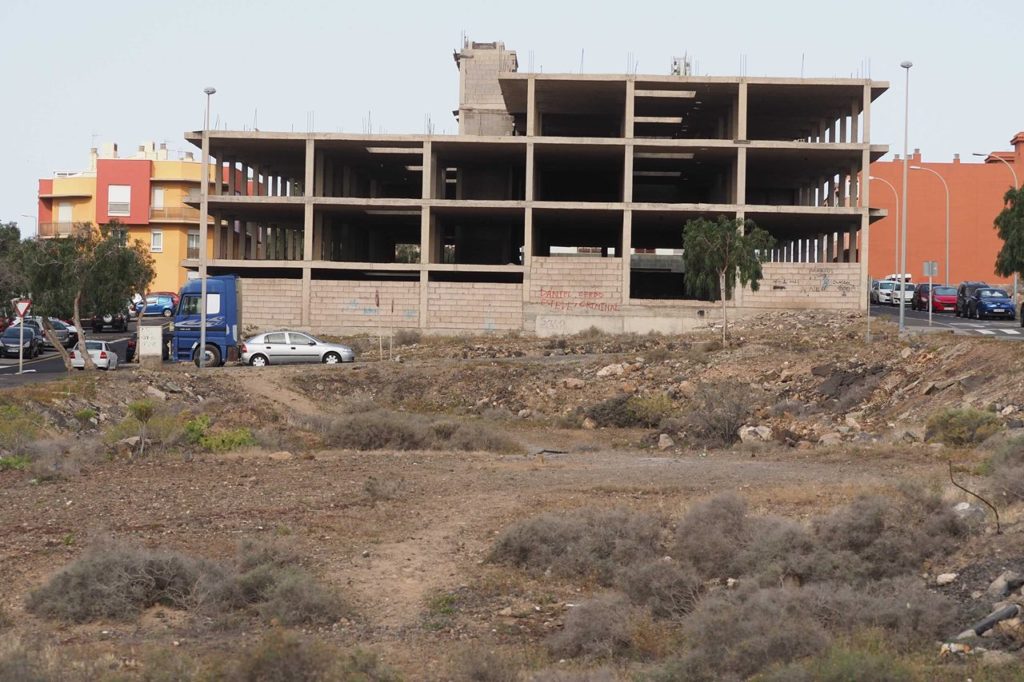
Canary Islands Housing Crisis: Bureaucracy Blocks 25,000 Homes
Administrative inefficiency, exemplified by Granadilla de Abona's refusal to apply streamlined building permit regulations, is significantly worsening the severe housing crisis in the Canary Islands.
The Canary Islands are grappling with a severe housing crisis. It's clear that simply introducing new laws or plans won't solve it. What's needed is an efficient and consistent administration, especially in the municipalities facing the most pressure for new homes. A worrying sign of this problem is Granadilla de Abona, where rules designed to speed up housing projects aren't being used, despite urgent social needs, high demand, and available tools. This suggests that institutional inefficiency can itself be a major barrier to ensuring the right to housing.
Granadilla de Abona, located in the south of Tenerife, is currently the slowest municipality in the Canary Islands when it comes to processing building permits, according to business groups. In an area already struggling with population growth, high demand for homes, and market limitations, the Granadilla town council has taken a surprising step: it voted in a council meeting not to follow a regional decree aimed at streamlining these procedures.
There's no clear technical or legal reason for this refusal. The regulations are mandatory and specifically designed to make it easier to build homes. The construction sector believes this rejection can only be explained by political motives or internal management issues that prevent the council from adopting more efficient processes. They describe it as a "chaotic and inexplicable" situation in one of the Archipelago's most strained housing markets.
This administrative bottleneck has significant economic consequences. It not only delays the construction of new homes, which are crucial for easing market pressure, but also discourages investment and harms the activity of construction companies, developers, and self-employed workers in the sector.
Business associations point out that when local councils fail to adapt to current legal tools, it doesn't just hinder housing construction. It also leads to higher costs for families, makes the Canary Islands less competitive as a market, and worsens the economic conditions for its citizens.
To address this housing emergency, the Government of the Canary Islands approved a decree in 2025. Its goal was to cut the time for granting urban planning licenses from up to two years to six months, thereby making it easier to build homes. This decree was the result of collaborative work between the regional government and various economic and social groups, including the construction sector, which had been demanding it for years as a key tool to unlock investment and increase housing supply. However, despite this widespread support, most municipalities are not applying these simplified rules, even in areas with the greatest administrative congestion. This is where Granadilla's case stands out so sharply.
The European Commission has warned that excessive bureaucracy in granting construction licenses is a major factor limiting housing supply across the EU. It recommends streamlining these procedures to add hundreds of thousands of homes to the market each year.
In Spain, new construction and the creation of new households aren't enough to meet growing demand. This pushes prices up, making it difficult, especially for younger generations, to access what should be a basic necessity.
The housing crisis in the Canary Islands won't be solved by laws alone; it requires an administration that acts efficiently and consistently, particularly in the municipalities facing the most residential pressure. Granadilla de Abona's failure to apply streamlining regulations, despite the urgent social need, accumulated demand, and available tools, is a worrying symptom that institutional inefficiency can be one of the greatest obstacles to ensuring the right to housing.
Meanwhile, young people who cannot afford to move out, families displaced by high prices, and thousands of homes awaiting permits that never arrive continue to see solutions stuck in municipal offices, with economic and social consequences worsening daily.
The Canary Islands are experiencing a deep-rooted housing crisis that not only affects thousands of households but also calls into question the basic right to decent housing for young people and families with fewer resources. While much of Spain faces similar pressures in its housing market, the problem is particularly acute in the Archipelago. Here, housing supply grows much slower than demand, prices are soaring, and in many cases, the local administration itself has become the biggest obstacle to the construction of new homes.
For business associations in the Canary Islands' construction sector, the root of the problem isn't a lack of land or business interest. Instead, it's administrative paralysis, which has stalled over 25,000 homes that are ready for construction, all waiting for municipal licenses.
Across the islands, this bottleneck is so severe that, according to the Canarian Federation of Municipalities (Fecam), the deadlines for granting building permits can extend for several years, even though the law sets a maximum of three months for urban planning licenses.
Macroeconomic data confirms what Canarians experience daily: housing has become consistently and significantly more expensive. Across Spain, housing prices increased by 12.2% in the first quarter of 2025, the largest jump in nearly two decades. In the Canary Islands, price growth has been particularly intense, with year-on-year rates around 11.6% for both new and used homes. This price surge occurs in a context of dwindling supply: in the last year, the number of available homes on real estate portals in the Archipelago fell by nearly 13%, intensifying market tensions.
The housing shortage is also clear in numbers: one of the most recent reports estimates the gap between actual supply and demand in the Canary Islands at almost 19,700 homes.
The social consequences of this imbalance are profound, especially for young people. According to data from the Canarian Emancipation Observatory, only 15% of young Canarians between 16 and 30 years old manage to move out of their parents' homes. This is the lowest rate in recent years, driven by the high cost of housing (both rental and purchase) and its scarcity.