
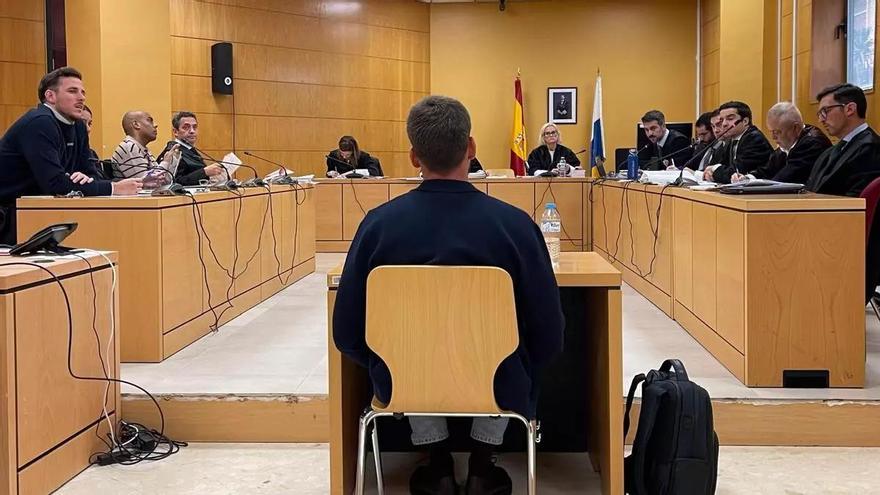
Canary Islands High Court Upholds Eight-Year Prison Sentence in Tradex Ponzi Scheme
The High Court of Justice of the Canary Islands has upheld an eight-year prison sentence for Mukesh Daswani for his role in a 1.9 million euro Ponzi scheme that defrauded 117 investors.
The High Court of Justice of the Canary Islands (TSJC) has upheld the conviction of Mukesh Daswani, a key development in the "Tradex" fraud case. As reported by El Día, the court rejected appeals from the defense, confirming the eight-year prison sentence originally handed down in March 2026 for aggravated fraud.
The 71-page ruling confirms that the scheme began in April 2021. Operating under the name Tradex Assets Management, Daswani convinced 117 private investors to hand over their money by promising extraordinary returns of 50% every two months, allegedly through intraday trading. The court found that the business became financially unviable by February 2022. Rather than stopping, Daswani kept the scheme alive by using money from new investors to pay off earlier ones—a classic Ponzi structure—before fleeing to the United Arab Emirates in July 2022.
Daswani must pay over 1.9 million euros in compensation to his victims, along with a daily fine for 24 months. The court also ruled against his ex-partner, Cecilia R. H. P., confirming her role as a "lucrative participant." Her request to reduce her liability to 7,500 euros was denied; she must pay 34,000 euros, representing the value of a BMW purchased with stolen funds that was added to her personal assets.
The TSJC dismissed all defense arguments. Regarding Daswani’s claim that his company, Pomares & Daswani S.L., was denied a proper defense, the court noted that the company’s failure to participate was due to Daswani’s own inaction as its representative. The judges also defended the length of the sentence, citing the severity of the harm, the fact that most victims were small savers, and the deliberate nature of the deception.
The court upheld the previous acquittals of Francisco Imobach Pomares and the company Pomares & Daswani S.L., and cleared Daswani of charges related to fraudulent conveyance. This ruling concludes the appeals process, finalizing a complex case that impacted a large number of investors.