
Canary Islands Health Fraud: Doctor, Pharmacists Face Trial Over €2.5M Scam
Four people in Tenerife, including a doctor and two pharmacists, face trial for allegedly defrauding the Canary Islands Health Service of over €2.5 million by falsely claiming for subsidized medications.
Prosecutors in Santa Cruz de Tenerife have asked a court to begin a trial against four people accused of defrauding the Canary Islands Health Service (SCS) of over €2.5 million. The four are accused of repeatedly falsifying official documents, committing aggravated fraud, and being part of a criminal organization.
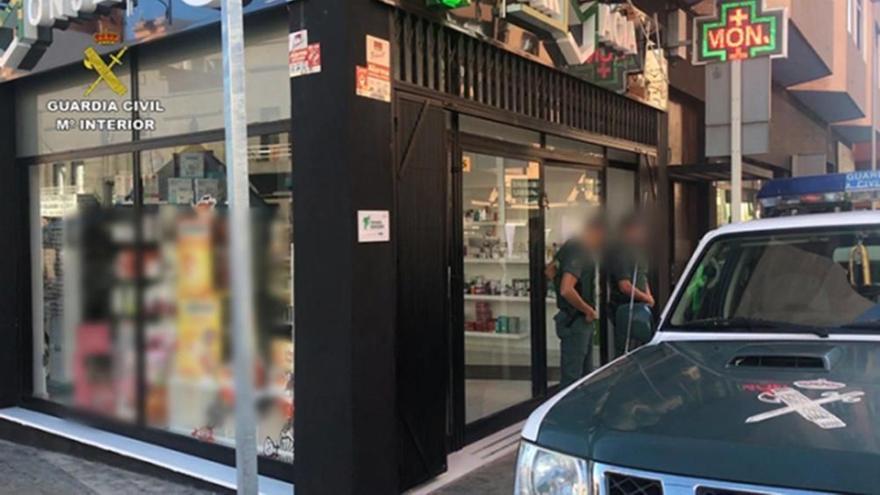
Among those accused are a family doctor and two pharmacists. One of the pharmacists owns the Monje pharmacy on Garcilaso de la Vega street in Santa Cruz de Tenerife. All four were arrested by the Civil Guard in October 2018. The SCS claims they conspired to commit fraud by falsely claiming to have dispensed expensive drugs, which were partly or fully paid for by public health funds, starting as early as 2014.
If the trial goes ahead, prosecutors are seeking a total of 59 years in prison for the four individuals. They are also requesting fines ranging from €21,000 to over €42,000. In addition, prosecutors want the four to jointly repay the €2,590,009.83 they allegedly defrauded from the SCS between 2016 and 2018. However, there are indications that the fraud may have started as early as 2014.
The judge has sent the prosecutor's initial charges to all parties involved for their review and to determine if any further investigation is needed. A jury will decide the case.
The investigation, initiated by the Prosecutor's Office following a complaint from the Canary Islands Health Service, suggests the group made money by falsely claiming for subsidized medicines. They allegedly claimed for medicines supposedly sold to patients with prescriptions, and also by secretly selling drugs without prescriptions, removing the proof-of-purchase seals to justify claiming the subsidy.
Prosecutors have outlined the roles each person allegedly played in the scheme. The pharmacists, D. J. M. T. and A. P. M. D., obtained blank paper prescriptions and electronic prescription details, initially using information from patients within their family, work, or friend circles.
The doctor, E. M. L. C., who worked for the SCS at the San Miguel de Geneto clinic and the San Benito Health Center in La Laguna, had pre-signed prescription pads with the patient details left blank. He also accessed the electronic prescription system and changed prescriptions for patients who didn't need the medication. These prescriptions, both paper and electronic, were used to falsely claim drug subsidies.
A. P. M. D., the owner of a pharmacy he later transferred, also acted as a "fixer" for the prescriptions, controlling their modification and giving instructions to the doctor, E. M. L. C. The prescriptions and subsidy claims were processed through D. J. M. T.'s pharmacy.
D. J. M. T. also obtained prescriptions from individuals and patients at a care home in Güímar, benefiting from subsidies that he did not share with the others involved. These prescriptions were written by a doctor from the local health center. This doctor was investigated, but the case against him was provisionally closed, despite the fact that he prescribed 972 drugs supposedly dispensed at D. J. M. T.'s pharmacy. Two other doctors from the Adeje Health Center were also investigated for prescribing over 1,200 drugs allegedly dispensed at the same pharmacy.
The fourth person accused, M. A. B. M., had already been convicted of fraud in Badajoz. He had legally prescribed, very expensive medications. He allegedly agreed with D. J. M. T. to split the subsidy payments for his drugs. Although he needed the medication, he was more interested in receiving 50% of the money from the health service than taking the drugs as prescribed. Between 2016 and 2018, the subsidy for his prescribed but not acquired drugs amounted to €27,885.09. The Prosecutor's Office is seeking a 22-month prison sentence for him for fraud.
Evidence suggests the embezzlement of public funds by the two pharmacists, the doctor, and the businessman began at least in 2014. However, the investigation has focused on the period between March 2016 and September 2018, with arrests and searches by the Civil Guard taking place in October 2018. The case is also limited to the fraudulent claiming of non-dispensed medications related to electronic prescriptions, as reported by the Canary Islands Health Service's department responsible for the rational use of medicines.
Within these limitations, the total amount defrauded is estimated at €2,590,009.83. Investigators have identified 80,181 medications for which proof-of-purchase seals were missing. During the 31 months investigated, the pharmacy on Garcilaso de la Vega processed 233,182 electronic prescriptions (worth €4,288,358), of which 34.4% lacked the required seals. The additional claims submitted on paper forms always exceeded €50,000 each month. The lowest monthly amount claimed without seals was €65,026.39 in September 2018, while the highest was in January 2017, when €99,379.28 was claimed for medications without seals.