
Canary Islands Government Plans Major Facelift for Tenerife’s TF-1 Highway
The Canary Islands government has unveiled a project to revitalize and ecologically integrate the TF-1 highway stretch between Tenerife’s Reina Sofía Airport and Playa de Las Américas to improve aesthetics and environmental sustainability.
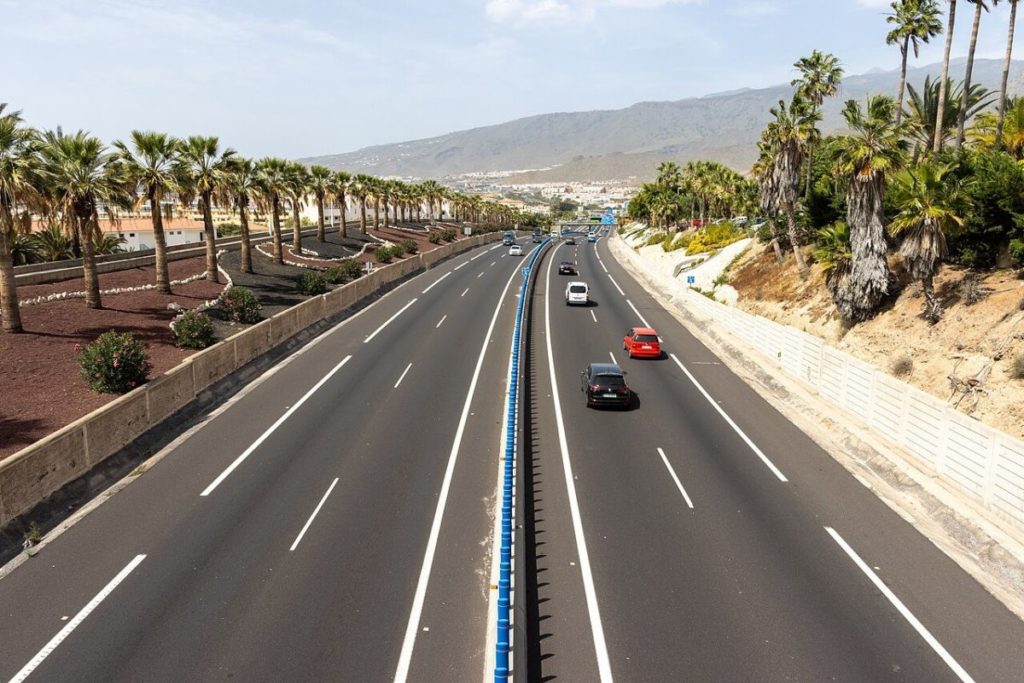
The Canary Islands government is planning a major facelift for the main road leading to Tenerife’s primary tourist hub. According to the newspaper El Día, the Vice-Ministry of Infrastructure has launched a project to transform the 20-kilometer stretch of the TF-1 highway connecting Reina Sofía Airport to Playa de Las Américas. The initiative, recently presented to local officials and business leaders in San Miguel de Abona, aims to repair the environmental and aesthetic damage caused by decades of urban growth.
The project goes beyond simple beautification; it seeks to address how the highway has fragmented the landscape. Experts note that the road has become a physical barrier that disrupts the natural volcanic terrain. The current proposal—still in its early stages—includes planting "green screens" to reduce noise and visual pollution, as well as creating ecological corridors to reconnect local habitats, a strategy already being used on Lanzarote’s LZ-3 road.
The push for these improvements comes largely from the private sector. The Circle of Entrepreneurs of the South of Tenerife (CEST) has long criticized the neglected state of the roadside, particularly near the Las Chafiras junction, where construction debris and untreated slopes have created an eyesore that clashes with the island’s status as a premier tourist destination. Business leaders are now calling for a long-term, multi-year funding plan to ensure these improvements are completed regardless of future political changes.
The technical report identifies the Guaza and Las Chafiras junctions as top priorities. This work will also align with future plans to expand the TF-1 between Oroteanda and Las Américas. The Vice-Ministry is now working with local councils to set priorities, with the ultimate goal of giving the highway a more sustainable identity that improves air quality and better integrates the road with the surrounding towns.