
Canary Islands Faced Decades of Disaster in Early 1700s
The Canary Islands endured a devastating 40-year period in the early 1700s, marked by relentless epidemics, volcanic eruptions, droughts, plagues, social unrest, and forced migration.
The Canary Islands could easily have been called the "Unfortunate Islands" once upon a time. In the early 1700s, the islands faced one of their toughest periods ever. For forty years, a relentless series of epidemics, volcanic eruptions, droughts, plagues, and social unrest left a lasting mark on generations.
This string of bad luck was so remarkable that "8 Canarias," an Instagram and TikTok profile focused on the islands' history, recently highlighted this difficult time in a post.
The troubles started in 1701 when a ship from Havana brought yellow fever to Tenerife. Within months, the disease spread rapidly across the island. Between 1704 and 1705, it caused tens of thousands of infections and killed 6,000 to 9,000 people. This was just the start of a period filled with disaster.
As people tried to recover, the ground beneath them also began to shake. In 1704 and 1705, three volcanoes – Fasnia, Arafo, and Siete Fuentes – erupted in Tenerife. These eruptions destroyed crops and forced hundreds of families to leave their homes.
But 1706 brought the worst blow. The Trevejo volcano, also called Garachico, erupted and completely destroyed the island's most vital port, burying Tenerife's main trade route under lava. Six years later, in 1712, La Palma faced its own disaster with the Charco volcano eruption.
The suffering wasn't just from natural disasters. Crop failures and widespread scarcity led to the Agüime Mutiny in 1718, a clear sign of the farmers' unhappiness.
Two years later, in 1720, smallpox hit the islands once more, killing over a hundred people in just one week.
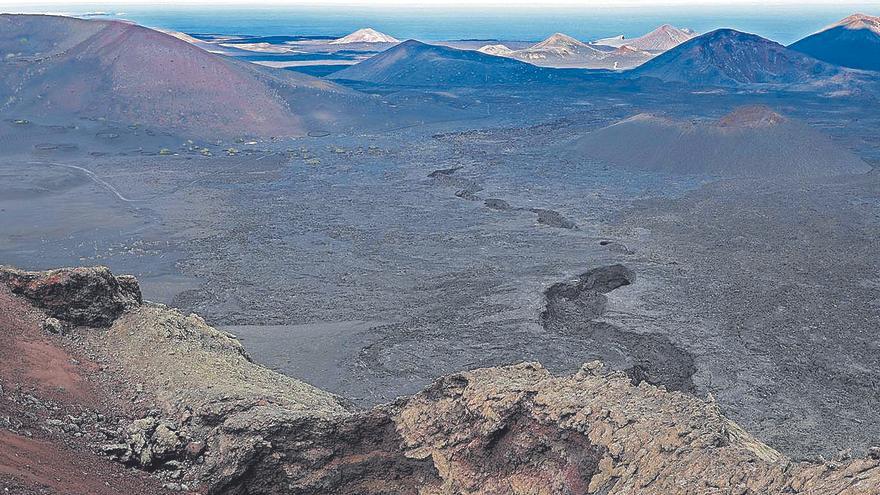
The earth offered no break. From 1730 to 1736, Lanzarote endured the Timanfaya volcano's eruption (known as Límamfalla in old records) – the longest in its history and one of the longest worldwide. The lava covered much of the island, permanently changing its landscape.
Just a few years later, between 1740 and 1741, an extreme drought pushed the islands to their breaking point. El Hierro was particularly affected, leading to the tradition of the Bajada de la Virgen de los Reyes, a procession begging for rain.
And if that wasn't enough, locust plagues repeatedly destroyed crops, leaving hunger and despair behind.
Beyond natural disasters, the people of the Canary Islands also faced the "blood tribute." This royal order from 1678 forced families from the islands to move to American territories. For every hundred tons of cargo, ships had to carry five Canarian families, tearing apart communities and creating a forced migration.
Epidemics, volcanoes, revolts, droughts, plagues, and even forced migration… the 18th century left a deep, lasting scar on the Canary Islands.
Looking back at that time, when simply surviving was a daily miracle, reminds us that "the good old days" weren't always so good. Yet, despite everything, the islands always managed to rise from their ashes.