
Canary Islands Face Lingering Heatwave as Temperatures Begin to Ease
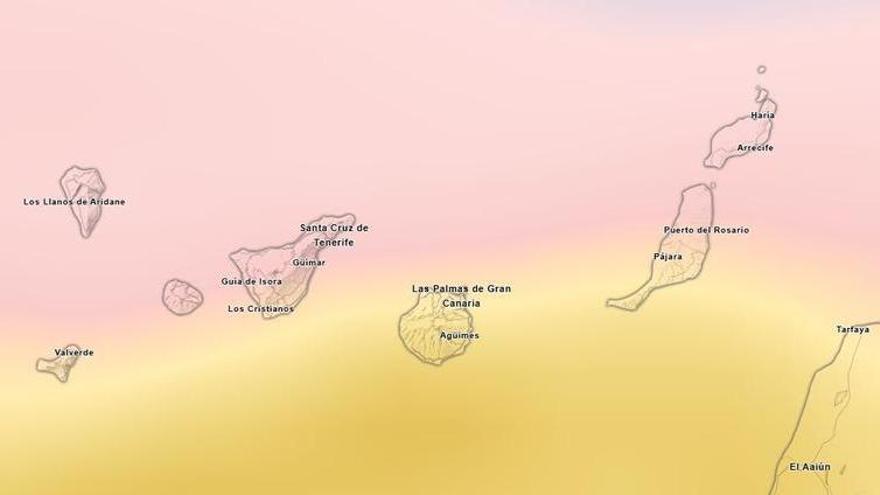
The Canary Islands are experiencing a gradual cooling trend, though Gran Canaria remains under a yellow heat warning with temperatures expected to reach 34°C.
Temperatures across the Canary Islands are beginning to drop this Thursday, though some areas remain under the influence of the recent heatwave. According to the State Meteorological Agency (Aemet), Tenerife is seeing a welcome cooling trend, moving away from the extreme highs of recent days. Even so, southern and western inland areas may still reach 30°C.
Visibility in Tenerife is improving as the high-altitude haze clears. However, winds from the north are expected to pick up later in the day, particularly around the central peaks and the southern slopes of the Anaga massif, where gusts could become quite strong. In Santa Cruz de Tenerife, temperatures will range from 21°C to 28°C, while the northern coast remains cooler due to sea breezes and cloud cover.
Gran Canaria remains the primary concern for weather officials. Aemet has issued a yellow heat warning, with temperatures expected to climb as high as 34°C, particularly in the Tirajana basin and at elevations between 600 and 900 meters. This heat, driven by Saharan air masses, is also affecting other islands: Lanzarote and Fuerteventura could see highs of 30°C and 32°C, respectively, with windy conditions expected in southern Jandía. Meanwhile, La Gomera, La Palma, and El Hierro will also see temperatures hovering around or above 30°C in inland areas.
Sea conditions are challenging for sailors. North to northeasterly winds are reaching force 5, increasing to force 6 further offshore. Seas will be rough to very rough in the west and southeast, though the southern and southwestern coasts remain calmer.
Authorities are urging the public to stay hydrated and avoid strenuous physical activity during the hottest part of the day. Given the combination of high heat and strong winds, residents and visitors should exercise caution, especially in areas under the yellow warning, as the islands' rugged terrain can lead to sudden, localized weather changes.