
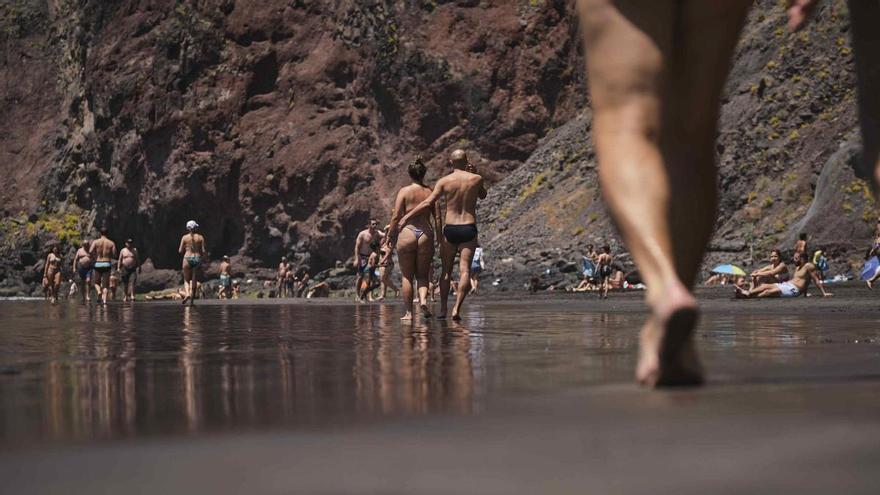
Canary Islands Emerge as Europe’s Leading Destination for Naturism
The Canary Islands have emerged as a premier European destination for naturism, with nearly half of their coastal spots now dedicated to nudism amidst a growing trend of "disconnection tourism."
The Canary Islands have become a top destination in Europe for naturism. According to the region’s official tourism portal and the Spanish Naturist Federation, about 175 of the islands' 400 coastal spots are now dedicated to nudism. This high number is no coincidence; the islands' unique volcanic landscape and year-round warm weather have helped keep many of these beaches secluded and free from urban development.
Sociologically, this trend reflects a growing desire for "disconnection tourism," where travelers seek out untouched, natural environments. Tenerife offers a wide variety of these spots: from the easy-to-reach Las Gaviotas in Santa Cruz and the private Cueva de la Arena in Arico, to more challenging locations like Masca and the Diego Hernández cove in Adeje. Other spots, such as El Callao and Los Enojados in Arona, offer complete privacy by lacking modern facilities. Because these areas are undeveloped, visitors should be well-prepared and cautious of the strong Atlantic currents.
This trend is widespread across the archipelago. Fuerteventura is home to the 14-kilometer-long Cofete beach, one of the largest naturist areas in Spain. Meanwhile, Gran Canaria’s Maspalomas dunes—specifically near kiosk number 7—remain a historic hub for the LGTBI community, offering a mix of nudism and nearby amenities.
On the smaller islands and Lanzarote, the focus shifts toward isolation and protected landscapes. Famara in Lanzarote and Las Conchas in La Graciosa offer a balance between nature and tourism, while La Gomera’s La Guancha beach provides a 500-meter-long refuge reached by hiking. La Palma features the beaches of Las Monjas and Los Tarajales, and El Hierro is home to the uniquely colored sands of El Verodal.
Regardless of the location, authorities emphasize that these wild, rugged coastlines can be dangerous. Visitors are urged to check sea conditions and bring the necessary supplies before heading out to these remote areas.