
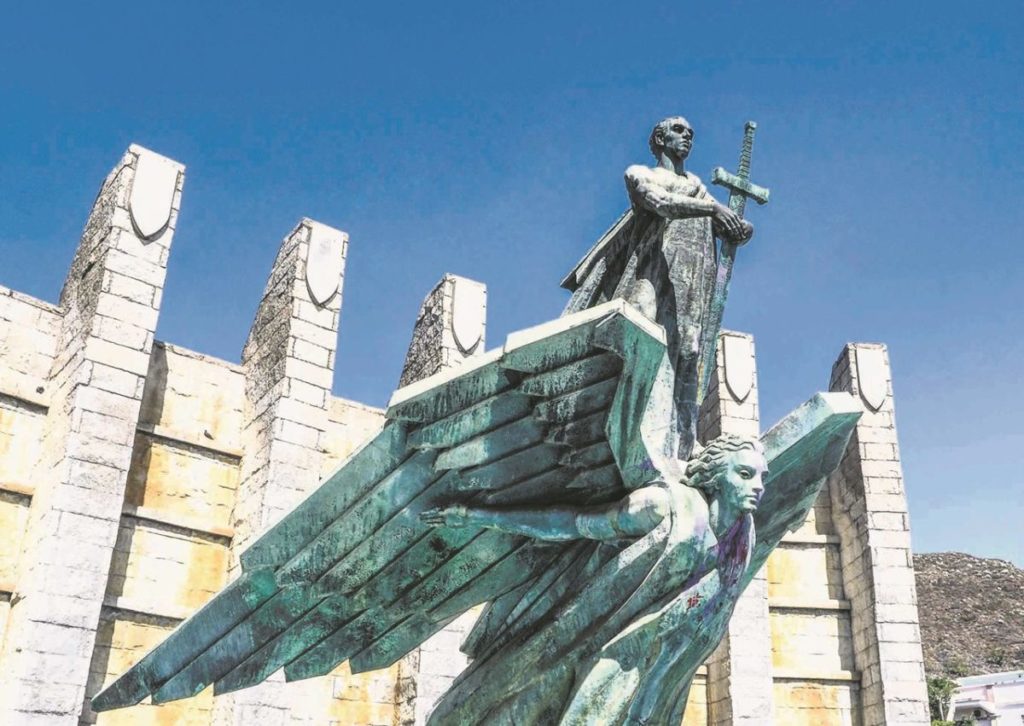
Canary Islands Council Denies Heritage Status to Franco-Era Victory Monument
The Canary Islands Cultural Heritage Council has denied "Asset of Cultural Interest" status to the Victory monument in Santa Cruz de Tenerife, clearing the way for its potential removal under the Historical Memory Law.
The Canary Islands Cultural Heritage Council has reached a final decision on the future of the Victory monument in Santa Cruz de Tenerife. The regional body has rejected a proposal to grant the Juan de Ávalos sculpture "Asset of Cultural Interest" (BIC) status, ruling that it does not meet the necessary heritage requirements for such high-level protection.
The decision, which passed with 16 votes against and one abstention, concludes an administrative process that began last October following a court order. Without this legal protection, the monument is now vulnerable, clearing the way for its potential removal under the Historical Memory Law. While some institutions, including the Royal Canary Academy of Fine Arts, argued for the sculpture's artistic value, the Council ultimately followed the technical recommendations provided by the Architectural Heritage Committee earlier this year.
The Santa Cruz City Council, which owns the monument, has responded cautiously, stating only that it remains committed to following regional laws regarding democratic memory. This approach contrasts with the efforts of groups like the Association for the Recovery of Historical Memory of Tenerife, which has collected over 1,400 signatures calling for the removal of the monument, which they view as a glorification of the former dictatorship.
This ruling resolves the long-standing conflict between art experts and the Canary Islands Government’s catalog of Franco-era symbols, which had already identified the monument as a vestige that should be removed from public space. With this decision, the path is now clear for the city council to dismantle the sculpture, ending decades of social and legal debate over how the archipelago should address its past.