
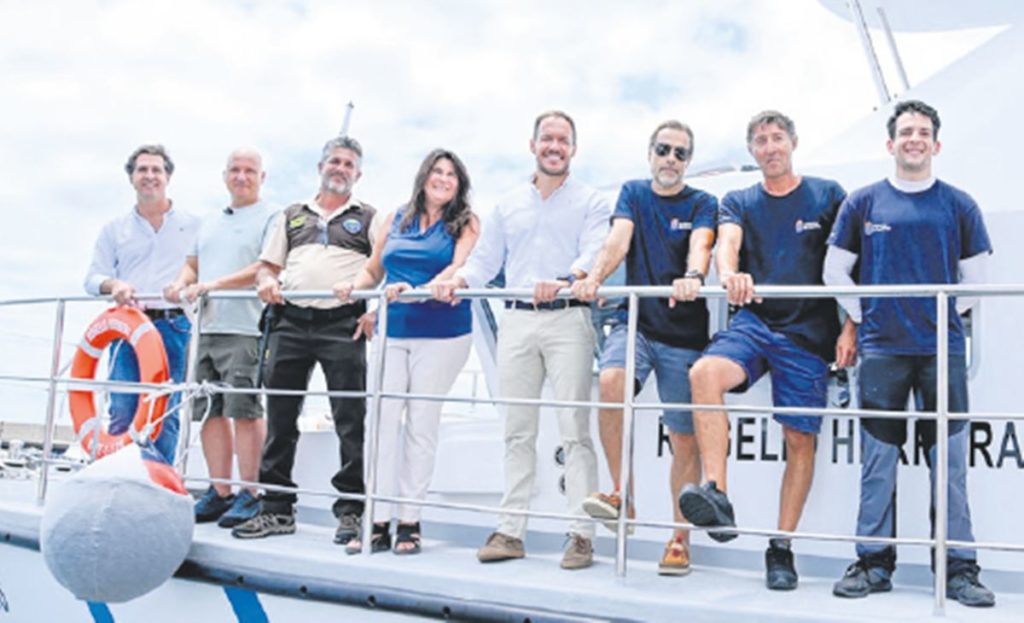
Canary Islands Bolster Marine Conservation With New Hybrid Surveillance Vessel
The Canary Islands government has deployed a new hybrid surveillance vessel, the Rogelio Herrera, to enhance marine conservation efforts and expand patrol coverage across the archipelago's protected waters.
The Canary Islands government has bolstered its coastal protection efforts with a new surveillance vessel, marking a significant step in managing the region’s Special Areas of Conservation (SAC). Funded by a 1.19 million euro investment from the Recovery, Transformation and Resilience Funds, this addition addresses a critical need to better protect the Teno-Rasca area in Tenerife, a zone facing high human activity and the constant threat of poaching.
Named the Rogelio Herrera—in honor of a renowned marine biologist—the new boat allows the regional government to reorganize its patrol strategy. Previously, surveillance was limited to two vessels covering Tenerife and Gran Canaria. With the new unit in place, one of the existing boats can now be moved to La Gomera. This ensures a permanent protective presence in Gomera’s waters for the first time, specifically to safeguard local osprey populations and various species of whales and dolphins.
The 14-meter vessel represents a major technical upgrade due to its hybrid engine. As Minister Mariano H. Zapata noted, the boat can operate in electric mode during inspections, which significantly reduces both carbon emissions and noise pollution. This "stealth" capability is a major tactical advantage, allowing agents to monitor sensitive areas without disturbing marine life, which is often highly sensitive to underwater noise.
This fleet expansion is part of a broader commitment to the Natura 2000 Network, which requires active management to prevent the degradation of marine habitats. By coordinating with national authorities, the Canarian government aims to better protect these vital biological corridors. The move reflects a growing effort to balance the Canary Islands' busy maritime economy with the urgent need to preserve its unique natural heritage.