
Canary Islands Bluefin Tuna Season Opens With 537-Ton Catch Limit
The bluefin tuna season has officially opened in the Canary Islands with a 537-ton catch limit, though local fishermen face significant profitability challenges due to rising fuel costs.
The bluefin tuna season has officially kicked off in the Canary Islands, with the first catches arriving in Tenerife and Gran Canaria. This marks the start of a vital period for the archipelago’s fishing industry, which will run until May 31.
The season is operating under strict government regulations. The Ministry of Agriculture, Fisheries and Food has set a total catch limit of 537 tons for the 250-vessel fleet, with rules explicitly banning joint management and vessel replacements this year.
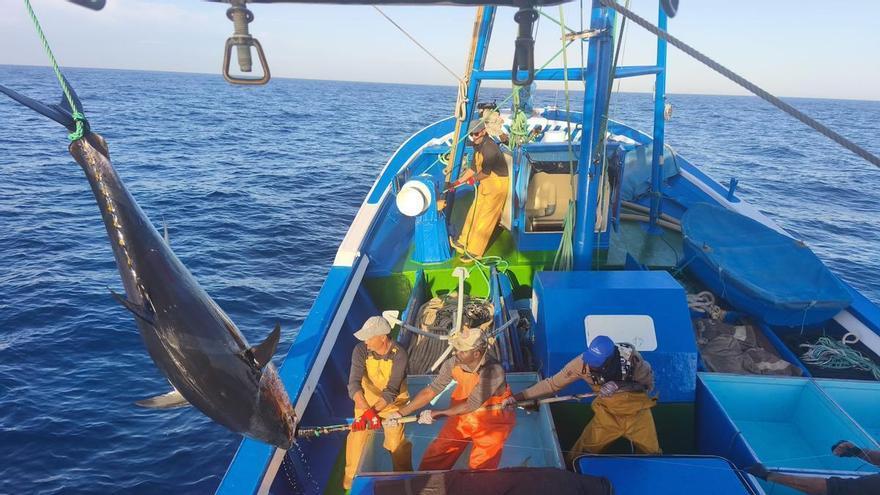
In Tenerife, the Nuevo Batabano Primero was the first boat to return to the Port of Santa Cruz. Captain Julio Alberto García and his crew landed four tuna—locally known as "patudo"—weighing between 170 and 289 kilograms. These were caught in waters near Fuerteventura. Despite a market price of around 12 euros per kilo, profitability remains a challenge due to high operating costs. García noted that fuel for this single trip cost 12,240 euros, a significant expense following years of low catch numbers.
Meanwhile, in Gran Canaria, the Nuevo Olimar arrived at the Arguineguín Fishermen's Guild with five tuna weighing a total of 1,274 kilograms, including one impressive 300-kilogram specimen. While activity has started quickly on these islands, other areas, such as the Los Cristianos Fishermen's Guild, are still waiting for the season to pick up.
Bluefin tuna is a crucial resource for both high-end gastronomy and the local economy. While some of the catch will stay in the Canary Islands, most is destined for national and international markets. The success of this season—and the livelihoods of the families who depend on it—will now rely on the health of fish stocks and the fleet's ability to manage high energy costs.