
Canary Islands Biodiversity Draft Law Sparks Dispute Over Private Enforcement Powers
The Tenerife PSOE is challenging a proposed Canary Islands law that would grant private rural guards the authority to issue official reports, arguing that such public enforcement powers must remain exclusively with civil servants.
A new draft law regarding biodiversity and natural resources in the Canary Islands has sparked a legal and institutional dispute. The controversy, highlighted by objections from the Tenerife PSOE, centers on concerns that the law would delegate public authority to private employees.
The debate focuses on specific sections of the draft—Article 117.2 and the eleventh additional provision—which critics argue would grant rural guards powers beyond simple support tasks. According to the Socialist Group in the Tenerife Cabildo, these provisions would allow reports from private guards to be treated as official public documents with a presumption of truthfulness. Socialist spokesperson Aarón Afonso argues this is unacceptable, noting that under Spanish law, the power to initiate legal sanctions must be reserved for public officials to ensure fairness and legal certainty for citizens.
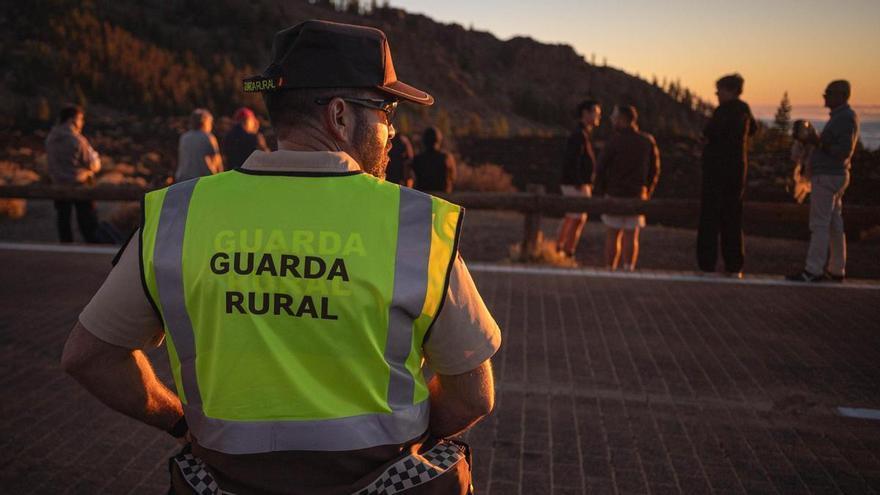
This issue is particularly sensitive regarding the management of Teide National Park, where the Cabildo has already begun outsourcing. In April, the island government hired the private firm Segurmáximo to deploy eleven rural guards at key locations. While the Spanish Brotherhood of Rural Guards maintains that their professionals are legally authorized for these duties, the PSOE views this as a dangerous precedent that the new law seeks to formalize across the region.
Tamara Raya, secretary-general of the Tenerife PSOE, argues that the regional government should focus on strengthening the public workforce instead. While the Cabildo currently employs over 70 environmental agents, the Socialists believe this is insufficient and argue that the government must prioritize civil servants over private contractors.
At the heart of the dispute is the future of environmental oversight. While the government claims these measures are necessary to manage increasing tourism and protect natural spaces, critics warn that outsourcing inspection duties undermines public authority. The PSOE is calling for the removal of the contested articles, insisting that any actions with legal consequences must be carried out by public officials to ensure that the protection of natural heritage remains a government responsibility rather than a private one.