
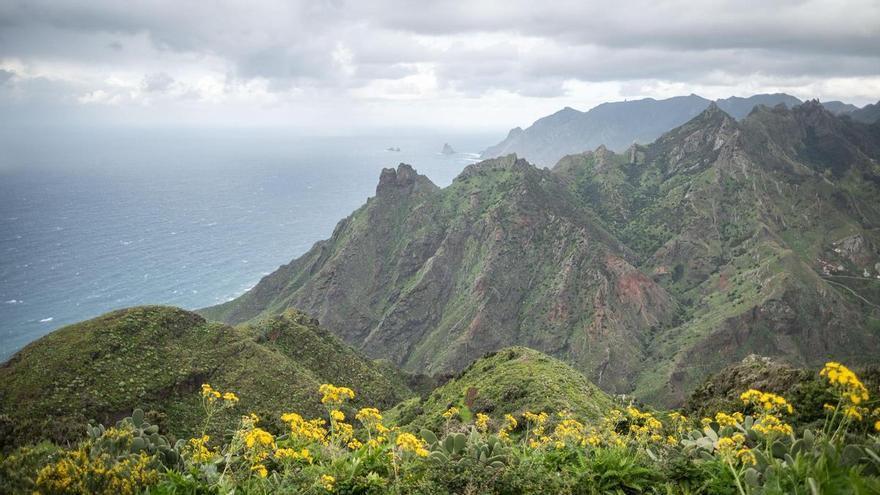
Canary Islands Biodiversity at Critical Turning Point, Scientists Warn
New research from the CanBio program warns that the Canary Islands' biodiversity is at a critical turning point, urging immediate political action to address ecosystem decline and the impacts of the climate crisis.
Canarian biodiversity is at a critical turning point, according to findings presented at the University of La Laguna during the "A Journey to a Sustainable Future" seminar. The CanBio program—a partnership between the Canary Islands government and the Loro Parque Foundation—has released scientific evidence that calls for an immediate political response to the decline of the islands' ecosystems.
There is a small glimmer of hope: researchers recently discovered remains of the land mollusk Canaridiscus engonatus in Anaga. As a key indicator of climate change, its potential survival is encouraging. However, this is overshadowed by a negative outlook for other species. A review of 16 arthropod species revealed a worrying trend, most notably the aquatic invertebrate Hydroporus compuctus. It is now classified as "possibly extinct" due to the degradation of aquifers, which are under constant pressure from human activity.
The research, conducted by experts from the University of La Laguna and the University of Las Palmas de Gran Canaria, covers a wide range of issues. These include the acidification of coastal waters, which affects the local blue economy, and the acoustic monitoring of the marine environment. The BuoyPAM project has improved technology for recording underwater noise, while the SonMAR project has built an archive of 3,000 hours of marine soundscapes, providing a vital baseline for protecting sea life.
The seminar also highlighted successes in conserving larger species, such as the tagging of the first thresher shark by the BioMAR project and community efforts in Cofete to protect loggerhead turtles. These findings were presented to government officials and academic leaders, emphasizing the need to share this information beyond the scientific community. The researchers were clear: the climate crisis is not a future threat but a current reality that is already changing the islands' biological landscape, requiring urgent action and greater public awareness.