
Canary Islands Amateur Squad Prepares for UEFA Regions' Cup Amidst Debate on Professional Team Revival
The amateur Canary Islands football team is preparing for the UEFA Regions' Cup while a political proposal to revive a professional team with top players was rejected due to FIFA regulations and financial concerns.
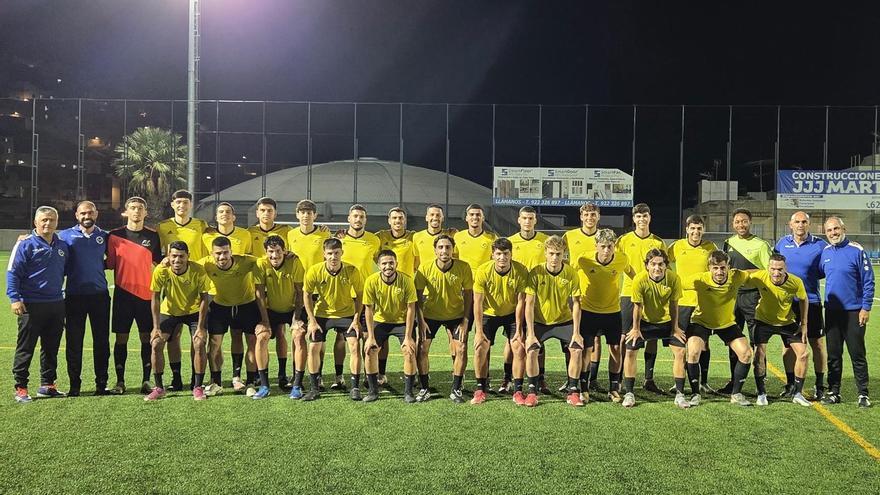
The Canary Islands does have an official football team, though it operates with some specific rules. Currently led by Sergio Alonso, this team is getting ready for the first stage of the UEFA Regions' Cup, which will be held in Aragon from November 28th to 30th. The Canary Islands team is in Group 5 of the national phase, facing Aragon (the current European champions) and Extremadura.
The squad recently trained on November 16th at the La Salud municipal stadium in Santa Cruz, with 26 players under Alonso and his coaching staff. If they advance past this initial stage in Aragon, they will move on to the intermediate phase in the last week of January 2026. Here, eight qualified teams will compete for the four spots representing Spain in the main UEFA Regions' Cup tournament, scheduled for February 27th to March 1st.
It's important to understand that the Canary Islands senior team is an amateur squad. This means the players selected are not professional footballers and cannot be. The criteria for selection are very strict: players currently under contract in Spain's First or Second Division, or those who have had such contracts, are ineligible. Even players registered with Social Security as employees of any national team (including those in the Third Division) or foreign teams cannot participate. The goal is to ensure a completely non-professional competition.
The UEFA Regions' Cup is an amateur tournament with over 20 years of history, described by its organizers as a "showcase of the wealth of talent that exists under the radar in European football." Unlike Spain, smaller countries can directly enter their amateur national teams.
In the first 13 editions of the competition, 28 countries have taken part, including Finland and San Marino. In 2025, the final phase was hosted by San Marino, with Aragon winning the title for Spain. Spanish teams have won the UEFA Regions' Cup four times out of the 13 tournaments held.
The idea of bringing back an official Canary Islands team was discussed last October when the nationalist party Nueva Canarias proposed its return. The initiative was supported by a video featuring Yoné Caraballo, a deputy from Nueva Canarias, meeting with Ángel López, a former professional player and current coach. The video was titled "Imagine an absolute Canary Islands team."
Ángel López played in the last match of the Canary Islands team that included elite players. This was on December 28th, 2007, at the Estadio de Gran Canaria, where the Canary Islands defeated Angola, a team that had competed in the World Cup, by 2-0. Adrián Martín and Jorge Larena scored the goals. Notable players in that squad included David Silva, Rubén Castro, and others.
Before that match, the Canary Islands had secured victories against Venezuela (5-1 in 1996) and Latvia (4-0 in 1998), and a draw against Yugoslavia (2-2 in 1999). Their only loss was against Venezuela (0-2 in 2002).
In his presentation to the Parliament of the Canary Islands, Caraballo expressed his party's desire to "protect and promote collective identity, reaffirming what makes Canarians unique." He highlighted sport, and particularly football, as an "emotional manifestation" that holds a special place. The proposal aimed to "relaunch and provide continuity to the Canary Islands team," including a women's team. Caraballo mentioned top players like Pedri, Misa, Ayoze Pérez, and others, citing the Basque Country team as an example. He suggested holding one match per year and exploring opportunities for the Canary Islands team to participate in international competitions. However, the proposal was not approved, with 25 votes in favor and 41 against.
Setting political matters aside, could a Canary Islands team featuring top-level professional footballers be revived? According to sources from the football federations, the answer is no. FIFA statutes only permit teams from independent states or those with explicit authorization from their national federation. Therefore, FIFA would not recognize an archipelago team for international tournaments.
This limitation would mean any matches would be friendlies, similar to the Basque Country team, which played Palestine recently. In this scenario, two major obstacles would arise. Firstly, clubs would not be obligated to release their players for such matches, nor would the players themselves be required to participate. Secondly, and perhaps more significantly, is the financial aspect.
The question of who would cover the costs is a major concern. For instance, if a professional player were injured during a friendly, the organizing body would face substantial compensation costs. FIFA's Club Protection Program covers compensation for injuries that exceed four weeks, with potential payouts reaching millions of euros per player annually, depending on their salary.
Ultimately, the dream of a Canary Islands team with stars like Pedri or Ayoze Pérez remains just that – a dream. This is not primarily due to the failure of the political proposal, but rather because it is currently unfeasible from both a federative and economic standpoint.