
Canary Islands: 69 Drown in 2025 as Water Accidents Surge 30%
The Canary Islands recorded 69 drowning deaths in 2025, a slight decrease from the previous year, yet overall water accidents surged by 30% to 241 incidents, with a significant rise in serious injuries and many occurring despite dangerous sea condition warnings.
In 2025, 69 people drowned in the Canary Islands. This was a slight decrease of three deaths (4%) compared to 2024, when 72 people died. These figures come from Canarias, 1500 KM of Coast, an association dedicated to preventing water accidents.
December saw nine drowning deaths, making it one of the deadliest months of 2025, alongside August and September, which also had nine fatalities each. January followed with eight deaths, while February, March, June, and July recorded the lowest numbers, with three deaths each.
By the end of December, three swimmers were in critical condition, six were moderately injured, two had minor injuries, and one person was rescued without harm.
The 2025 report also shows a concerning rise in the number of swimmers who were critically or seriously injured. The number of critically injured people jumped to 16, a 77% increase from the nine recorded in 2024. Those seriously affected totaled 25, up 66% from 15 last year.
Throughout the year, 70 people suffered moderate injuries, 32 had slight injuries, and 29 were rescued unharmed. In total, 241 people were involved in water accidents, which is 55 more than in 2024 – a 30% increase.
A significant number of these incidents occurred despite warnings. Of the 69 people who drowned, 32 (46%) had gone swimming or approached the coast when the Canary Islands Government had issued pre-alerts or alerts for dangerous sea conditions. Similarly, 94 of the 241 people involved in accidents (39%) were in the water during these warnings.
In 2025, many water accidents in the Canary Islands happened in rocky coastal areas. These tragedies were often due to carelessness, such as ignoring warning signs and safety advice.
Tenerife's coast saw several deaths due to strong waves. One particularly tragic November weekend, three people died within hours of each other: a 79-year-old Dutch swimmer in Puerto de la Cruz, caught by a rogue wave that affected ten people; a man found on El Cabezo Beach (Granadilla de Abona); and a 43-year-old fisherman in La Guancha.
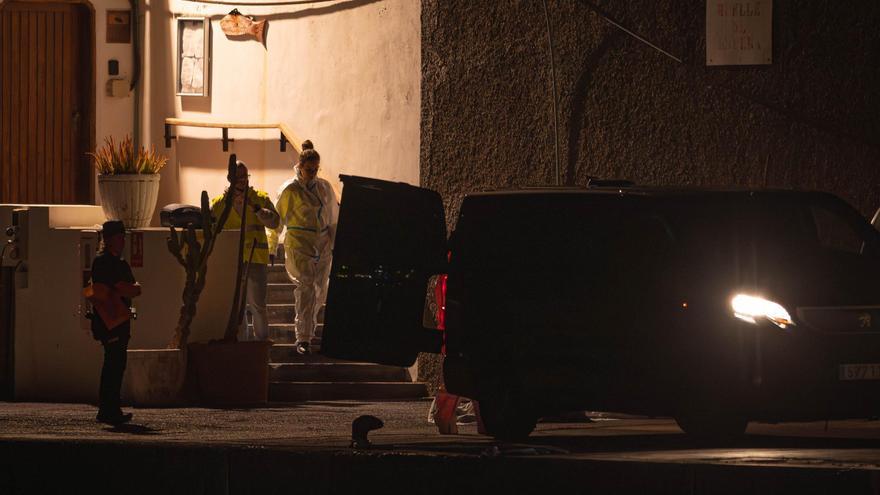
However, the worst incident happened in early December at the Isla Cangrejo natural pool in Los Gigantes, Tenerife. This tragedy, widely reported by international media, saw four tourists die and one go missing after safety barriers were ignored. Several other people were also injured. This was the most severe water-related tragedy in the Canary Islands in at least the last ten years.
Four minors drowned, the highest number in ten years. For children, who are most vulnerable in water, a common factor in these accidents is a false sense of security, especially in swimming pools. This often leads to a lack of supervision from responsible adults.
Overall, 19 minors were involved in water incidents across the Canary Islands during the year. This included four deaths (6% of all fatalities), four critically injured, four seriously injured, five moderately injured, one slightly injured, and one rescued unharmed.
One notable incident was the disappearance of Arek, a 15-year-old Polish boy swept out to sea in February at Charco del Viento, Tenerife. His body has not yet been found.
Another tragic event happened in April at Lago Taurito water park in Gran Canaria, where two-year-old Rebeca, an Italian girl, drowned in a busy pool. This was described by Sebastián Quintana, a drowning prevention expert and president of the association, as 'invisible drowning' syndrome. At the same park in early December, a four-year-old Swedish girl was critically injured with a head injury after going down a slide.
Looking at the age of victims, 38% of those who died were adult swimmers (26 people). Another 30% (21 people) were over 60 years old. The age of 26% of the victims (18 people) was unknown.
Most fatalities were male, accounting for 74% (51 deaths), while females made up 25% (17 deaths).
Among those identified, 17 foreigners died: four British, three Romanians, two Poles, two Italians, one German, one Belgian, one Moroccan, one Indian, one Dutch, and one Slovak. Five other foreigners had unspecified nationalities. Four Spanish nationals also died, and the nationality of 42 victims remained unknown.
Swimmers accounted for the largest group of those affected, at 67%. Water sports participants made up 9%, while 8% were involved in unknown activities, and another 8% were fishermen. The 'other' category, which includes people falling from piers, cliffs, or promenades, as well as athletes like paragliders or boat crew, represented 4%. Divers accounted for the remaining 1%.
Tenerife recorded the highest number of deaths with 24. Gran Canaria followed with 18, Lanzarote with 13, Fuerteventura with six, La Gomera and El Hierro each had three, and La Palma had two. La Graciosa reported no deaths.
Looking at all people affected by incidents, Tenerife again had the highest percentage at 42%, followed by Gran Canaria (22%), Lanzarote (15%), and Fuerteventura (12%).
Beaches remained the most common location for accidents, accounting for 50% of incidents. Ports and other coastal areas followed at 26%, natural pools at 16%, and swimming pools at 8%.
Most accidents (60%) happened in the afternoon, with 28% occurring in the morning. The time was not specified for 10% of incidents, and only 2% took place at night.
Canarias, 1500 Km of Coast, compiled this report using data from official emergency services, including 112 Canarias, the Guardia Civil, National Police, Maritime Rescue, Local Police, Firefighters, and Civil Protection.
This initiative was sponsored by the Cabildo de Gran Canaria and the Elder Museum of Science and Technology. It also received support from the Ministry of Territorial Policy, Territorial Cohesion and Water of the Canary Islands Government, the Tourism and City of Sea departments of the Las Palmas de Gran Canaria City Council, and Binter.