
Canarian Roseta Lace Declared Top Cultural Asset
The traditional Canarian roseta lace-making technique has been declared an Asset of Cultural Interest (BIC) in the Canary Islands, providing the highest level of protection for this generational craft starting October 14, 2025.
The Canary Islands have taken a major step to protect their cultural heritage. The Canarian roseta, a traditional lace-making technique, has been declared an Asset of Cultural Interest (BIC). This is the highest level of protection for cultural heritage in the region. This new status, which starts on October 14, 2025, is a crucial moment for safeguarding this handmade lace, passed down through generations, especially in the south of Tenerife.
This official recognition not only celebrates the careful work of the craftswomen but also strengthens official protection for a unique part of the Canary Islands' culture. Being named a BIC, under Canarian law, protects the roseta as an intangible tradition, connected to old knowledge and skills. This protection means steps will be taken to safeguard, document, share, and teach the technique. These efforts are vital to make sure this knowledge isn't lost due to modern challenges like globalization and factory production.
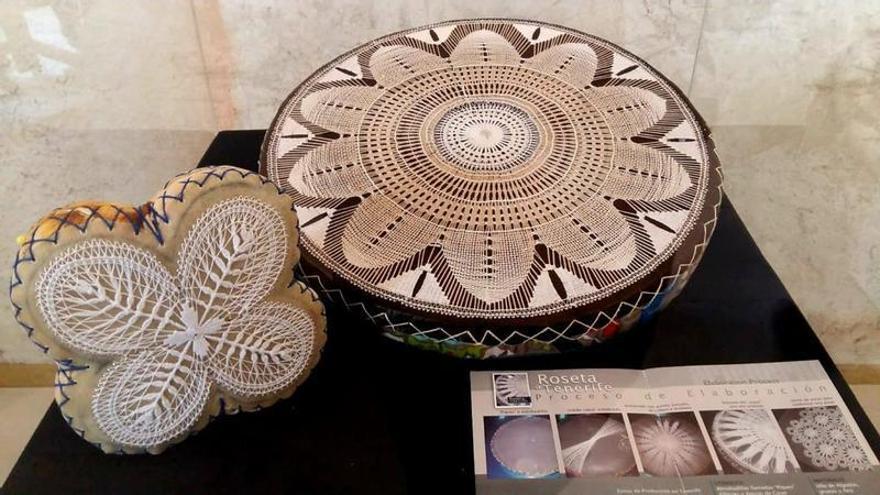
The Canarian roseta is a special lace technique where small, round pieces are woven with thread, usually cotton. These pieces are then joined together to create larger items like doilies, tablecloths, or other decorations. Each roseta is made on a mold, often cardboard. Threads are stretched tightly on this mold before being worked with a needle, creating delicate, geometric, and symmetrical designs.
Historically, this craft has strong ties to towns in the south of Tenerife, including Vilaflor, Granadilla de Abona, Arona, and San Miguel de Abona. For many years, making rosetas helped many rural families earn extra money. Women were the main people who kept this skill alive and passed it on, making it a key part of the region's identity. While its exact origins are thought to be between the 19th and 20th centuries, during a time of significant trade and cultural exchange, the technique has developed its own unique style.
Being declared a BIC is more than just an honorary title. It formally recognizes the Canarian roseta as a valuable part of cultural heritage that needs special protection because of its historical, cultural, and social importance. For intangible traditions like this, the law requires detailed documentation of the technique, support for teaching it, and public promotion of its significance. This means more official recognition, opportunities for training programs, and including the roseta in cultural and tourism plans that highlight local identity. Also, any action that could affect how the roseta is passed on or its authenticity must now take its protected status into account.
Protecting intangible heritage is a growing trend worldwide, supported by organizations like UNESCO, which stress the importance of preserving traditional knowledge and practices. In the Canary Islands, adding the roseta to the BIC list strengthens the commitment to the islands' diverse culture.
While the number of active craftswomen has decreased over time due to social and economic changes, there are still groups, workshops, and associations working to keep the tradition alive. This declaration as an Asset of Cultural Interest comes at a critical time. The future of the roseta faces clear challenges, including fewer young people learning it, competition from factory-made goods, and traditional crafts being less common in everyday life.
More than just a beautiful object, the Canarian roseta is a symbol of identity. Each piece represents hours of patient work and a refined technique requiring precision and skill. This contrasts sharply with today's fast-paced production, making every roseta a unique item. Historically, selling these pieces helped families in the south of Tenerife, with items sold at local markets and craft fairs. Today, valuing traditional crafts is also connected to cultural tourism, where the roseta can be a key feature to promote a tourism model that respects local identity.
The challenge now is to turn this legal protection into real and effective actions. This will require strong cooperation between government bodies, artisan groups, and the local community. Passing the skill on to new generations will be crucial to ensure the roseta doesn't just become a museum exhibit, but continues to be made by those who want to learn it. While being recognized as a BIC doesn't guarantee its survival on its own, it does create a positive environment to boost its revival, moving the roseta from a home craft to a prominent place in the island's cultural story.
In a world of fleeting trends, the Canarian roseta stands for patience, memory, and shared identity. Its declaration as a BIC is, ultimately, a sign of respect for those who have kept it alive for generations. It's also an invitation to see heritage not as something fixed, but as a living legacy built every day. Tenerife, particularly its southern region, celebrates this recognition, which protects not just a handmade technique but also a way of understanding culture and community.