
Bolivian Migrants Celebrate Virgin of Copacabana Tradition in Tenerife
The annual feast of the Virgin of Copacabana in Tenerife’s Ofra neighborhood continues to serve as a vital cultural anchor for the island’s Bolivian migrant community, blending religious tradition with vibrant displays of Andean heritage.
The feast of the Virgin of Copacabana has become a powerful example of how migrant communities in Tenerife preserve their cultural identity. For over 20 years, this celebration in the Ofra neighborhood has served as a vital social anchor for the island’s Bolivian population.
The tradition began in 2002, when a Bolivian couple, Paulino Juchani and Herminia Mamani, brought a religious image from their homeland to the San Antonio de Padua parish in Las Retamas. What started as a small, private effort to feel closer to home has grown into a major public event. The annual procession through the streets of Santa Cruz now acts as a bridge between generations, helping the children of migrants—many born in Spain—stay connected to their Andean roots.
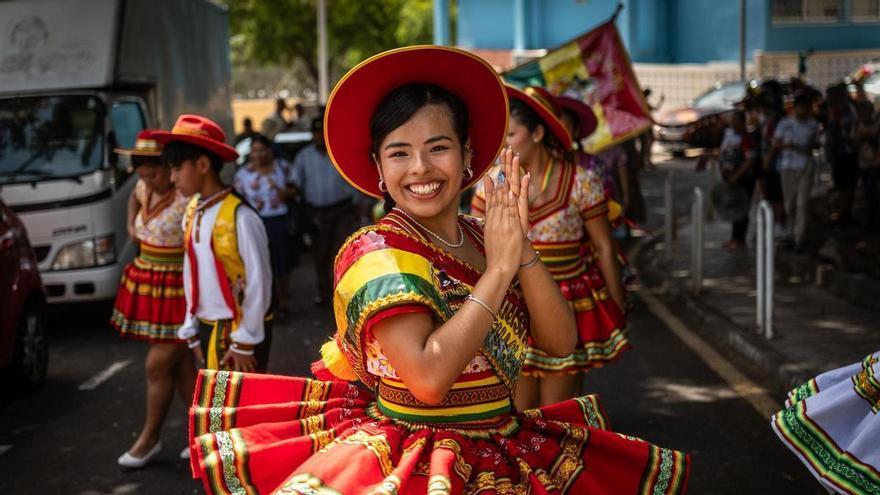
Last Saturday’s festivities highlighted the rich regional diversity of Bolivia. Dancers performed traditional styles like the morenada, tinkus, and diablada—a dance that blends pre-Hispanic and Catholic symbolism. The participants’ dedication is clear in their elaborate costumes, some of which cost up to 900 euros. Organized by various groups, the event is more than just a religious rite; it is an opportunity to share Bolivian culture with the wider community.
As the parade moved through the busy streets of Ofra, it offered a glimpse into the multicultural life of Santa Cruz’s peripheral neighborhoods. Despite the intense heat, the community completed the full route before heading to private celebrations in Guamasa. The event shows how imported traditions can become a natural part of the local calendar, turning public spaces into places where nostalgia and shared history bring people together.