
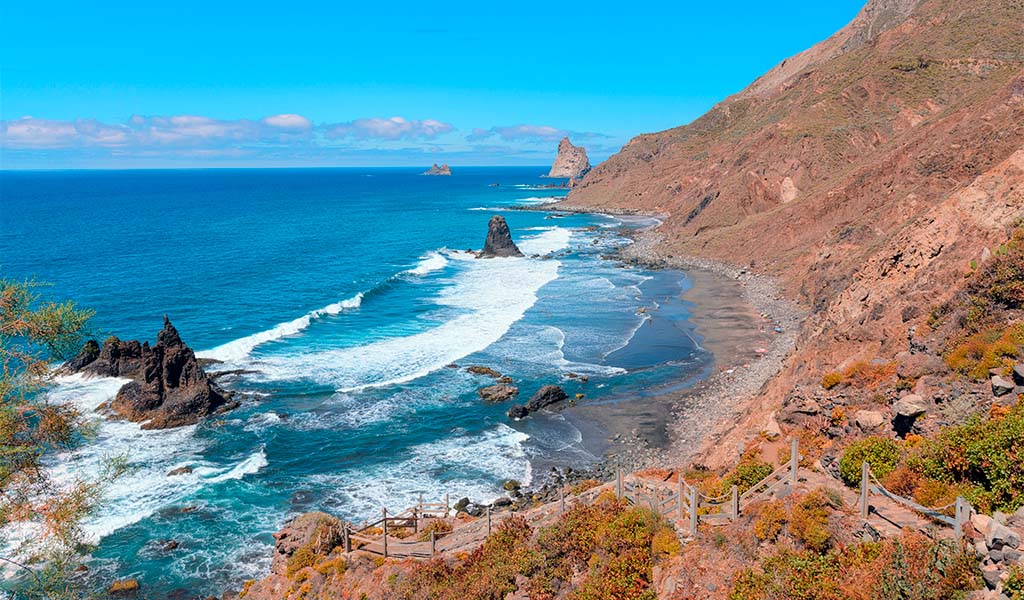
Benijo Beach Set to Reopen After Two-Year Rockfall Closure
Benijo beach in Tenerife is set to reopen after a two-year closure due to rockfalls, with the Santa Cruz City Council investing €2.15 million in hillside safety work before summer as part of a larger €11.7 million infrastructure plan.
Benijo beach, a well-known spot in the Anaga mountains, is getting ready to reopen to the public. It has been closed for two years because the nearby hillside was unstable, leading to rockfalls. The Santa Cruz de Tenerife City Council plans to start work to make the slope safe before summer, a vital step to ensure visitors are safe at this beautiful and popular natural area.
To speed up the process, the project is being handled through a special agreement designed to quickly award contracts. Carlos Tarife, the Councillor for Public Services, confirmed that the €2.15 million funding comes from the Department of Tourism. He added that while contracts for "Lot II" (urbanization and paving) have already been given to companies Sando and Elfidio Pérez, the work to reinforce the hillside can't start until the project is officially assigned.
The investment in Benijo is part of a larger €11.7 million plan. This plan also includes fast-tracking three projects to improve the water system, originally planned for 2025 and 2026. One key project already underway is sanitation work in Barrio Nuevo. This first phase, costing €1.3 million (with the island council paying half), aims to update the sewage, water supply, and rainwater drainage systems there.
Another important project is the €1.4 million work at the El Regente ravine in San Andrés. This project needs a change to its original design to better prevent flooding during heavy rain. Work is expected to start before the end of March. Lastly, €2 million will go towards extending the Anatolio Fuentes underwater pipeline. This extension will allow the wastewater treatment plant to discharge excess treated water further out to sea. Tarife clarified that these discharges are approved by the Department of Environment and are not considered pollutants.