
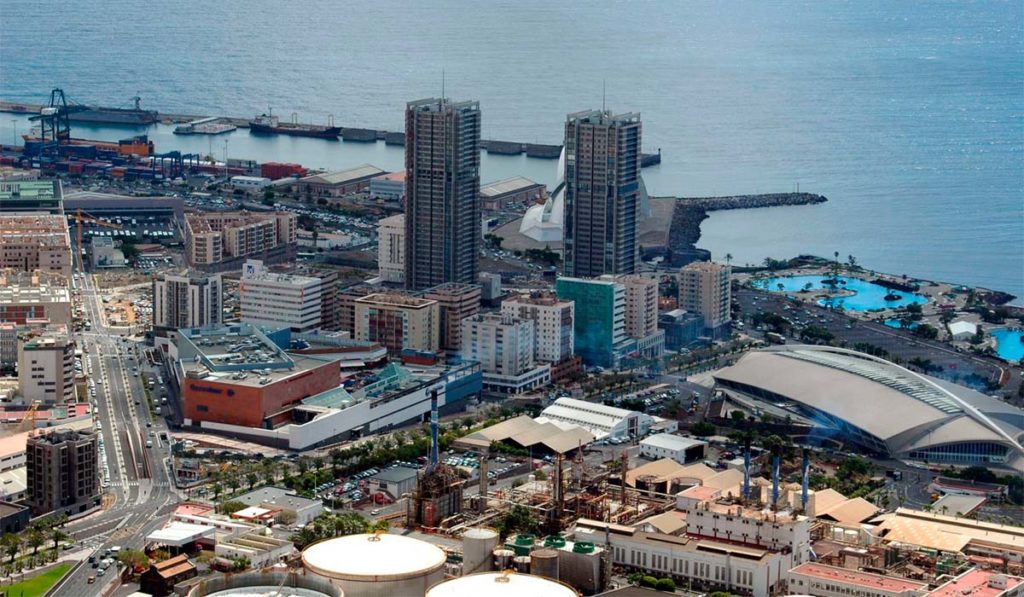
Asodiscan Urges Santa Cruz to Review 'Large Tourist Influx Zone' Designation
The employers' association Asodiscan has formally requested that the Santa Cruz de Tenerife City Council review the city's "Large Tourist Influx Zone" designation to ensure commercial policies reflect current urban and economic realities.
The employers' association Asodiscan has formally asked the Santa Cruz de Tenerife City Council to review the city’s "Large Tourist Influx Zone" (ZGAT). This special status, in place since 2011, allows businesses to set their own opening hours. The association is not calling for the policy to be scrapped; rather, they want a formal review to see if the criteria used fifteen years ago still make sense for the city today.
The group argues that local governments have a duty to update policies when circumstances change. They point out that the zone’s boundaries have never been re-evaluated, despite major shifts in the city’s urban and economic landscape. Even Mayor José Manuel Bermúdez acknowledged in 2024 that Santa Cruz has changed significantly since 2011.
Asodiscan highlights a clear disconnect between the current rules and the reality on the ground. They note that 419 storefronts are currently closed, including many on key streets like Castillo, El Pilar, and Imeldo Serís that fall within the ZGAT. Furthermore, the association points out that only 15% to 35% of businesses in the zone actually choose to open on Sundays—a surprisingly low number, given that the city welcomes 160,000 cruise passengers each year.
From an urban planning perspective, the association questions why the current map is so rigid. They suggest that areas like Tres de Mayo-Cabo Llanos—which host six of the city’s thirteen tourist bus stops—should be considered for inclusion. Ultimately, they are asking the City Council to provide an objective, evidence-based justification for whether the current boundaries should be kept or redrawn.
The economic context of the city has shifted drastically since 2011. While the policy was originally introduced during a financial crisis to combat high unemployment, the retail sector now accounts for 44% of the municipality’s economic activity and one in five local jobs. After failing to receive a response from the Development Society in 2025, the association has now taken its request directly to the Mayor’s Office. They maintain that their goal is not to challenge the legality of the original rule, but to ensure that commercial policy reflects the modern needs of the capital.