
Arona plans to build more than 4,000 apartments, becoming the leader in construction in the Canary Islands.
The largest plot of land for development in the Canary Islands has been unlocked in Arona, opening up opportunities for the construction of over 4,000 residential properties and addressing the housing crisis.
In Arona, as they say, every cloud has a silver lining. Perhaps the only positive thing to come out of all the corruption scandals, political and business squabbles, and the general plan blocked by the court since 2015, is that the city now has a chance.
Unlocking the construction, which has been ignored for so long, gives Arona the opportunity to become a leader in housing construction in the Canary Islands, especially now that the housing crisis is being felt the most.
The Arona city authorities, led by Mayor Fátima Lemes, have estimated that more than 4,000 apartments and houses – both private and social – can be built in the coming years. No other city in the Canary Islands has such potential. Lemes and the construction councillor, Javier Baute (from the People's Party), decided to prioritise the restoration of those areas that are already considered urban and suitable for development. This will help solve the housing shortage not only in the south, but also on the entire island.
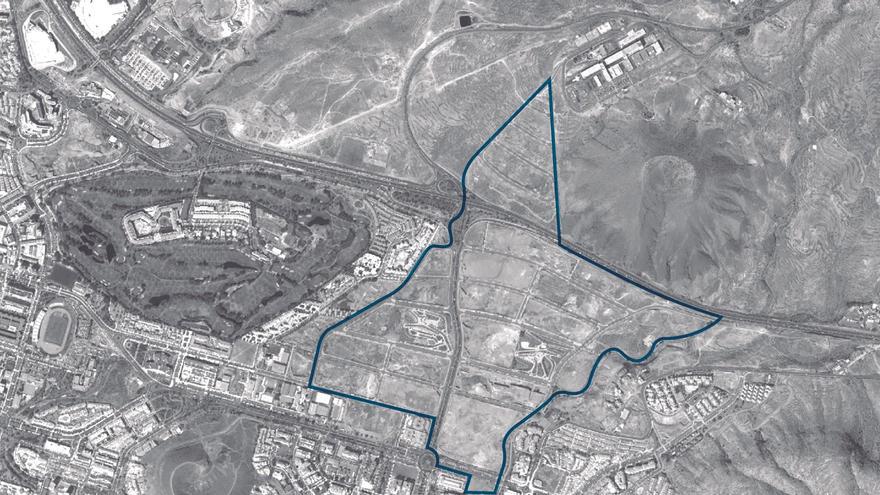
The first important step has already been taken. Recently, the city council and the El Mojón Compensation Board signed an act on the partial acceptance of the largest plot of urban land in the Canary Islands. It is located directly above Los Cristianos, the main city of Arona. In this way, the local authorities have unblocked almost one million square metres of land, although plans for this area were made 40 years ago. In El Mojón alone, it will be possible to build 5,400 residential units, i.e. approximately 2,000-2,500 apartments.
According to Javier Baute, the city council has solved a bureaucratic problem that arose due to the chaos in the city's management in the past. This will allow construction permits to be issued and construction to begin on these lands. "El Mojón was already planned, the land was ready, and now we have simply completed the unblocking of a significant part of this plan," he stressed.
The councillor also noted that there are other "mojones" throughout Arona that are rarely talked about, as everyone is focused on the huge figures of El Mojón. This plot is not only the largest in the Canary Islands, but also the third largest in Spain. Experts estimate that there are more than 350,000 square metres of urban land on 21 plots that have been blocked for reasons similar to El Mojón. At least 2,000 additional apartments can be built there.
The example of Cho-Parque de la Reina is particularly telling – private plots that have been waiting for development for 40 years. Javier Baute assures that there is hope to solve this problem soon, so that the city council can issue construction permits. Negotiations with the owners are already progressing. Unlike El Mojón, where it is planned to build luxury homes with a low building density, in Cho-Parque de la Reina they want to build more affordable housing for people with average incomes, but with a higher building density. Here, next to one of the most popular areas of Arona – Guaza – it is possible to build about 1,000 houses, as well as supermarkets and other necessary facilities.
Other "mojones" mentioned by Baute are located in four settlements: Valle San Lorenzo, Cabo Blanco, Buzanada and La Camella. It will be possible to build about a thousand more houses there. These are areas where people who work in the tourism sector mainly live. In Valle San Lorenzo, there are three plots of 18,000, 26,000 and 27,000 square metres, most of which are still undeveloped. In Cabo Blanco, there are two plots of 88,000 and 52,000 square metres, where more than 70% of the land is suitable for development. In Buzanada, there is one plot of 69,000 square metres, of which 80% is vacant.
The case of La Camella shows what poor city management can lead to. There is a building with 35 social apartments that was built 15 years ago, but people still cannot live there due to legal confusion. In 2021, the court ordered the city council to pay €2.7 million to the state-owned company Visocan for this building, as the permit for its construction was declared invalid. The court decided that the building would become the property of the city. Javier Baute's team is now working to solve this problem so that people with low incomes can get these apartments on favourable terms.
Arona officially has 87,000 inhabitants, but it is believed that there are actually more than 100,000, taking into account those who are not registered. At the moment, real estate websites offer only 190 rental options. None of them costs less than €700 per month, and most cost more than €900. Even a room in a shared house costs more than €400. In view of this, as well as the constant increase in house purchase prices (a square metre in Arona costs an average of €3,700), the restoration and construction of housing is a very important task.
In the Canary Islands, and especially in Tenerife, there is a big problem with the lack of available land, as the territory of the islands is limited. In addition, half of Tenerife's territory is protected due to its natural value. The population is constantly growing, especially in the south, where there are the most tourists. If the population growth rate continues, the island will have more than one million inhabitants in seven years. That is why the situation in Arona is so important. In addition to El Mojón, there are other plots waiting to be developed. No other island has the opportunity to increase its housing stock by more than 4,000 apartments and houses in the coming years.
Only Madrid has larger development plans than El Mojón. But there is much more territory there than in the archipelago. In the south-west of Madrid, it is planned to build 45 million square metres of new districts. Among the largest urban plots, El Mojón would rank third with almost one million square metres, which is equivalent to 140 football pitches. A plot in Valencia with 380,000 square metres would be in fourth place.
20 March 1986
The El Mojón development plan was commissioned in 1985 and developed by architect Rubens Enríquez from Palma. It was first presented to the Arona City Council on 20 March 1986.
1 October 1996
The Construction and Environment Commission of the Government of the Canary Islands approved the El Mojón plan.
29 June 1998
The Mayor signed the decision on the final approval of the development project.
16 March 2001
The City Commission approved the compensation project.
January 2015
The development agreement was declared invalid after the Supreme Court overturned the Arona General Development Plan.
July 2018
The first construction permit in El Mojón was obtained by Inversiones Marylanza SL.
17 August 2020
The then Mayor José Julián Mena decided not to accept the development plan due to negative expert opinions.
31 January 2024
The Construction Commission considered the agreement between the Arona City Council and the El Mojón Compensation Board. This was a step towards resuming the process of final implementation of the development plan for this large plot of land.
6 February 2024
The Arona City Council made a historic decision that will boost the development of the new city of El Mojón. This will change the tourist centre of southern Tenerife. At an extraordinary meeting, the agreement with the Compensation Board (which brings together the landowners) for the development of the El Mojón plan above Los Cristianos was finally approved. This is the largest plot of land in the Canary Islands.
15 September 2025
The Arona City Council and the El Mojón Compensation Board signed the act on the acceptance of the development plan in Los Cristianos. Thus, the largest plot of urban land in the Canary Islands – almost one million square metres, most of which (60%) is intended for housing – has finally been unblocked. Three hotels and two large parks are also planned.