
Arona Judge Reopens Cuna del Alma Case, Denies Immediate Halt
An Arona judge has reopened the Cuna del Alma tourist complex case in Tenerife, ordering new investigations into potential coastal law violations but declining to halt construction immediately.
A judge in Arona has agreed to reopen a case about the Cuna del Alma tourist complex in southern Tenerife. While the judge accepted appeals to continue the investigation, she has not yet agreed to stop the construction work.
Both the Public Prosecutor's Office and a public interest group, the Puertito Libre Cultural Social Ecologist Association, had challenged the judge's decision on December 4 to temporarily close the case. The judge has now sided with them, reversing her earlier decision and ordering two new steps in the investigation.
However, the judge, with the agreement of the Public Prosecutor's Office, turned down the public interest group's request to immediately halt the construction. She noted that this possibility remains open, depending on what the new investigations uncover.
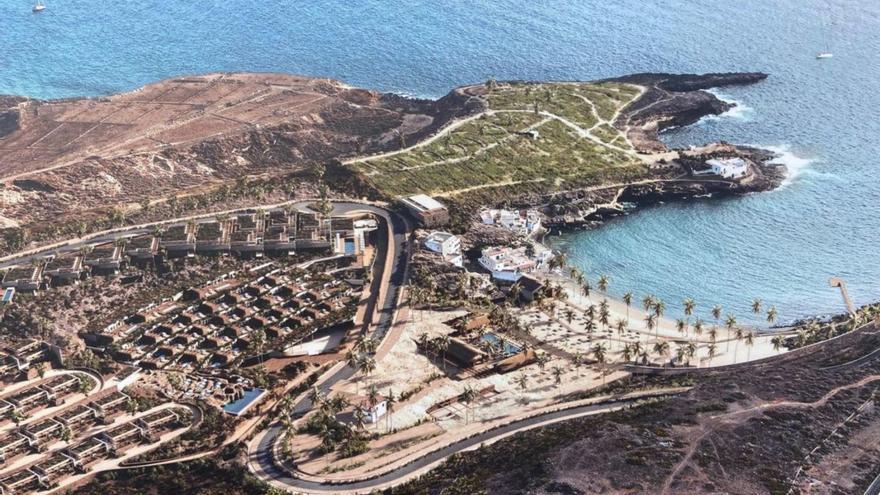
To restart the case, Judge Sandra Peraza has ordered two specific actions. First, she wants to get the full file on the Cuna del Alma project from the Directorate General of Coasts and Management of the Canarian Maritime Space. This project plans to build 3,600 tourist beds in Puertito de Adeje, an undeveloped area in southern Tenerife.
Second, she has asked for an expert report. This report will determine if the Cuna del Alma construction might be breaking rules set out in articles 47 of Royal Decree 876/2014 and 25 of the Coasts Law. These specific rules govern what kind of activities are allowed in the coastal protection zone, particularly banning residential buildings in this area.
Just over a month ago, the judge had initially closed the case, stating that the Canary Islands Government's Directorate General of Coasts had approved the work. However, the Public Prosecutor's Office appealed this, arguing that some planned activities in the coastal protection strip might be against existing regulations. The general Coasts regulation only allows structures or activities in this protected zone if they cannot be located anywhere else. Furthermore, the Coasts Law specifically forbids residential buildings there, along with other restrictions.