
Arico Government Affirms Strong Pact, Challenges Waste Complex
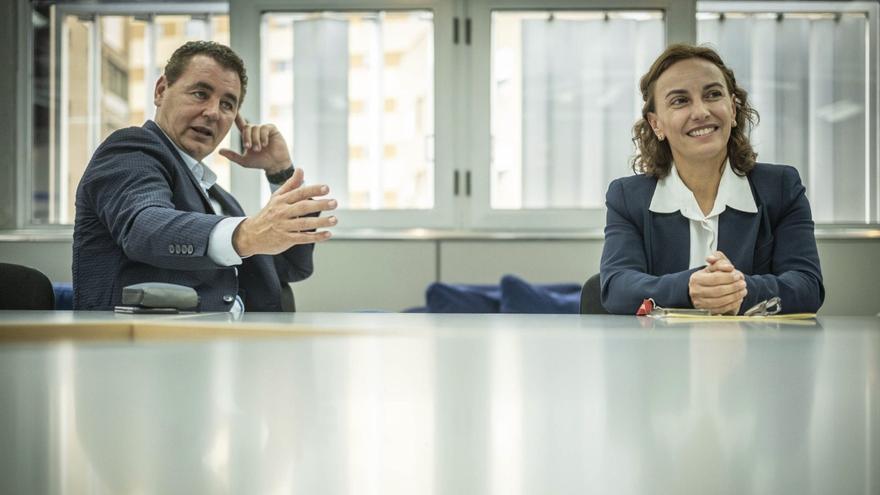
Arico's government leaders, Olivia Delgado and Andrés Martínez, affirmed their stable two-and-a-half-year partnership, highlighting progress on key infrastructure projects while strongly criticizing the island's waste complex and unplanned renewable energy developments.
Olivia Delgado: Some people thought our agreement wouldn't last, and there have been efforts to break it. But our partnership isn't about politics; it's about serving the public. That focus has guided our work for the past two and a half years of our term. We are sticking to our government agreement.
Andrés Martínez: It looked like a difficult agreement to keep, but in the end, we managed to understand each other despite our differences. Most importantly, we put the town's interests first.
A.M.: Just like any family, governments have their good times and bad, and we've had our disagreements. But we've worked well together. This government has brought stability, peace, and confidence, showing that we can achieve a lot for our town.
I believe we are delivering on much of our plan. We're working on the promises we made, which are exactly what people have always asked for. This government is investing in neighborhoods, improving services, and creating policies that boost our residents' quality of life. We haven't fixed everything Arico needs yet, but we're heading in the right direction and setting things up for many projects to happen in the coming years.
O.D.: The Arico we took over had many problems. In just two and a half years, we're reaching goals that are making life better for residents. Arico is moving past decades of doing nothing and is starting to see the changes it wants and needs. This is all thanks to careful management.
O.D.: No. The Complex causes constant problems. It takes up a lot of land, its five sections are full, and barely 10% of waste is recycled – the rest is buried. On top of that, it harms local farming, plastics blow everywhere, there's a terrible smell, and its poor management is leading to a serious crisis, almost a collapse. Arico should be paid for this, but we aren't. When you consider that waste management costs us 426,000 euros and we get less than 900,000 euros in compensation, this facility isn't good for our town.
A.M.: It doesn't make up for anything. In fact, it has hurt waste management, and it continues to do so even with the new company in charge. This island plant has been a burden on our town in every way, causing huge damage to Arico's economy and community. I want to make it clear that we will keep doing everything we can, not just to get fair compensation for Arico, but also to ensure waste is managed properly. We will take all necessary steps, and I promise we won't let Arico be treated like the island's doormat any longer.
We will take whatever action is needed, whether legal or otherwise. However, I truly hope the Cabildo listens to us and addresses our concerns, so we can discuss and resolve the waste management issues for both the island and Arico. I'm confident the Cabildo will move towards improvements in all these areas.
O.D.: The Environmental Complex stops us from growing. We can't develop sustainable tourism or boost our farming and fishing industries because of it. This facility isn't following the rules, and that needs to be fixed right away.
O.D.: To be clear, we support renewable energy. But we can't keep using up our town's land for these projects. Between the waste complex and these energy developments, Arico and its economy are being harmed. This all comes down to poor planning and organization.
A.M.: Renewable energy projects have become another problem for our town, much like the island plant. Because of a Canary Islands Government decree, they don't need our permission, and they're built everywhere without any proper planning, ignoring the combined impact. We did manage to increase the fee we charge these parks to 10%, which is the only money we get from them. Remember, we can no longer collect the ICIO tax (Tax on Constructions, Installations and Works) because a court ruled that these facilities are exempt from needing local permits.
O.D.: We have great news about this: We've reached a deal with the company and settled their final payment claim. They wanted a lot more, but we paid around 250,000 euros and ended the contract. Now, we'll start the process to find a new contractor for the remaining work and finally finish building the square that residents have wanted for so long.
A.M.: This was a very complicated issue, and we've found the right solution. Now, it's time for us to take the final step and complete this very important project.
A.M.: Water is a problem across the island, and the Island Council needs to fix it. Here at the City Council, we're improving some water supply systems. The next project, costing over 1.6 million euros, will be in the La Listada neighborhood.
O.D.: Clearly, this issue needs a lot of money and can't be solved instantly. We are making good progress. But farming still needs more water. Now, the Cabildo needs to act quickly and provide the treated water that the agricultural sector desperately needs.
O.D.: Yes! This project is moving forward nicely and will be very important for Arico, especially for our elderly residents who need support. It will help ease the burden of caring for them.
A.M.: The Institute of Social and Socio-health Care – and I want to praise the excellent work of councilor Águeda Fumero and her team in this area – has successfully put out to tender this project. It wasn't awarded in the last government term, but now it's finally being built. Our elderly residents will soon have this facility, which is expected to take 18 months to complete.
A.M.: Our colleague, Education Minister Poli Suárez, promised Arico that he would fast-track the new coastal school project in Abades. That project has now been awarded, so we will soon have a school on the coast. It will be a modern and well-equipped facility.
O.D.: The new school in Abades is a crucial project for coastal students and their parents. It will address a long-standing demand and give Arico's coastal area a vital resource. Most importantly, it will improve the lives of students and their families.
O.D.: This agreement is working well; we're getting things done and we're happy with the progress.
A.M.: We'll discuss future agreements when the time is right. Any agreements should be decided by the people through elections and must benefit Arico, not just political parties. For now, we need to keep working towards the goals that the people of Arico expect us to achieve.